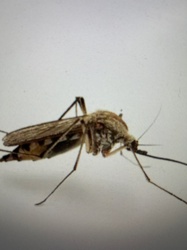
Common House Mosquito Identification Guide
Plain brown and unremarkable at first glance, the common house mosquito is identified by its lack of bold markings and its habit of resting parallel to surfaces.
Read the full Common House Mosquito encyclopedia entry →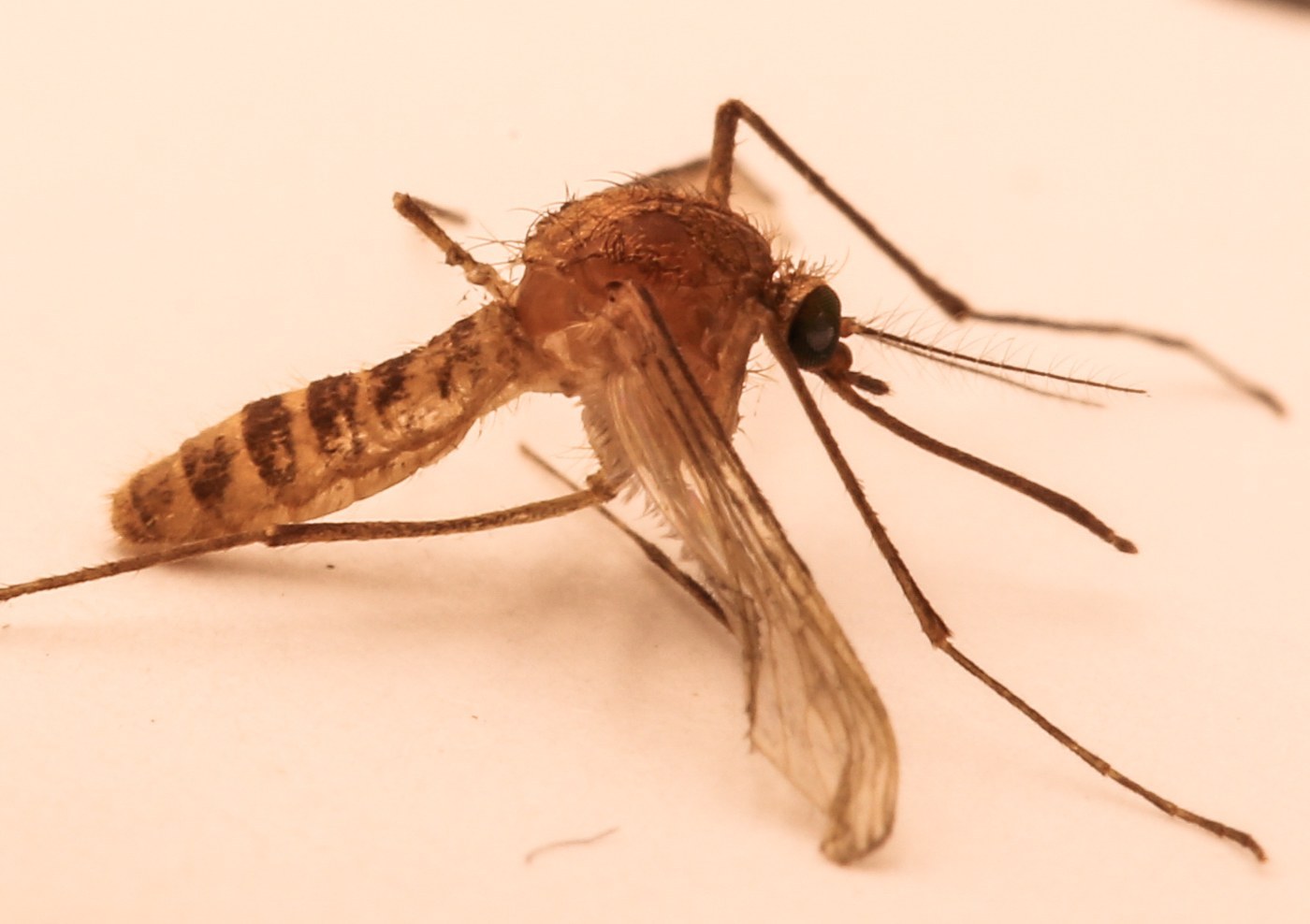
Key Visual Features
The common house mosquito (Culex pipiens) is a medium-sized mosquito with a fairly plain, understated appearance compared to more strikingly marked species.
- Size: Medium, about 4-7 mm long.
- Body color: Light to medium brown overall, without bold black-and-white contrast.
- Markings: Subtle, indistinct banding on the abdomen; lacks the sharp stripes or lyre-shaped patterns seen in some other mosquitoes.
- Wings: Clear, scaled wings typical of mosquitoes, folded flat over the body at rest.
- Resting posture: Rests with its body roughly parallel to the surface it lands on, rather than at a steep upward angle.
- Proboscis: Long, slender, forward-pointing mouthpart typical of mosquitoes, used alongside antennae to sense its surroundings.
Where and When You'll See It
- Common in urban and suburban areas, frequently entering homes, hence the common name.
- Breeds in stagnant water sources such as clogged gutters, storm drains, catch basins, birdbaths, and neglected containers.
- Primarily active from dusk through night, becoming more noticeable indoors after sunset.
- Found across a wide range of climates, with populations peaking in warm, humid months.
Similar-Looking Bugs
- Aedes mosquito (tiger or yellow fever mosquito): Shows bold black-and-white banded legs and distinct thorax stripes, unlike the plain brown common house mosquito.
- Anopheles mosquito: Rests at a steep, head-down angle with the body tilted away from the surface, and often has spotted wings, unlike the flatter resting posture here.
- Aedes species in general: Tend to be darker with sharper contrast, while the common house mosquito appears more uniformly tan or brown.
Quick ID Checklist
- Plain brown body without bold stripes or banding
- Rests with body roughly parallel to the surface
- Clear, scaled wings folded flat over the back
- Most active from dusk through nighttime
- Breeds in stagnant water in gutters, drains, and containers
Frequently asked questions
How can I identify a common house mosquito if it has no bold markings?
Look for its plain brown body without sharp stripes, combined with a resting posture that keeps the body roughly parallel to the surface it lands on.
When is the common house mosquito most active?
It is primarily active from dusk through the night, which is why it's most often noticed indoors after sunset.
How does its resting posture differ from an Anopheles mosquito?
The common house mosquito rests with its body nearly parallel to the surface, while Anopheles mosquitoes typically rest at a steep, head-down angle.
Where does the common house mosquito prefer to lay eggs?
It favors stagnant water in places like clogged gutters, storm drains, catch basins, and neglected containers around neighborhoods.
Common House Mosquito identified by the community
Recent Common House Mosquito finds identified with Bug Identifier.