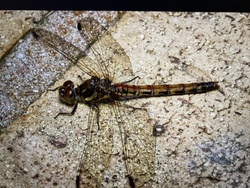
Common Sanddragon Identification Guide
Learn to identify this sand-loving clubtail dragonfly by its pale coloring and widened tail tip.
Read the full Common Sanddragon encyclopedia entry →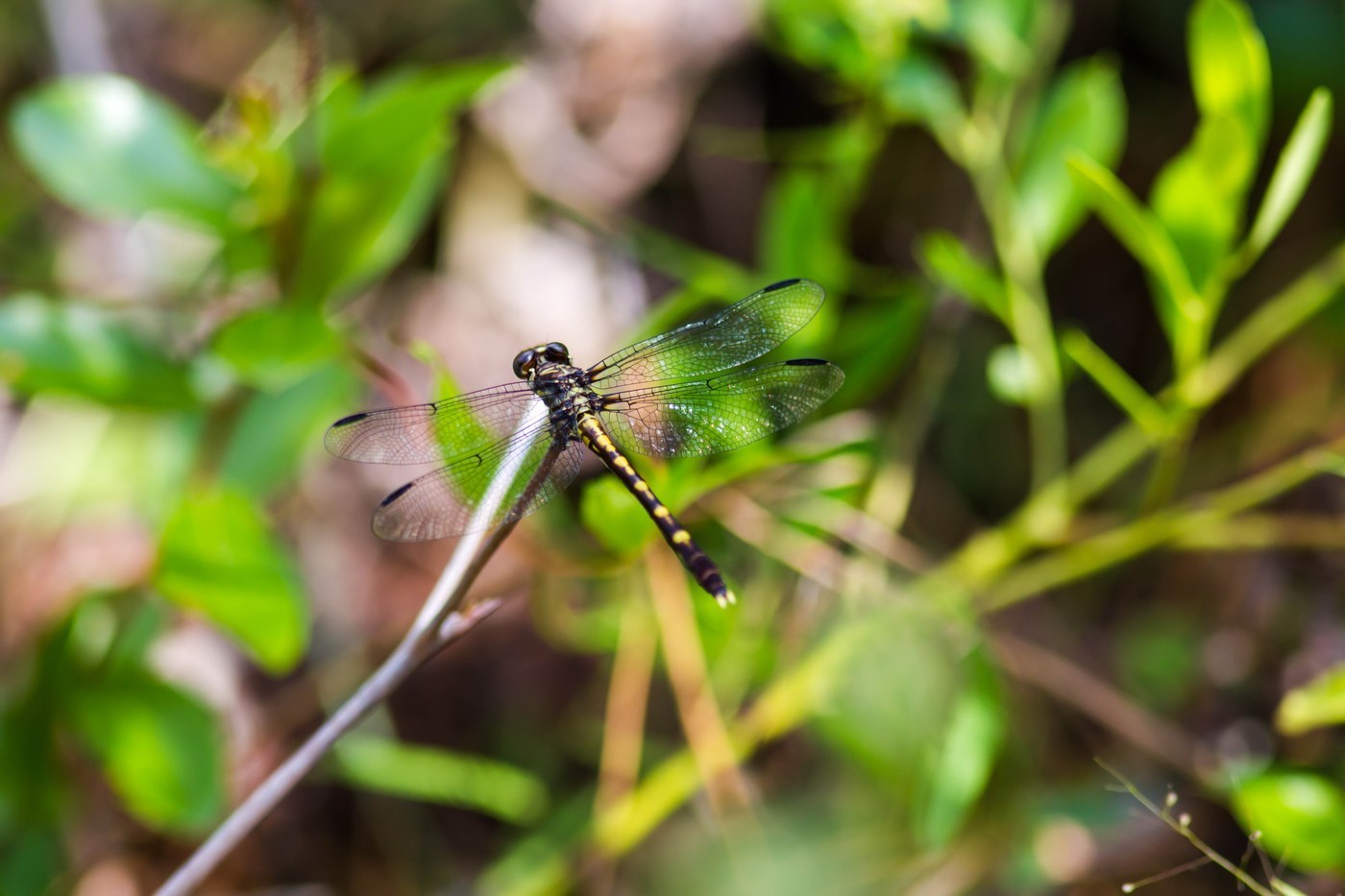
Key Visual Features
The common sanddragon is a medium-sized clubtail dragonfly, typically 1.7 to 2.1 inches long, with a build and coloring suited to its sandy habitat:
- Overall pale brown to tan or greenish-yellow body coloring that blends well with sand
- A noticeably "clubbed" abdomen — the last few segments widen slightly compared to the slender middle abdomen, a hallmark of clubtail dragonflies
- Pale yellow-green eyes that are widely separated at the top of the head, rather than touching
- Yellow markings along the sides of the thorax and pale spots along the top of the abdomen segments
- Clear wings with a light amber or yellowish tint near the base
- Legs mostly dark
Where and When You'd See It
Look for this species along sandy-bottomed rivers, streams, and sometimes sandy lake shorelines, where the aquatic nymphs burrow into loose sand and silt. Adults are typically seen from late spring through summer, perched on sandy banks, bare ground, or low vegetation near the water's edge, often basking in open sun. They frequently rest flat on warm sand or exposed rock, blending in until disturbed into short, low flights.
Similar-Looking Bugs
- Other clubtail species share the widened tail tip and separated eyes, so precise identification often depends on close comparison of the abdomen's yellow spot pattern and thorax striping.
- Common darners and other large dragonflies have eyes that meet broadly at the top of the head, unlike the clearly separated eyes of clubtails such as the sanddragon.
- Skimmers typically show a stockier, less clubbed abdomen and often have more strongly patterned or colored wings.
Quick ID Checklist
- Pale tan to greenish-yellow body matching sandy substrate
- Abdomen tip visibly widened ("clubbed") compared to the middle segments
- Eyes pale and clearly separated at the top of the head
- Found perched on sand or bare ground beside sandy streams and rivers
- Active late spring through summer in sunny, open spots
Frequently asked questions
What does 'clubtail' mean when identifying this dragonfly?
It refers to the slight widening of the last few abdominal segments compared to the narrower middle abdomen, giving the tail end a club-like shape when viewed from above.
How do I tell a sanddragon from other clubtail species?
Look closely at its pale, sand-matching body tone and the specific pattern of yellow spots along the abdomen and thorax, since many clubtails look similar and differ mainly in these fine details.
Why are sanddragons only found near sandy water?
Their nymphs burrow into loose sandy or silty streambeds to develop, so adults stay close to that specific habitat type.
What is a reliable way to separate clubtails from darners at a glance?
Check the eyes: clubtails like the sanddragon have eyes that are clearly separated at the top of the head, while darners have eyes that broadly touch.
Common Sanddragon identified by the community
Recent Common Sanddragon finds identified with Bug Identifier.