
Common Spreadwing Identification Guide
A large brownish damselfly that perches with its wings held half-open, unlike most other damselflies.
Read the full Common Spreadwing encyclopedia entry →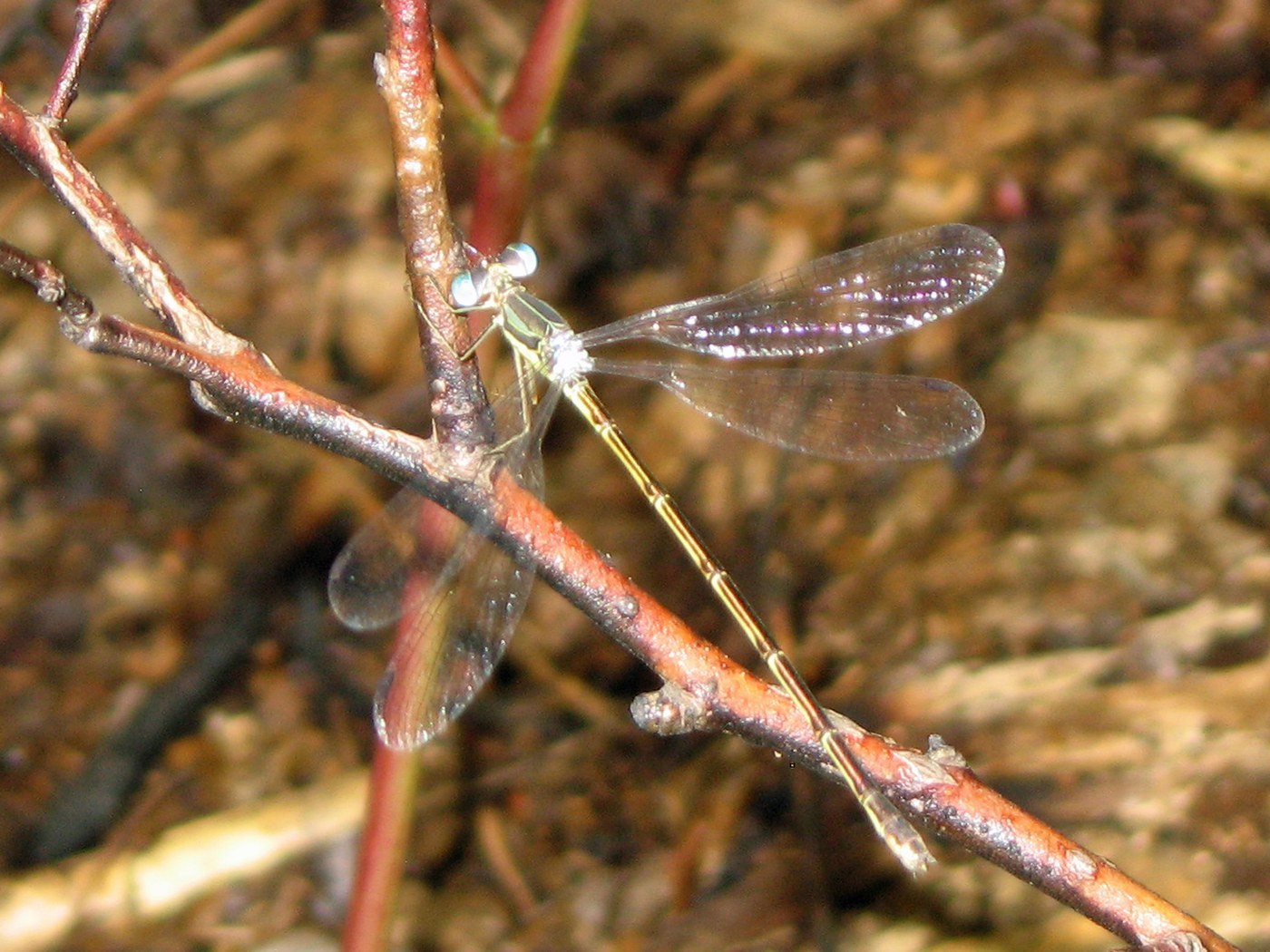
Key Visual Features
The Common Spreadwing is a relatively large damselfly, measuring about 1.5 to 2 inches (38 to 50 mm), a notable size difference from the smaller dancers and bluets.
- Wing posture: The most distinctive feature is its resting posture. Unlike most damselflies, spreadwings (family Lestidae) perch with their wings held partly open at an angle rather than folded flat together, giving the group its name.
- Color: The body is generally metallic bronze, brown, or greenish-brown, often with a somewhat dull or matte look compared to the vivid blues of dancers and bluets. Some individuals show pale blue eyes or a touch of pruinosity on the thorax when mature.
- Body shape: Long and slender, with an elongated abdomen typical of damselflies but proportionally larger and more robust than many bluets.
- Eyes: Large, well-separated eyes on a broad head, often pale blue-gray in mature adults.
- Legs: Long legs used for gripping emergent stems and grasses around ponds.
Where and When You'd See It
Common Spreadwings are found around ponds, marshes, ditches, and other still or slow-moving waters across much of North America. Look for them perched at an angle on grasses, sedges, or twigs near the water, often holding still with their wings characteristically spread. They are active from late spring through fall, and unlike many damselflies, adults can sometimes be seen away from water in nearby fields or meadows.
Similar-Looking Species
- Other spreadwing species (e.g., Slender Spreadwing, Sweetflag Spreadwing): Share the same half-open wing posture, so telling spreadwing species apart usually requires close attention to the shape of the appendages at the abdomen tip and subtle color differences.
- Dancers and bluets: Easily ruled out because they fold their wings fully closed at rest, unlike the open-winged posture of spreadwings.
- Dragonflies: Hold wings fully flat and open, more so than a spreadwing's partial angle, and generally have a stockier body and touching eyes.
The half-open wing posture combined with a bronzy-brown body color is the fastest way to place an individual in the spreadwing group before narrowing down to species.
Quick ID Checklist
- Wings held partly open at an angle when perched, not fully closed or fully flat
- Bronze, brown, or greenish-brown body color
- Larger and more robust than typical bluets or dancers
- Found near ponds, marshes, and other still water
- Pale eyes and long legs suited for gripping emergent vegetation
Frequently asked questions
How does the Common Spreadwing's wing position help identify it?
Most damselflies fold their wings completely together over the back when resting, but spreadwings like the Common Spreadwing hold their wings partly open at an angle, which is usually the quickest way to recognize the group.
Is the Common Spreadwing the same size as a bluet or dancer?
No, spreadwings are generally noticeably larger and more robust than bluets and dancers, with a longer body that can approach two inches.
Can Common Spreadwings be found away from water?
Adults are sometimes seen resting in nearby grassy fields or meadows away from the immediate shoreline, though they remain closely tied to ponds and marshes for breeding.
How do I tell one spreadwing species from another?
Because many spreadwing species share the same brownish color and open-wing posture, distinguishing between them typically requires a close look at the small appendages at the very tip of the abdomen.