Common True Katydid Identification Guide
Recognize this canopy-dwelling, leaf-mimicking insect by its broad green wings and its famous night chorus.
Read the full Common True Katydid encyclopedia entry →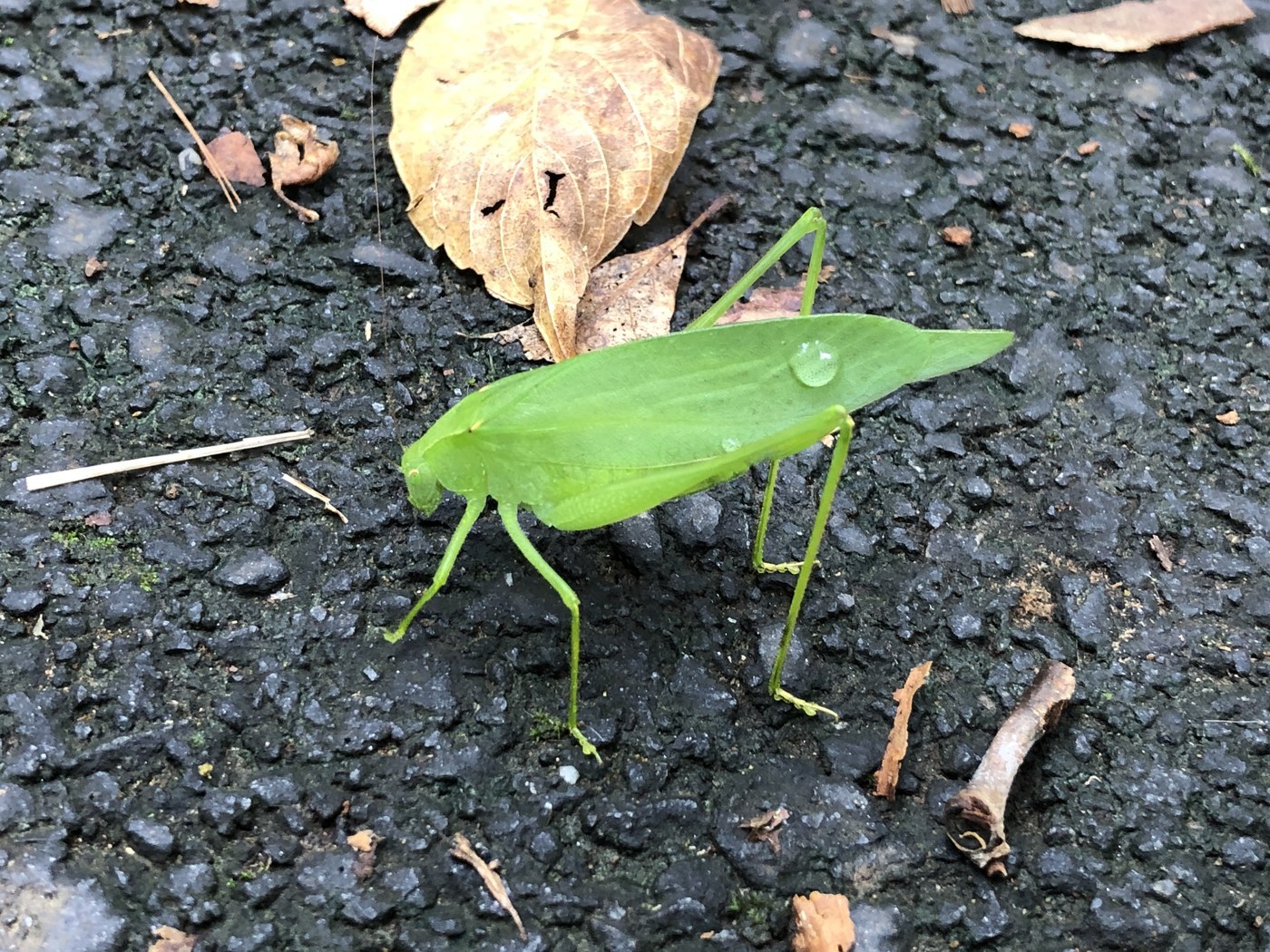
Key Visual Features
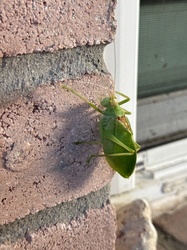
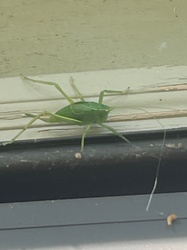
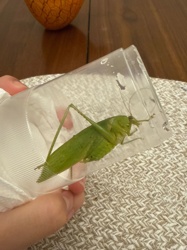
The common true katydid (Pterophylla camellifolia) is a large, leaf-mimicking insect, with adults typically 1.25 to 2 inches long.
- Color: Bright to medium green overall, closely matching healthy tree leaves.
- Wings: Broad, rounded, leaf-shaped wings held vertically over the body, complete with visible vein patterns that mimic the texture of a real leaf — this species has some of the most convincing leaf camouflage among katydids.
- Body shape: Stout and somewhat flattened body relative to more slender bush katydids, with strong hind legs adapted for jumping rather than sustained flight.
- Antennae: Extremely long, thread-like antennae, often exceeding the length of the entire body.
- Sound-producing structures: Males have specialized structures at the base of the forewings used to produce their loud, distinctive calling song.
Where and When You'll See It
Common true katydids live high in the canopy of deciduous trees across the eastern United States, making them far more often heard than seen. They are active at night from mid-summer through early fall, when males produce their well-known repetitive "katy-did, katy-didn't" calling chorus, often heard in overlapping waves from many individuals calling at once after dark.
Similar-Looking Species
- Bush katydids (such as the fork-tailed bush katydid): Generally smaller and more slender, with narrower, less rounded wings and a different, less repetitive calling song; bush katydids are also more often found in shrubs and low vegetation rather than high tree canopies.
- Meadow katydids: Much smaller, slimmer-bodied, and associated with grasses and low meadow vegetation rather than tree canopies.
- Leaf-mimicking mantises or other insects: While some other insects also mimic leaves, the true katydid's combination of broad rounded wings, long antennae, and canopy habitat combined with its distinctive night song make it fairly straightforward to identify by ear even when it can't be seen.
Quick ID Checklist
- Large, bright green body with broad, rounded, leaf-shaped wings
- Antennae longer than the body
- Lives high in deciduous tree canopies, rarely seen at ground level
- Active at night, especially mid-summer through early fall
- Known for the loud, repetitive "katy-did, katy-didn't" calling chorus
Frequently asked questions
Why is it so hard to see a common true katydid?
It lives high in deciduous tree canopies and its broad green wings closely mimic real leaves, making it very well camouflaged even when present in large numbers.
What does the common true katydid sound like?
Males produce a loud, repetitive calling song often described as sounding like 'katy-did, katy-didn't,' heard in overlapping choruses on summer and early fall nights.
How is the true katydid different from a bush katydid?
The true katydid is generally larger and stouter with broader, more rounded, leaf-shaped wings and lives in tree canopies, while bush katydids are slimmer, have narrower wings, and are usually found in shrubs and lower vegetation.
When are common true katydids active?
They are active at night, primarily from mid-summer through early fall, and are rarely encountered during the day.
Common True Katydid identified by the community
Recent Common True Katydid finds identified with Bug Identifier.