
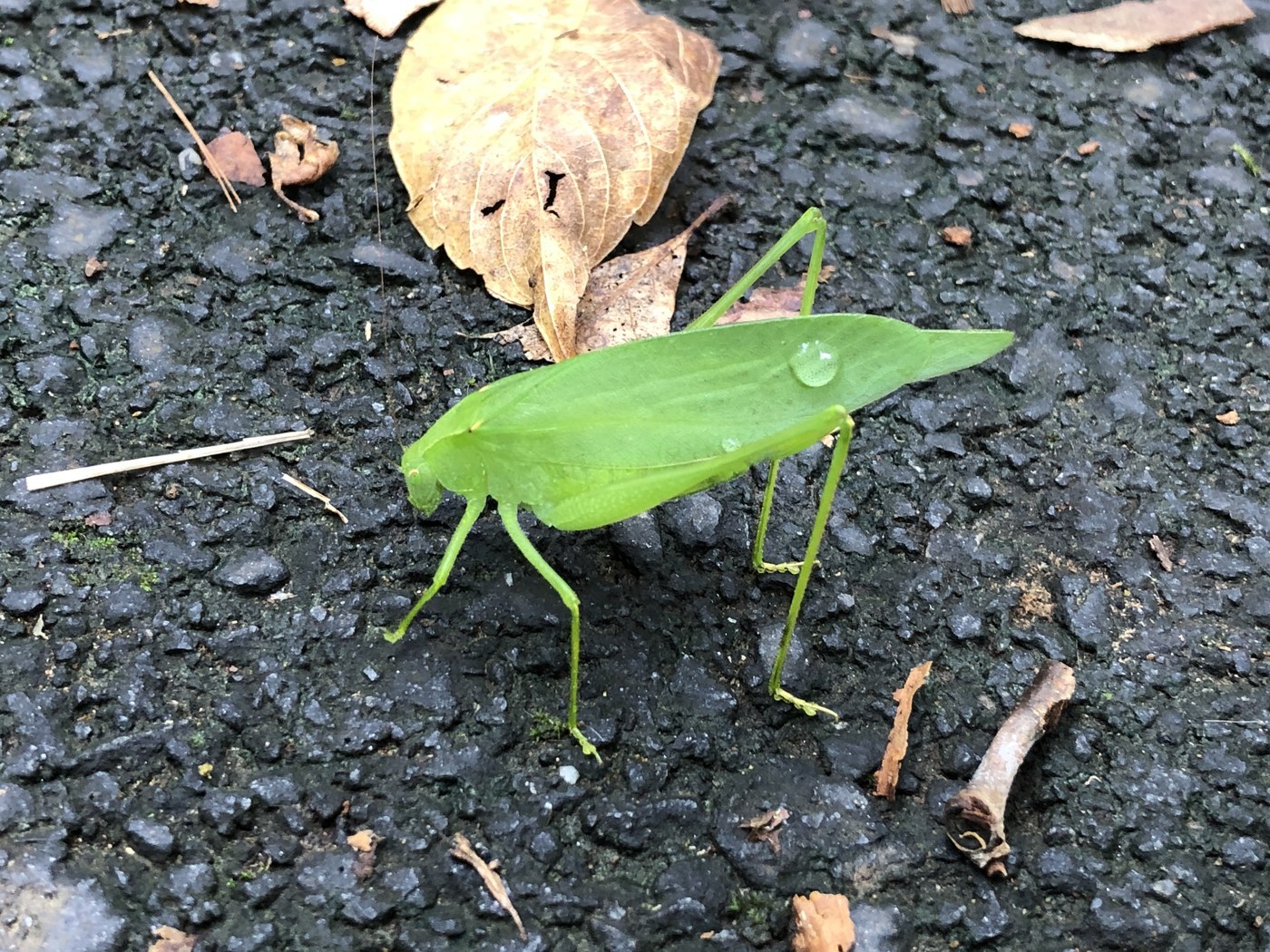
Common True Katydid
Pterophylla camellifolia
A living leaf that spends its life high in the treetops, the common true katydid is far more often heard than seen, producing the loud, rasping "katy-did, katy-didn't" chorus that fills eastern summer nights.
- Size
- 3.5–5 cm (1.4–2 in) long
- Habitat
- Deciduous forest canopy and tall trees across the eastern United States
- Danger
- Harmless
Spotted a bug like this?
Identify any bug or insect from a photo, free.
Overview
The common true katydid is a large, leaf-mimicking insect found throughout the deciduous forests of the eastern United States, where it spends nearly its entire adult life high in the canopy of trees rather than in low vegetation. It is the species most responsible for the well-known nocturnal chorus of loud, rhythmic calling that gives katydids their name, as many listeners interpret the repeated song as sounding like "katy-did, katy-didn't."
Despite being extremely common and vocal, this katydid is rarely seen due to its excellent camouflage and preference for staying high in tree foliage, where its broad, leaf-shaped wings render it nearly invisible against the surrounding leaves. Its presence is instead announced almost entirely through sound, with large choruses of males calling from treetops on warm summer and early fall nights, sometimes so loud and pervasive that they dominate the nighttime soundscape of eastern forests and suburbs.
The species plays an important ecological role in forest canopy communities, both as a herbivore of tree leaves and as a prey item for birds, bats, and other predators that hunt in and around the forest canopy.
How to Identify
- Broad, oval, leaf-shaped forewings that closely mimic the shape and venation of tree leaves.
- Green body color overall, providing near-perfect camouflage among foliage.
- Long, thread-like antennae, typically longer than the body.
- Large hind legs adapted for jumping, though flight is limited.
- Males have specialized wing structures used to produce their loud, distinctive calling song.
- Distinguished from bush katydids and meadow katydids by its much larger size, broader leaf-like wings, and characteristic "katy-did" call.
Habitat & Range
This species occurs throughout the eastern United States, from the Midwest and Great Lakes region south to the Gulf Coast, inhabiting the canopy of deciduous forests, shade trees, and wooded suburban areas. Adults are active and calling primarily from mid to late summer into early fall, most vocal after dark.
Behavior & Diet
Common true katydids feed on the leaves of deciduous trees, spending most of their adult lives in the canopy where they also mate and lay eggs. Males produce their loud, repetitive call by rubbing specialized structures on their forewings together, often calling in large, synchronized choruses that can be heard from a considerable distance on summer nights. This nocturnal chorusing behavior is thought to help synchronize mating activity and may also provide some protection through the difficulty predators have in pinpointing an individual caller within a large chorus. As canopy-dwelling herbivores, they contribute to leaf consumption in forest ecosystems and serve as prey for canopy-foraging birds and bats.
Life Cycle
Females lay flattened, overlapping eggs in rows along twigs and bark in late summer and fall, and the eggs overwinter before hatching the following late spring. Nymphs develop through incomplete metamorphosis over several instars during the summer while climbing higher into the canopy as they mature, reaching adulthood and beginning to call by mid to late summer. There is one generation per year.
Frequently asked questions
Why is the common true katydid rarely seen?
It spends nearly all of its adult life high in tree canopies, and its broad, leaf-shaped green wings provide excellent camouflage against foliage.
What does the common true katydid's song sound like?
Males produce a loud, rhythmic, rasping call often described as sounding like "katy-did, katy-didn't," frequently in large nighttime choruses.
When are common true katydids most active?
They are most vocal and active from mid to late summer into early fall, mainly after dark.
What do common true katydids eat?
They feed primarily on the leaves of deciduous trees in the forest canopy where they live.
Common True Katydid guides
In-depth guides for identifying, understanding, and living alongside Common True Katydid.
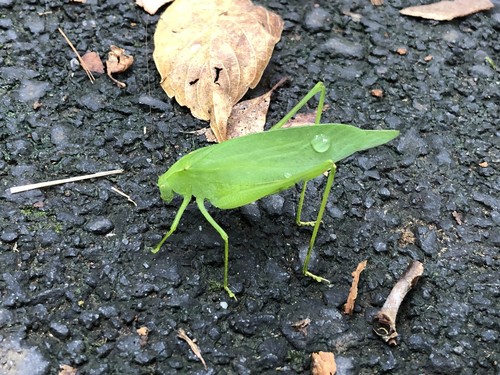
Common True Katydid identified by the community
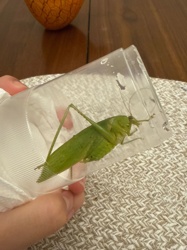
Real finds identified with Bug Identifier.
Other bugs you may enjoy
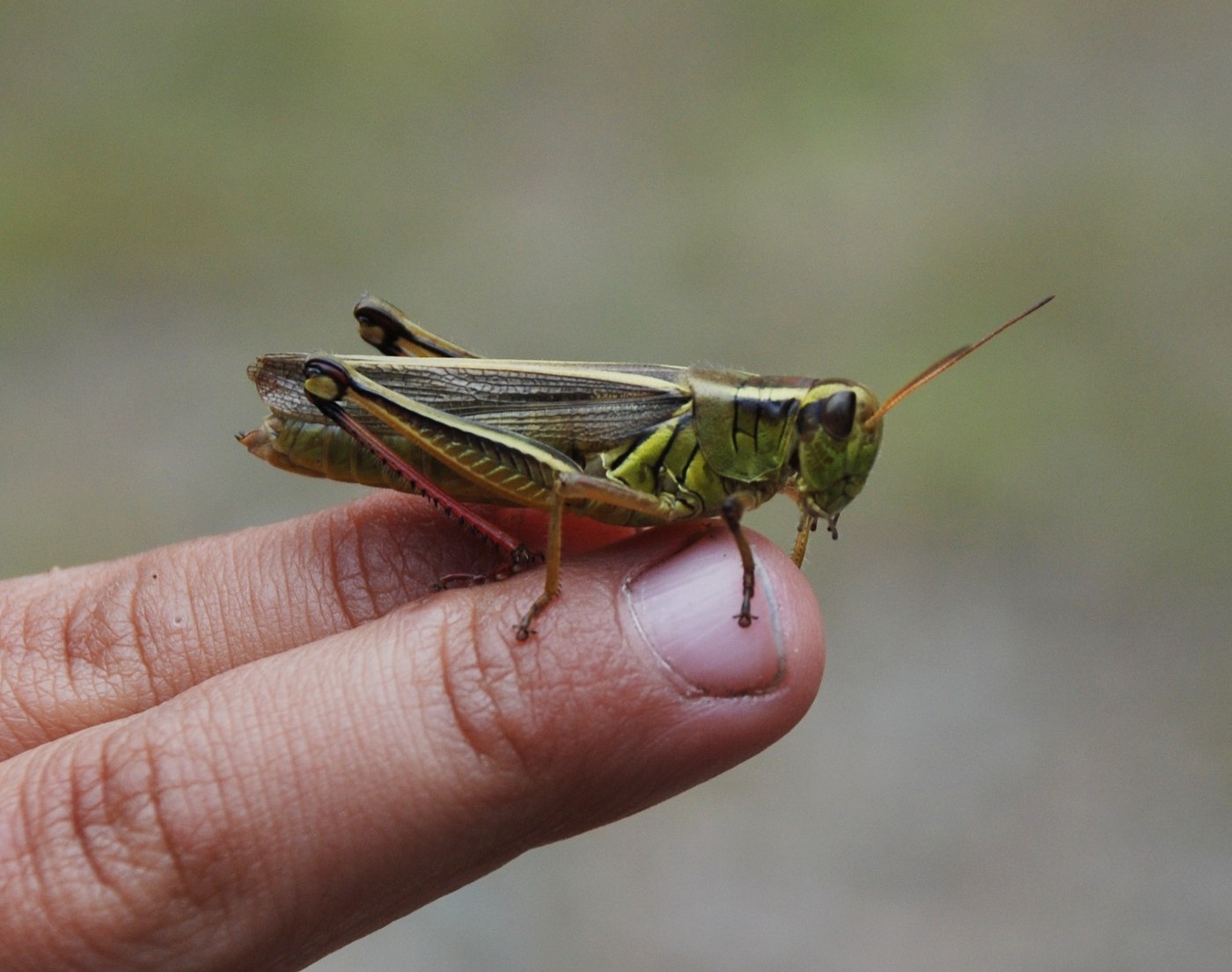
Two-striped Grasshopper
Meadows, pastures, riverbanks, and agricultural fields across North America
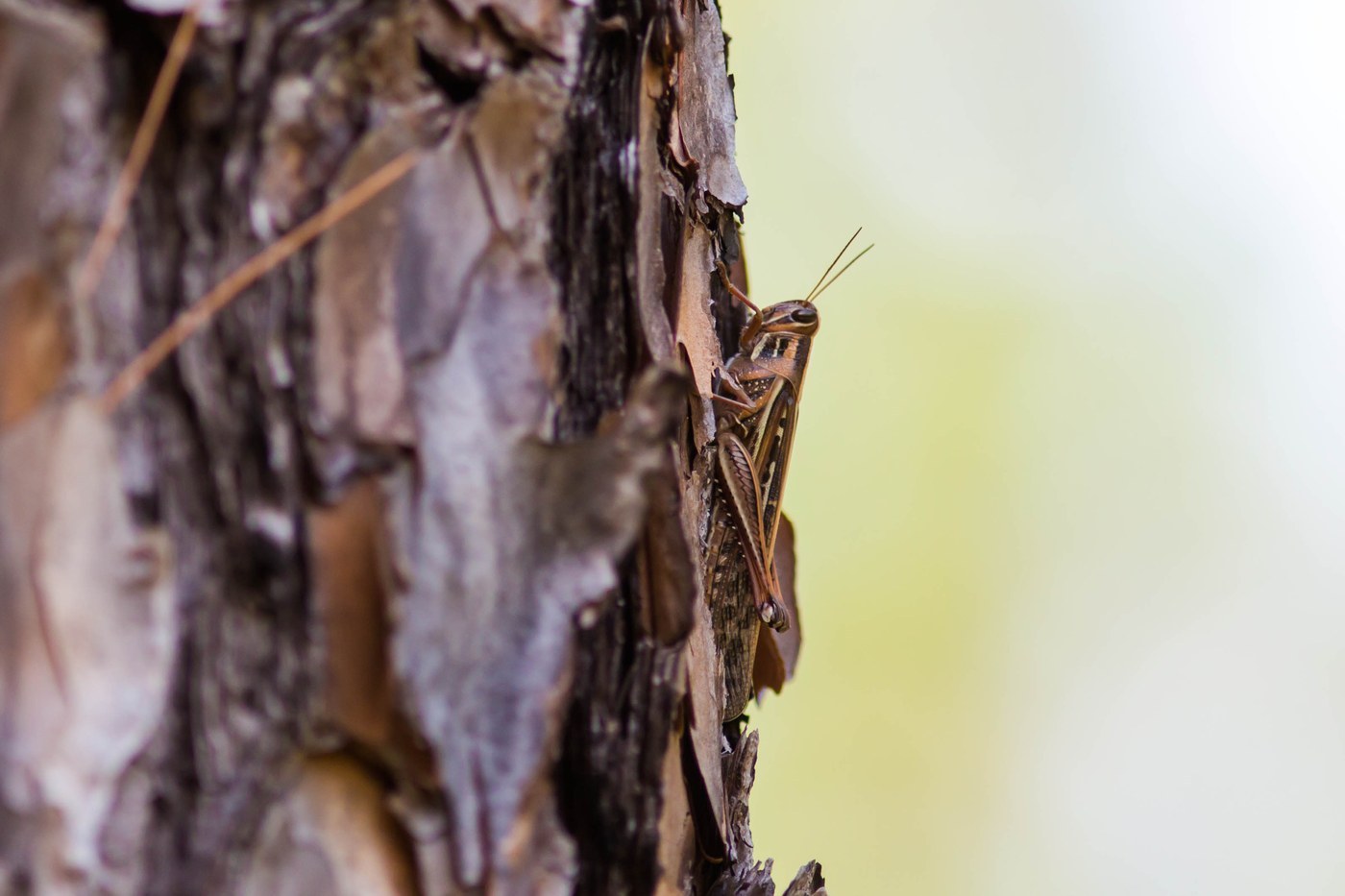
American Grasshopper
Woodland edges, citrus groves, gardens, and open fields across the southern and southeastern United States
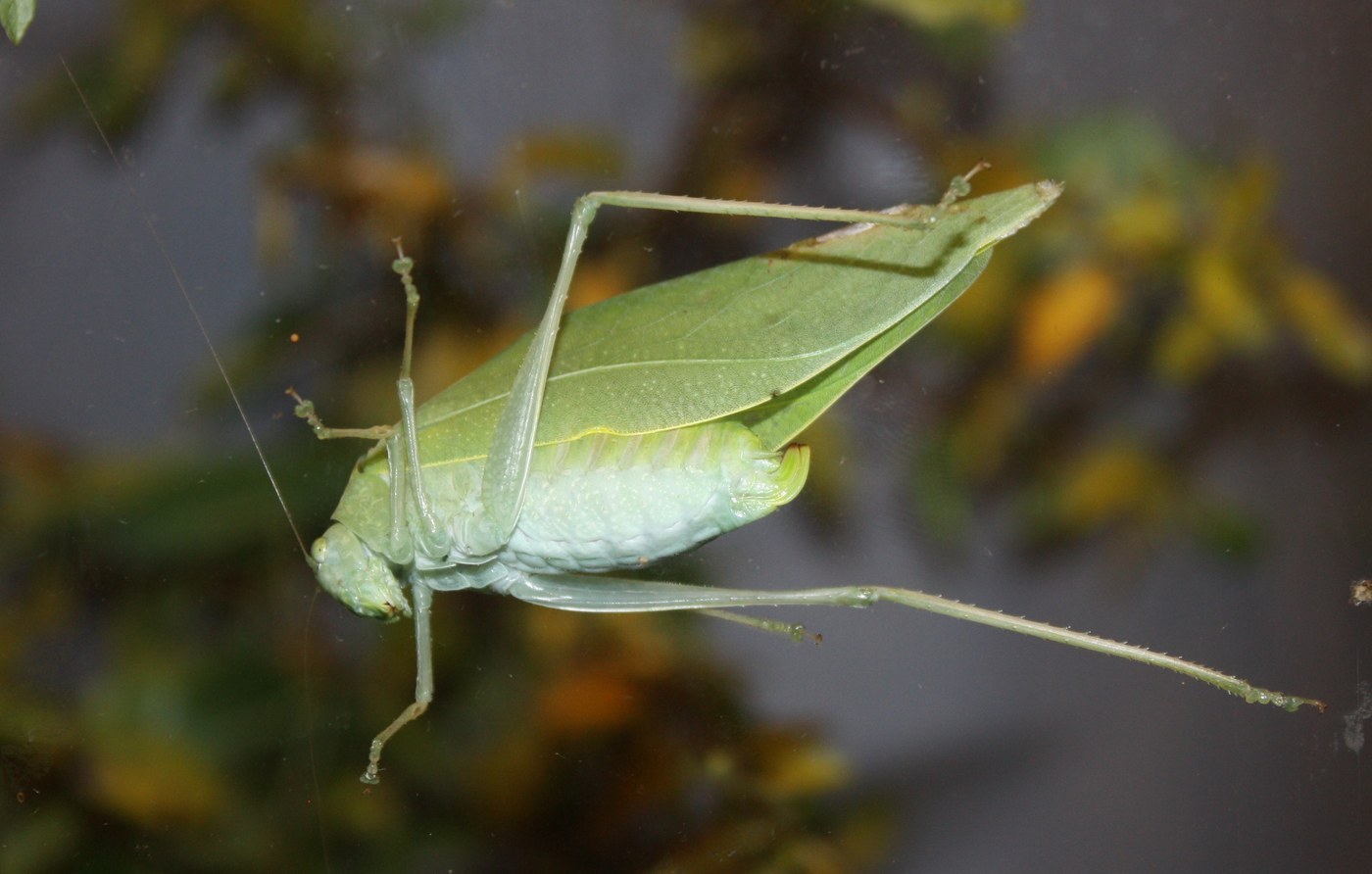
Angular-winged Katydid
deciduous trees, shrubs, and hedgerows across eastern and central North America
Spur-throated Grasshopper
grasslands, meadows, croplands, and roadsides across North America
Snowy Tree Cricket
Shrubs, trees, and tall vegetation across North America
Rocky Mountain Locust
historically open grasslands and river valleys of the Rocky Mountains and Great Plains (now believed extinct)
Spotted Camel Cricket
damp caves, crawl spaces, basements, leaf litter, and rotting logs in eastern North America
Pygmy Grasshopper
damp soil, mud, and low vegetation near ponds, streams, and marshes
Red-legged Grasshopper
Meadows, pastures, field edges, and gardens across North America
Painted Grasshopper
arid scrub, wastelands, and gardens of the Indian subcontinent, especially near milkweed plants
Speckled Bush Cricket
Brambles, hedgerows, nettles, and shrubby vegetation
Northern Mole Cricket
wet soil, pond margins, and marshy ground across eastern and central North America