Common Wasp Identification Guide
Learn the key markings that separate the familiar black-and-yellow common wasp from other similar yellowjackets.
Read the full Common Wasp encyclopedia entry →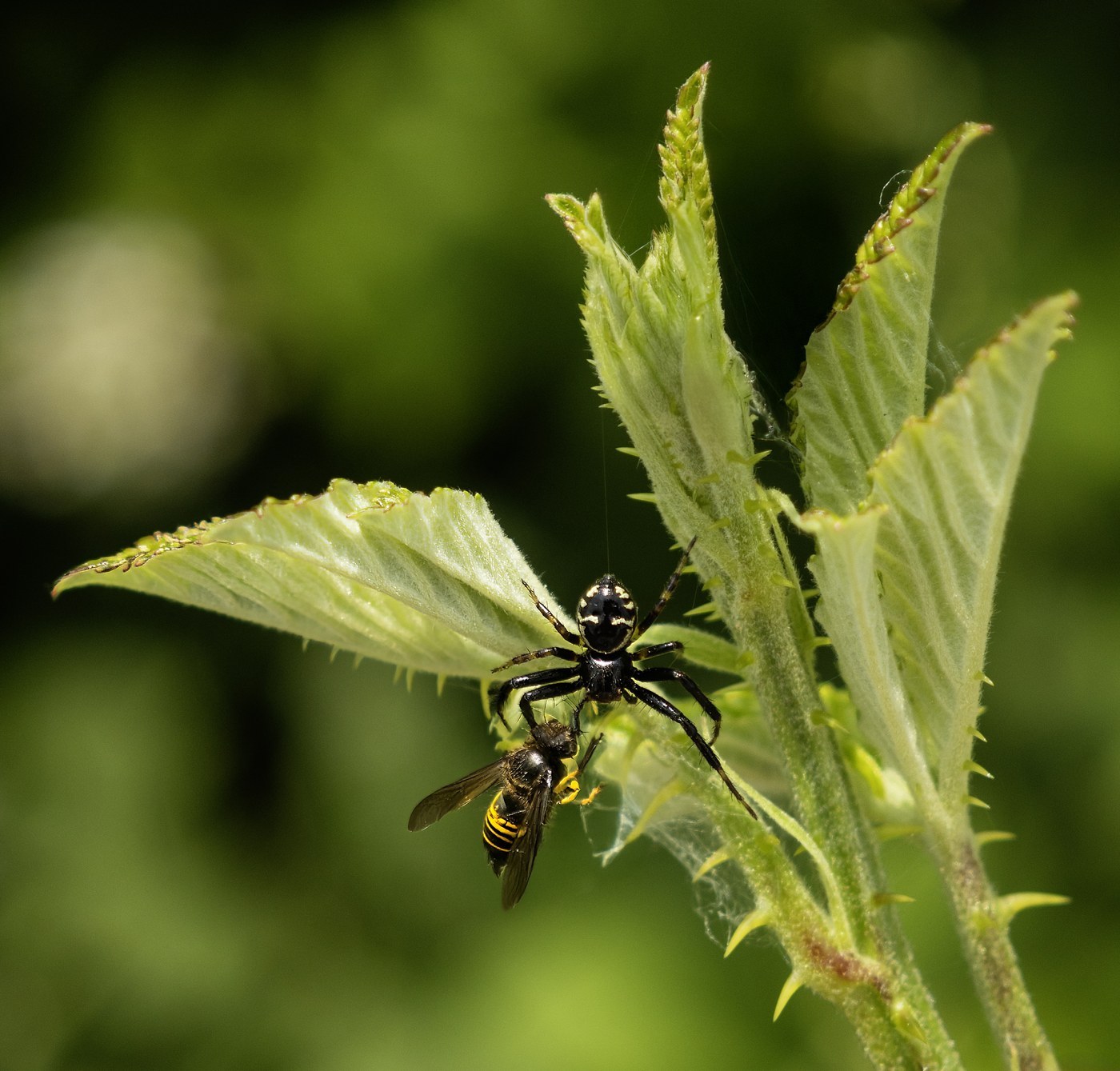
Key Visual Features
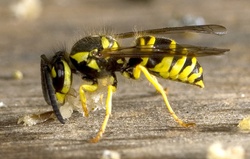
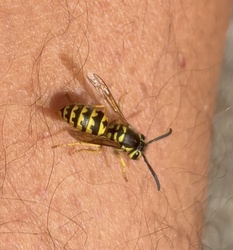
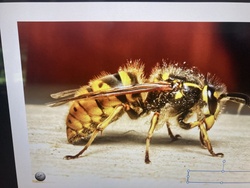
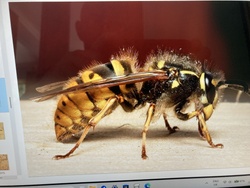
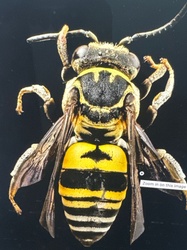
The common wasp is a classic yellowjacket, recognizable by its crisp black-and-yellow banding and characteristic facial markings.
- Size: Workers measure about 12–17 mm (0.5–0.7 inches); queens are noticeably larger, around 20 mm.
- Color: Bright yellow and black banded abdomen with a smooth, hairless appearance (unlike the fuzzy bumble bee).
- Body shape: Slim waist, smooth cylindrical abdomen, and a compact thorax.
- Facial marking: A distinctive black anchor- or dagger-shaped mark on the yellow face is a key identification feature for this species.
- Wings: Clear to lightly smoky, folded lengthwise along the back when at rest.
- Legs: Yellow with black markings, relatively short compared to the body.
- Antennae: Black, thin, and elbowed.
Where and When You'll See One
Common wasps are social insects tied to a nest and are seen widely wherever people and food overlap.
- Nests are built in concealed cavities: underground burrows, wall voids, roof spaces, and hollow trees, made from a gray papery material chewed from wood fibers.
- Workers are highly active from late spring through fall, especially in mid to late summer when colonies reach peak size.
- Frequently seen around gardens, picnics, and outdoor food or drink, particularly sweet or protein-rich items.
- Queens appear alone in early spring, searching for a nest site before the colony's worker population builds up.
Similar-Looking Bugs
- German yellowjacket: Very similar banding, but the facial marking usually consists of three separate black dots rather than the common wasp's connected anchor shape.
- European paper wasp: More slender overall, with longer legs that dangle noticeably in flight and orange-tipped antennae.
- Honey bees: Fuzzy-bodied and golden-brown rather than smooth and bright yellow-and-black, with a rounder abdomen.
- Hoverflies: Mimic the yellow-and-black pattern but have only one pair of wings and large, fly-like eyes without a narrow wasp waist.
Quick ID Checklist
- Smooth, hairless yellow-and-black banded abdomen
- Black anchor- or dagger-shaped mark on the face
- Slim waist and compact, cylindrical body shape
- Nest built from gray papery material in a concealed cavity
- Peak worker activity in mid to late summer around food sources
Frequently asked questions
How do I tell a common wasp from a German yellowjacket?
The clearest distinction is the facial marking: common wasps usually show a connected black anchor-shaped pattern, while German yellowjackets typically show three separate black dots on the face.
How is a common wasp different from a honey bee?
Common wasps have a smooth, hairless, brightly banded body, while honey bees are fuzzier, more golden-brown, and rounder in shape.
Where do common wasps usually build their nests?
They favor concealed cavities such as underground burrows, wall voids, and roof spaces, constructing a gray papery nest from chewed wood fibers.
Why do I see more common wasps in late summer?
Colonies grow throughout the season, reaching their largest worker populations by mid to late summer, which is when sightings around gardens and food sources peak.
Common Wasp identified by the community
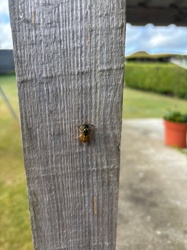
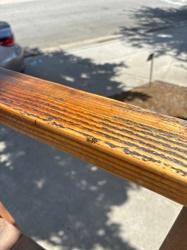
Recent Common Wasp finds identified with Bug Identifier.