
Common Water Strider Identification Guide
A long-legged insect that skates effortlessly across the surface film of calm ponds and streams.
Read the full Common Water Strider encyclopedia entry →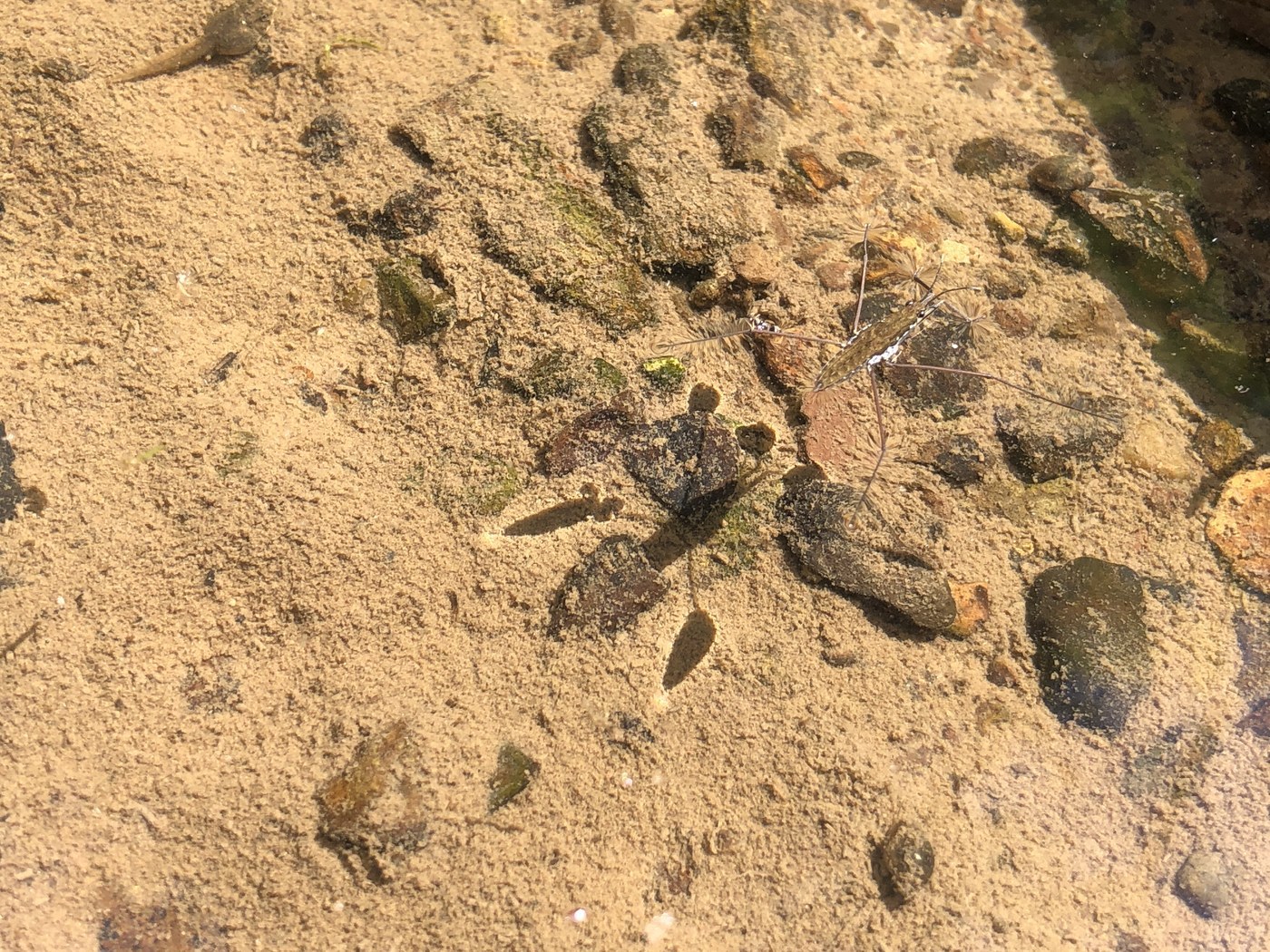
Key Visual Features
- Slender, elongated body typically 0.4-0.6 inches (10-15 mm) long
- Dark brown, gray, or black coloring, sometimes with a faint sheen
- Extremely long, thin middle and hind legs held out to the sides
- Short front legs positioned close to the head, used to grab prey
- Body and legs covered in fine water-repellent hairs that let it rest on the surface film without breaking it
- Slim, tapered abdomen and a small head with short antennae
- Some individuals have wings, others are wingless, depending on the population
Where and When You'll See It
Common water striders are found gliding across the surface of calm or slow-moving fresh water, including ponds, lake edges, slow streams, and quiet backwaters. They tend to gather near shorelines, under overhanging vegetation, or around floating debris where prey lands on the water. They are active from spring through fall in temperate climates and can often be seen in groups skating together, especially on sunny, calm days when the water surface is undisturbed by wind or current. When startled, they can push off with a quick, jerking leap that skips them several inches across the surface before resuming their normal gliding pace. Overwintering adults often shelter in leaf litter or under bark near the water's edge until warm weather returns.
Similar-Looking Bugs
- Water measurer: has a much thinner, stick-like body and walks slowly and deliberately rather than skating quickly across the surface.
- Water cricket: smaller overall with a stockier build and often found on faster-flowing water, with a slightly velvety texture to the body.
- Broad-shouldered water strider: shorter and stockier than the common water strider, with a more compact body shape.
- Fishing spiders: also walk on water but have eight legs, a spider body plan with two body segments, and no antennae.
Quick ID Checklist
- Long, thin legs held far out to the sides
- Skates rapidly across the water surface without sinking
- Dark brown to black, slender body
- Short front legs used to grab prey, much longer middle/hind legs for propulsion
- Found on calm, still, or slow-moving fresh water
Frequently asked questions
How can I tell a water strider from a water measurer?
Water striders have a more robust body and skate quickly across the surface using their long middle and hind legs, while water measurers have a distinctly thin, stick-like body and move slowly and deliberately rather than gliding.
Why don't water striders sink?
Their legs and body are covered in microscopic water-repellent hairs that trap air and distribute their weight across the surface tension of the water, allowing them to rest and move on top of it.
Do all water striders have wings?
No, wing presence varies by individual and population; some common water striders are fully winged and can fly to new habitats, while others remain wingless their whole lives.
What kind of water do common water striders prefer?
They favor calm or slow-moving fresh water such as pond surfaces, lake margins, and quiet stream backwaters where the surface film is undisturbed.