
Coral Hairstreak Identification Guide
A tailless hairstreak recognized by its striking row of coral-orange spots along the hindwing edge.
Read the full Coral Hairstreak encyclopedia entry →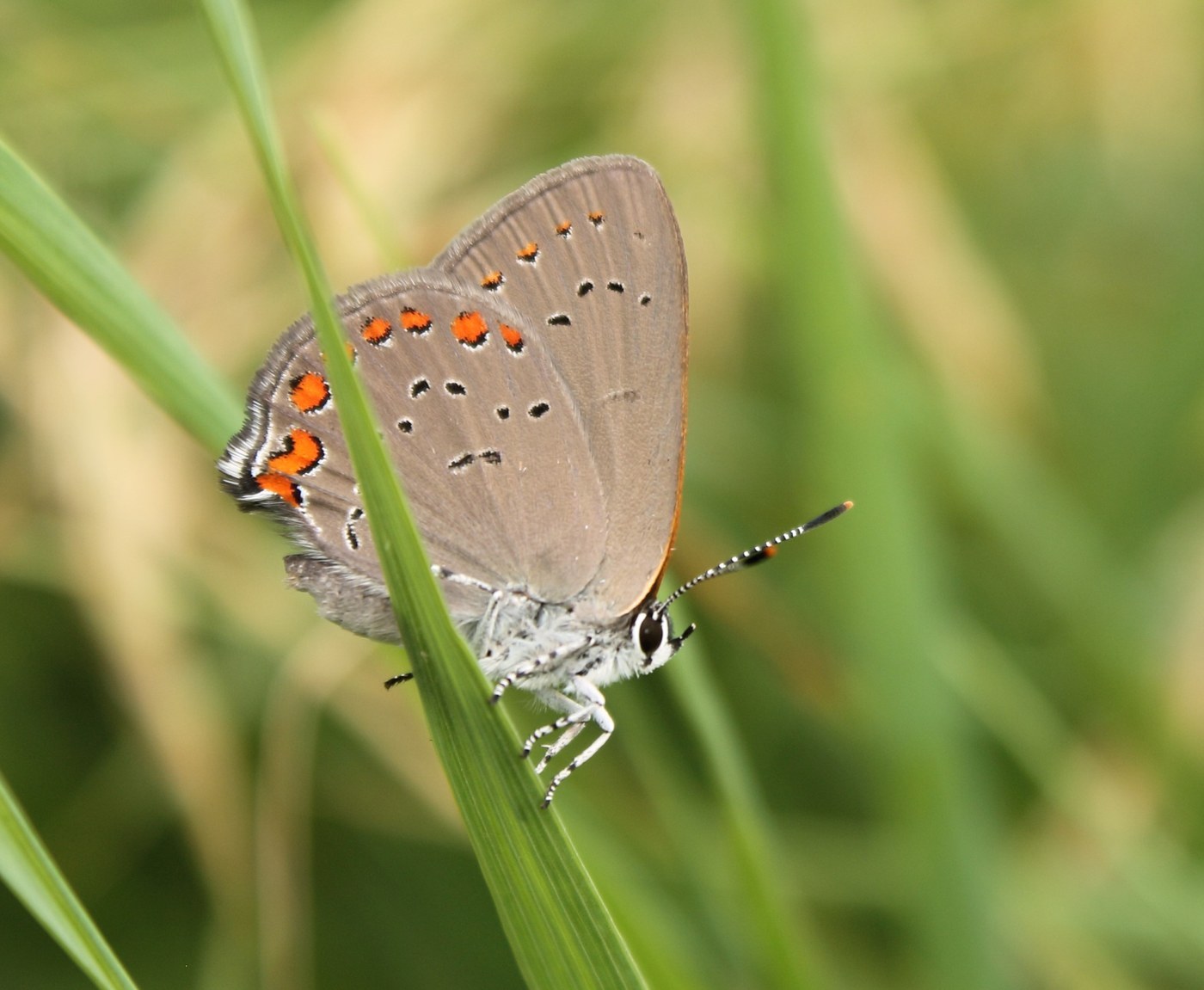
Key Features
The coral hairstreak (Satyrium titus) is a small butterfly with a wingspan of about 1 to 1.375 inches. Distinguishing features include:
- Upperside is plain brown with little pattern, typical of many hairstreaks.
- Underside is gray-brown, decorated with small black spots outlined in white scattered across the wing.
- A row of bright coral-orange spots runs along the outer margin of the hindwing underside, the species' most eye-catching and diagnostic feature.
- Unlike most Satyrium hairstreaks, the coral hairstreak lacks tails on the hindwing, giving it a smoother wing outline.
- Wings are small and rounded overall, with a fairly quick, low flight.
Where and When to Spot It
Coral hairstreaks are found in open fields, prairies, power-line cuts, and woodland edges across much of the eastern and central United States, typically near wild cherry or plum trees that serve as caterpillar host plants. They fly in a single generation during midsummer, generally June through August depending on latitude, and are frequently seen nectaring on milkweed, dogbane, and other summer wildflowers alongside other hairstreaks and skippers.
Similar Species
- Banded hairstreak: Has thin tails on the hindwing and a differently shaped, more jagged white-edged band rather than a clean row of coral spots.
- Acadian hairstreak: Also has tails and a somewhat different arrangement of underside spotting.
- Gray hairstreak: Has a bold orange spot near the tail base rather than a full row of coral spots, and does have tails. The absence of tails combined with the bright coral-orange spot row is the clearest way to confirm this species.
Quick ID Checklist
- Small brown hairstreak with no tails on the hindwing
- Row of bright coral-orange spots along the hindwing margin
- Underside gray-brown with scattered white-ringed black spots
- Single midsummer flight, June through August
- Found near wild cherry/plum in open fields and edges
FAQs
Frequently asked questions
How can I tell a coral hairstreak from other similar hairstreaks?
The coral hairstreak lacks tails on the hindwing entirely, while most similar species have thin tails, and its coral-orange spot row along the margin is especially bold.
What time of year is best to look for coral hairstreaks?
They fly in a single generation during midsummer, typically from June through August depending on location.
What plants are associated with coral hairstreak caterpillars?
Wild cherry and plum trees serve as the primary caterpillar host plants, so nearby open fields and edges are good places to search.
What flowers do adult coral hairstreaks visit?
They are frequently seen nectaring on milkweed, dogbane, and other summer-blooming wildflowers in open habitats.