
Corn Earworm Identification Guide
A spiny, color-variable caterpillar usually found tunneling into the tip of a corn ear.
Read the full Corn Earworm encyclopedia entry →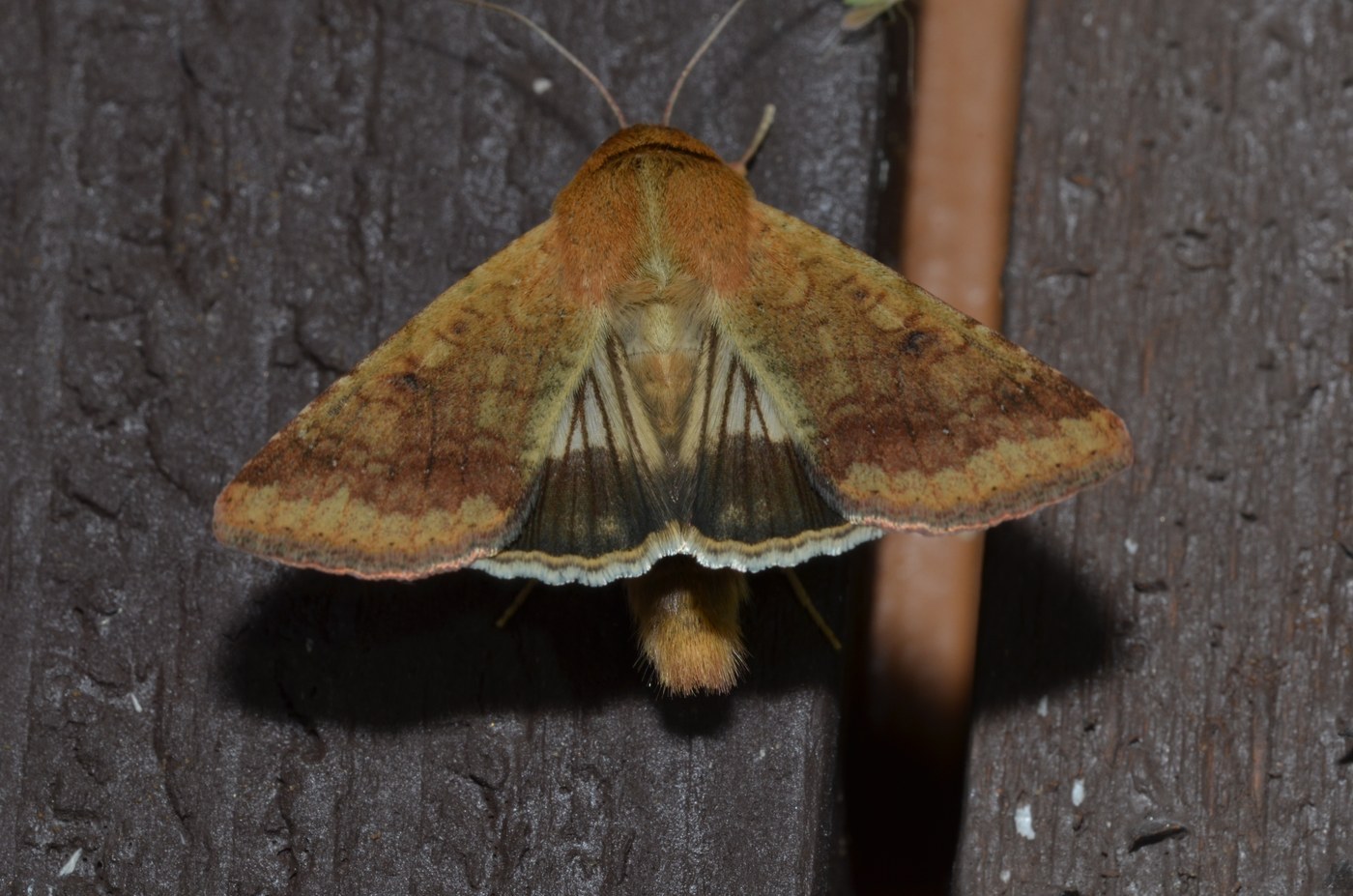
Key Visual Features
The corn earworm is a stout caterpillar that grows to roughly 1.5 to 2 inches long, notable for how much its color can vary even within the same field.
- Color: Ranges widely from pale green or yellow to tan, pink, or dark brown/maroon
- Stripes: Faint light and dark stripes run lengthwise along the body, though visibility depends on the base color
- Texture: Body is covered in short, coarse microspines that give it a slightly rough, bristly feel rather than smooth skin
- Head: Head capsule is orange-brown and unmarked
- Body shape: Thick and cylindrical, tapering slightly toward the rear
Where and When You'll See It
True to its name, the corn earworm is most often found feeding at the tip of a corn ear, having chewed through the silk to reach the kernels beneath. It also attacks tomatoes (where it is called the tomato fruitworm) and cotton bolls (cotton bollworm). Look for it from mid-summer through early fall, peeling back husks or checking fruit for a single entry hole. Only one caterpillar is typically found per ear or fruit, since the species is aggressively cannibalistic toward other caterpillars sharing the same feeding site.
Similar-Looking Bugs
- Fall armyworm: Also feeds on corn but attacks whorls and leaves rather than just the ear tip, and has a clearer pale Y-mark on the head plus four spots on the last segment
- European corn borer: Smooth, pale caterpillar with small dark spots that tunnels inside the stalk rather than the ear tip
- Tomato hornworm: Much larger, smooth-bodied, green with a horn, and found on tomato foliage rather than inside fruit
Quick ID Checklist
- Rough, spiny-textured body, not smooth
- Highly variable color from green to pink to dark brown
- Found singly at the tip of a corn ear or inside a tomato/fruit
- Orange-brown, unmarked head capsule
- Feeds mid-summer through early fall
Frequently asked questions
Why does the corn earworm come in so many colors?
Its color varies with diet, temperature, and individual genetics, ranging from green and yellow to pink, tan, or dark brown, which is why body texture and location are more reliable identification clues than color alone.
Where on the corn plant will I find a corn earworm?
It is typically found at the tip of the ear, having tunneled in through the silk to feed on the kernels beneath the husk.
Why is there usually only one corn earworm per ear?
The caterpillars are cannibalistic toward each other, so when more than one hatches in the same ear, only a single individual typically survives to feed there.
How is a corn earworm different from a fall armyworm on corn?
The corn earworm feeds mainly at the ear tip with a rough, spiny texture, while the fall armyworm feeds on leaves and whorls and shows a distinct pale Y-mark on its head with four spots on its last segment.