
Cotton Bollworm Identification Guide
Learn to recognize this variably colored caterpillar by its spiny skin texture and pale head with dark spots.
Read the full Cotton Bollworm encyclopedia entry →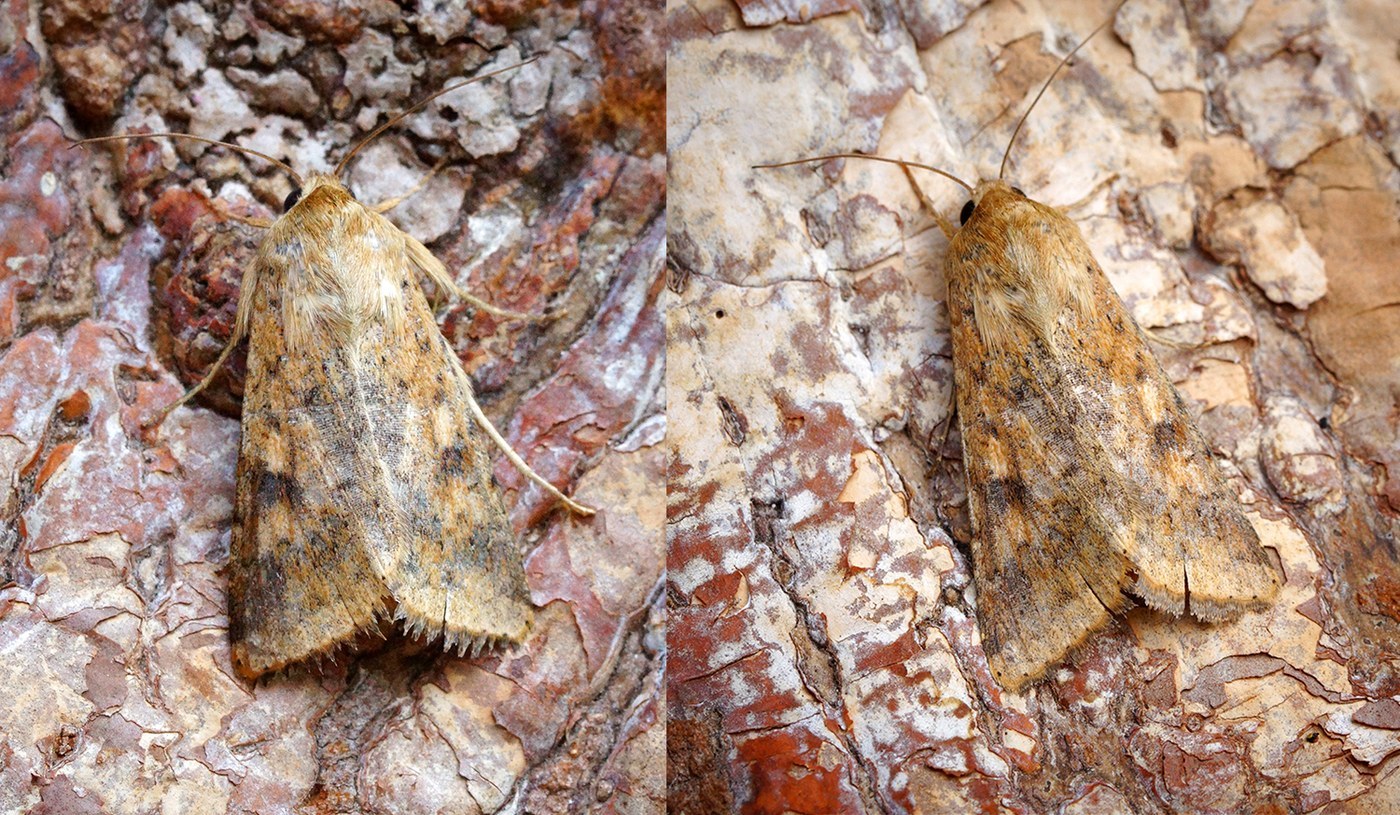
Key Visual Features
The cotton bollworm caterpillar, also known as the corn earworm in some crops, is highly variable in color, so texture and pattern matter more than color alone.
- Mature larvae reach about 1.5 to 2 inches (4-5 cm) long and can range from pale green or yellow to pink, brown, or nearly black, sometimes even on the same plant.
- The skin has a distinctly rough, spiny texture from tiny microspines covering the body, which can be felt or seen with magnification even though there are no large hairs or tufts.
- A pale stripe often runs along each side, and faint darker stripes may run lengthwise down the back, though the intensity of these markings varies with color form.
- The head is pale orange-brown with small dark spots, and the caterpillar has three pairs of true legs near the head plus fleshy prolegs further back.
- Adult moths are medium-sized, about 1.5-inch wingspan, tan to olive-brown with a darker irregular band and a small dark spot near the center of each forewing.
Where and When You'd See It
Cotton bollworm caterpillars feed inside developing fruiting structures such as cotton bolls, corn ears, and tomato fruit, as well as on the leaves and flowers of many other crop and garden plants. Moths are active at night from late spring through fall, laying single eggs on leaves, flowers, or fresh silk, and larvae then bore into buds, bolls, or fruit to feed while partly hidden from view. Multiple generations occur through the warm season, with populations often building through mid to late summer.
Similar-Looking Bugs
- Armyworms have a smoother-looking body and more consistent striping, without the rough, spiny skin texture of the bollworm.
- Cutworms are typically thicker-bodied, smooth, and dull-colored, curling into a tight C-shape when disturbed, unlike the more active, straight-crawling bollworm.
- Tomato hornworms are much larger, bright green, and have a prominent horn at the tail end, easily distinguishing them from the smaller, hornless bollworm.
- Because bollworm color varies so much, the spiny skin texture, pale spotted head, and habit of feeding inside developing fruit or ears are more reliable identification clues than body color alone.
Quick ID Checklist
- Caterpillar color ranges widely from green to brown to nearly black
- Skin has a fine, rough, spiny texture visible up close
- Pale head with small dark spots
- Found boring into buds, bolls, ears, or fruit rather than just leaf surfaces
- Adult moth is tan-olive with a dark band and small spot on each forewing
Frequently asked questions
Why is color not a reliable way to identify a cotton bollworm?
Larvae vary widely in color from green to yellow, pink, brown, or nearly black, sometimes even within the same batch, so texture and pattern are more consistent identifying features.
How can I tell a bollworm from a tomato hornworm?
The tomato hornworm is much larger, uniformly bright green, and has a distinct horn at its rear, while the bollworm is smaller, spiny-skinned, and hornless.
Where on the plant do cotton bollworm caterpillars typically feed?
They usually bore into developing buds, bolls, ears, or fruit rather than staying exposed on leaf surfaces.
What does the adult cotton bollworm moth look like?
It is a tan to olive-brown moth with roughly a 1.5-inch wingspan, featuring a darker irregular band and a small dark spot on each forewing.