
Cotton Bollworm
Helicoverpa armigera
A variably colored caterpillar, ranging from green to brown to nearly pink, that burrows into cotton bolls, corn ears, and tomato fruit, feeding concealed inside the very structures it damages.
- Size
- Larva up to 1.5–2 in (38–50 mm); adult moth wingspan about 1.5 in (35–40 mm)
- Habitat
- Cotton, corn, tomato, legume, and other row-crop fields
- Danger
- Nuisance pest
Spotted a bug like this?
Identify any bug or insect from a photo, free.
Overview
The cotton bollworm is among the most economically significant caterpillar pests of agricultural crops worldwide, attacking cotton bolls as well as a very wide range of other crops including corn, tomato, chickpea, and many other vegetables and field crops. Its extremely broad host range and strong flight capability as an adult moth have made it a persistent challenge across cotton- and crop-growing regions of Africa, Asia, Europe, and Australia, with a closely related New World species, the corn earworm (Helicoverpa zea), filling a similar ecological role in the Americas.
Larvae are notable for their variable coloration, ranging from green to brown, pink, or nearly black even within the same brood, which can make visual identification tricky without close attention to other features such as the pattern of stripes along the body. They are also cannibalistic at higher densities, often resulting in only one or two larvae surviving to maturity within a single cotton boll or corn ear despite many eggs being laid.
Adult moths are strong, far-ranging fliers capable of migrating long distances between crop-growing regions, which contributes to the species' wide distribution and its capacity to recolonize areas quickly each growing season.
How to Identify
- Larva color highly variable, ranging from pale green to yellow-brown, reddish-brown, or nearly black, often with faint pale stripes running the length of the body
- Body covered in short, sparse spines set on small raised bumps, giving a slightly rough texture compared to smoother caterpillars
- Mature larva reaches roughly 1.5–2 in (38–50 mm) in length
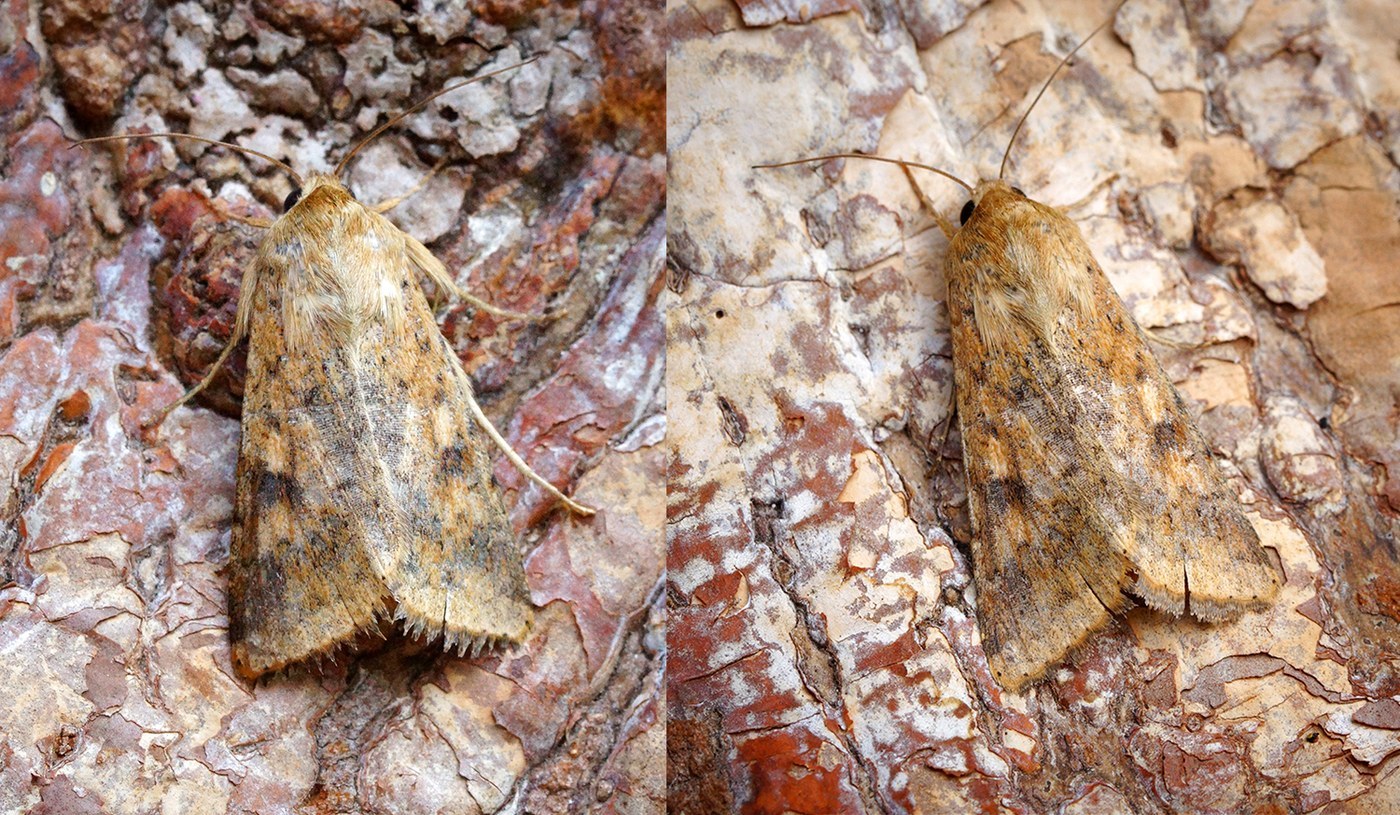
- Adult moth is stout-bodied with forewings ranging from pale tan to olive-brown, often with a faint darker kidney-shaped mark, and paler hindwings with a dark border
- Lookalike: corn earworm (Helicoverpa zea) in the Americas, which is nearly identical in appearance and closely related, filling a similar role on corn, tomato, and other crops
Habitat & Range
Native to and widespread across Africa, Asia, Europe, and Australia, with a closely related counterpart species established throughout the Americas. Found wherever host crops such as cotton, corn, tomato, and legumes are grown, from smallholder gardens to large commercial fields, with activity and generation number varying by climate, generally increasing in warmer regions with longer growing seasons.
Behavior & Diet
Larvae feed by boring directly into fruiting structures such as cotton bolls, corn ears, and tomato fruit, often entering near the tip and feeding concealed inside, which protects them from many predators while they consume developing seeds and fruit tissue. Younger larvae may feed briefly on foliage or flowers before moving to bore into fruiting parts, and cannibalism among larvae sharing the same boll or ear is common. Adult moths are capable of sustained long-distance flight and often migrate between regions and crop types across a season, contributing to the species' broad distribution and its status as a major agricultural pest.
Life Cycle
Development is complete metamorphosis, with multiple overlapping generations possible per year in warm climates. Eggs are laid singly on host plant foliage, flowers, or developing fruit and hatch within a few days; larvae pass through six instars over roughly two to four weeks, feeding increasingly inside fruiting structures as they mature, before dropping to the soil to pupate. In regions with cold winters the species typically overwinters as a pupa in the soil, with adults emerging in spring to begin the first generation of the season.
Frequently asked questions
Why does the cotton bollworm caterpillar look so different from one individual to the next?
Larval coloration is highly variable even within the same egg batch, ranging from green to brown to nearly black, so color alone is not a reliable way to identify this species.
Why is only one caterpillar often found in a cotton boll or corn ear despite many eggs being laid nearby?
Larvae of this species are cannibalistic when crowded together, so competition inside a single boll or ear often leaves only one or two survivors even from a much larger initial hatch.
How is the cotton bollworm related to the corn earworm?
They are closely related species in the same genus that look nearly identical and fill a similar ecological role, with the cotton bollworm widespread across Africa, Asia, Europe, and Australia and the corn earworm as its counterpart throughout the Americas.
How far can adult cotton bollworm moths travel?
Adults are strong fliers capable of sustained long-distance migration, which allows the species to move between crop regions and contributes to its wide geographic distribution.
Cotton Bollworm guides
In-depth guides for identifying, understanding, and living alongside Cotton Bollworm.
Other bugs you may enjoy
Bagworm
Trees and shrubs, especially conifers and ornamental landscaping
Armyworm
grasslands, pastures, and cereal crop fields
Zebra Longwing Caterpillar
Tropical and subtropical hammocks with passionflower vines
Tomato Hornworm
Gardens and fields with tomato, pepper, and other nightshade plants
Tent Caterpillar
Deciduous trees such as cherry, apple, and other rosaceous species
Tobacco Hornworm
tobacco, tomato, and pepper plants in gardens and fields
Woolly Bear Caterpillar
Gardens, meadows, roadsides, and woodland edges across North America
Sod Webworm
Turfgrass lawns, golf courses, pastures
Spiny Oak-slug Caterpillar
Deciduous forests and woodland edges with oak and other hardwoods
Saddleback Caterpillar
Deciduous trees and shrubs in eastern and southern North America
Stinging Rose Caterpillar
Gardens and woodlands with rose, dogwood, or oak
Silkworm
Reared exclusively in captivity on mulberry leaves; no independent wild population