Cuckoo Bee Identification Guide
Learn to spot cuckoo bees by their sparse, wasp-like appearance and lack of pollen-carrying hairs, a sign they don't build their own nests.
Read the full Cuckoo Bee encyclopedia entry →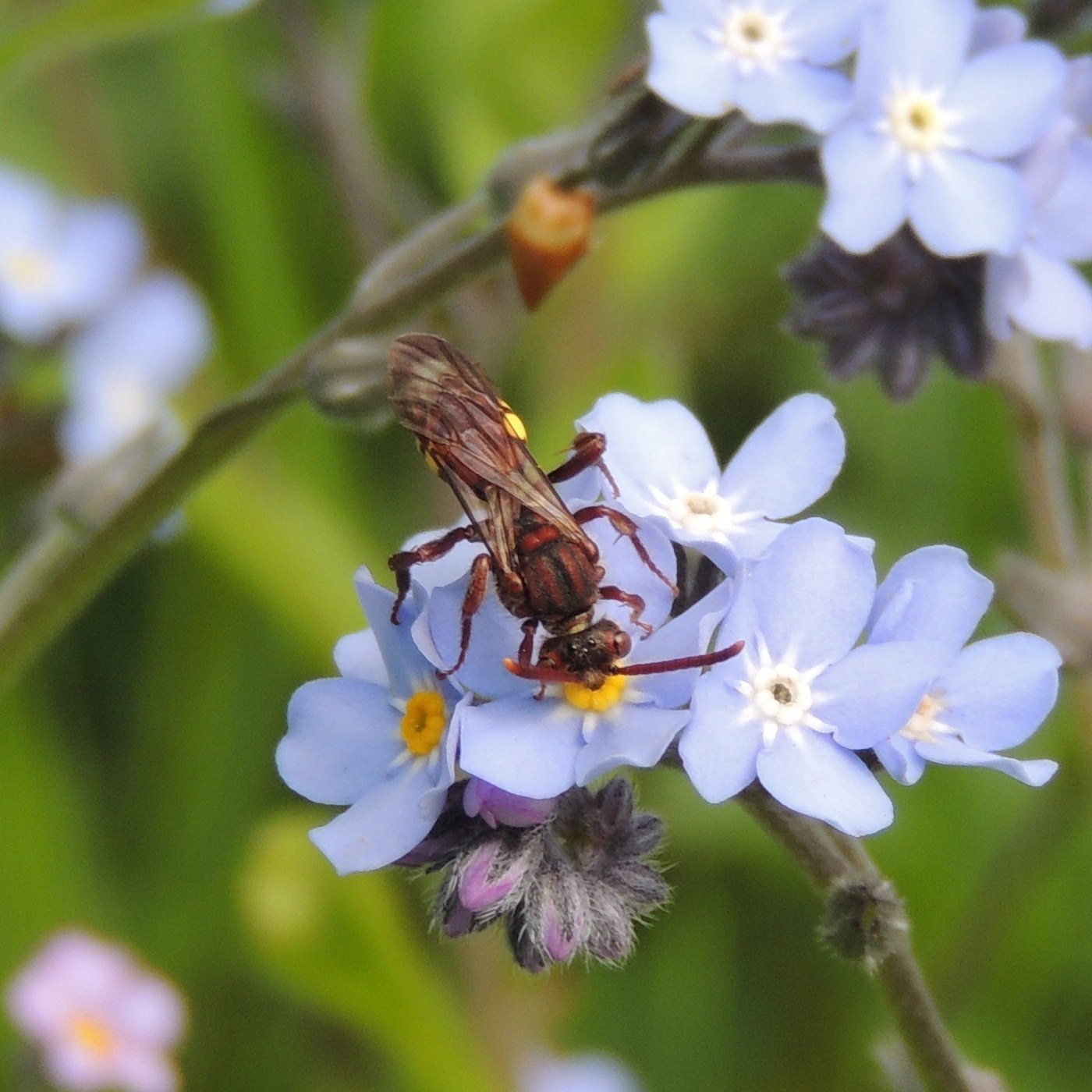
Key Visual Features
Cuckoo bees (several genera, including Nomada) look quite different from the fuzzy bees most people picture:
- Slender, streamlined body with a distinctly wasp-like silhouette
- Sparse hair overall, giving a smooth, shiny rather than fuzzy appearance
- No dense pollen-carrying hairs (scopa) on the legs or abdomen, since these bees don't collect pollen to provision their own nests
- Coloring often reddish-brown, black, and yellow in mixed patterns, reminiscent of a small wasp
- Narrow waist area that can make the abdomen look somewhat separated from the thorax at a glance
Where and When You'll See Them
Because cuckoo bees are nest parasites — they lay their eggs in the nests of host bee species, most often mining bees and digger bees — you'll typically find them hovering low and searching persistently over the same ground where their host species nest. Their activity season closely tracks that of their host bees, generally spring through summer, and they can often be seen loitering near burrow aggregations rather than visiting flowers extensively.
Similar-Looking Bugs
- Cuckoo bees are frequently mistaken for small wasps because of their sparse hair and slender build, but their antennae shape and general bee-like proportions help set them apart on close look.
- Fuzzy solitary bees like mining or digger bees have dense, hairy bodies and visible pollen-carrying structures, which cuckoo bees conspicuously lack.
- Behavior is a strong clue: cuckoo bees loiter and search near host nest sites rather than actively foraging for pollen at flowers.
Quick ID Checklist
- Slender, sparsely haired, wasp-like body
- No visible pollen-carrying hairs on legs or abdomen
- Reddish-brown, black, and yellow mixed coloring
- Found hovering near host bee nest aggregations, not flowers
- Active during the same season as host bee species
Frequently asked questions
Why does a cuckoo bee look more like a wasp than a bee?
It has sparse hair and a slender, smooth body because it doesn't collect and carry pollen like typical bees, giving it a wasp-like appearance.
Why don't cuckoo bees have pollen-carrying hairs?
They don't provision their own nests with pollen; instead they lay eggs in the nests of host bee species, so they lack the dense scopa hairs used for pollen transport.
Where would I typically spot a cuckoo bee?
Look for them hovering low and searching persistently near the burrow aggregations of host bee species, such as mining or digger bees, rather than at flowers.
When are cuckoo bees active?
Their activity period closely matches that of their host bee species, generally spanning spring through summer.
Cuckoo Bee identified by the community
Recent Cuckoo Bee finds identified with Bug Identifier.