
Cucumber Beetle Identification Guide
Learn to identify the yellow-green, spotted or striped beetle commonly seen on cucumber, squash, and melon vines.
Read the full Cucumber Beetle encyclopedia entry →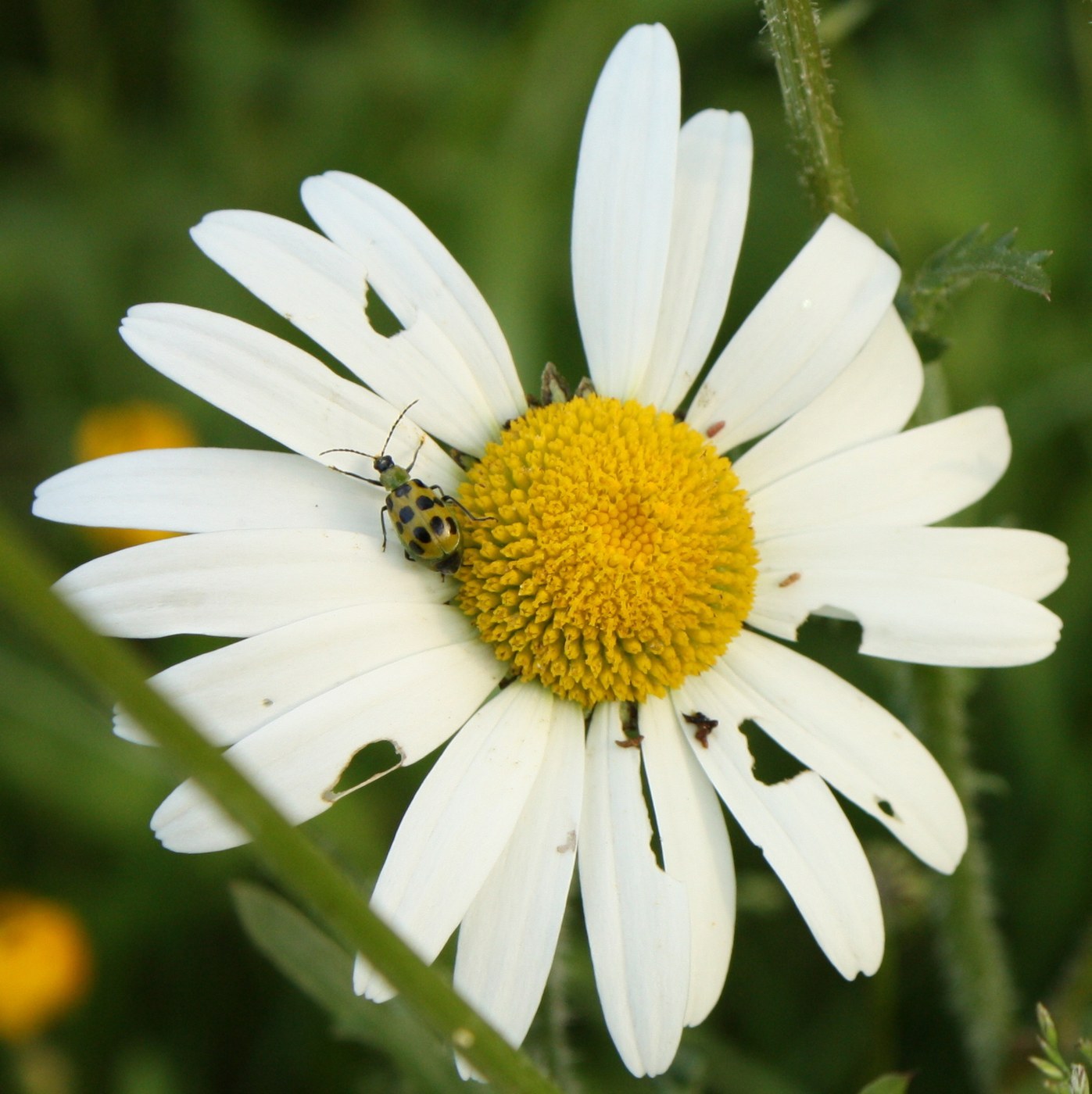
Key Visual Features
Cucumber beetles come in two common color forms — spotted and striped — but share a similar overall size and shape that makes the group easy to recognize once you know the pattern.
- Size: Small, about 0.5 to 0.7 centimeters long.
- Body shape: Elongated-oval and somewhat flattened, narrower and less domed than many other leaf beetles.
- Spotted form: Yellow-green wing covers marked with eleven or twelve black spots arranged in rows; the head and legs are typically black.
- Striped form: Pale yellow wing covers marked with three bold black longitudinal stripes running the length of the body, with a black head and yellow-black legs.
- Antennae: Thread-like, moderately long, dark in color.
- Larvae: Slender, whitish, worm-like grubs with a brown head, living in soil where they feed on roots — rarely seen above ground.
Where and When You'd See Them
Cucumber beetles appear in gardens and fields as soon as cucumber, squash, melon, and other vine crops emerge in late spring, and remain active through summer into early fall. They are most easily spotted on the leaves, flowers, and stems of vine crops during warm daylight hours, often clustering inside open flowers or along young, tender growth. Populations tend to be highest in early summer when new vine crops are establishing.
Similar-Looking Bugs
- Colorado potato beetle: Larger and more strongly domed, with bold orange-and-black striping rather than the flatter, pale-yellow-and-black pattern of a cucumber beetle.
- Ladybird beetles: Rounder and more strongly domed, usually red or orange with black spots, versus the flatter, yellow-green body of a spotted cucumber beetle.
- Flea beetles: Much smaller and shinier, typically solid black or bronze, and known for jumping suddenly when disturbed, unlike the more deliberate movement of cucumber beetles.
- Squash beetles: Similarly yellow-orange and spotted, but larger and more rounded, closely resembling an oversized ladybird beetle rather than the flatter cucumber beetle.
Quick ID Checklist
- Small, elongated-oval body, about 0.5–0.7 cm long
- Yellow-green with black spots, or pale yellow with three black stripes
- Black head, thread-like antennae
- Found on leaves, flowers, and stems of cucumber, squash, and melon plants
- Most active and visible during warm daylight hours in late spring through summer
Frequently asked questions
What are the two common color forms of cucumber beetles?
A spotted form with yellow-green wing covers and black spots, and a striped form with pale yellow wing covers marked by three black longitudinal stripes.
How can I tell a cucumber beetle from a flea beetle?
Cucumber beetles are larger, patterned with spots or stripes, and move more deliberately, while flea beetles are smaller, usually solid dark, and jump suddenly when disturbed.
Where on the plant do cucumber beetles congregate?
They are commonly found on leaves, open flowers, and young tender stems of vine crops such as cucumber, squash, and melon.
What do cucumber beetle larvae look like?
Slender, whitish, worm-like grubs with a brown head that live in the soil and are rarely seen above ground, unlike the visible spotted or striped adults.