Culex Mosquito Identification Guide
Uniformly brown and blunt-tailed, Culex mosquitoes rest nearly flat against surfaces and favor stagnant, organically rich water for breeding.
Read the full Culex Mosquito encyclopedia entry →Key Visual Features
Culex mosquitoes are a widespread genus known for their plain coloring and characteristic body shape.
- Size: Medium, about 4-8 mm long depending on species.
- Body color: Brown to grayish-brown, generally without bold contrasting stripes or patches.
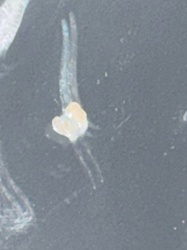
- Abdomen shape: Blunt-tipped abdomen, ending in a rounded rather than pointed tip when viewed from below, a useful field mark up close.
- Wings: Clear, evenly scaled wings without strong mottling, folded flat over the back at rest.
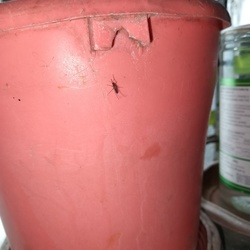
- Resting posture: Rests with the body close to and roughly parallel to the surface, not at the steep angle seen in Anopheles.
- Palps: Short palps, much shorter than the proboscis, distinguishing it from Anopheles mosquitoes at close range.
Where and When You'll See It
- Common in urban, suburban, and rural areas across a wide range of climates.
- Breeds in stagnant, often organically enriched water, including catch basins, clogged gutters, unused pools, and containers with decaying debris.
- Most active from dusk into the night, with adults resting in shaded, sheltered areas during the day.
- Frequently enters buildings, making it one of the more commonly encountered indoor mosquitoes.
Similar-Looking Bugs
- Anopheles mosquito: Rests at a steep, head-down angle with long palps nearly as long as the proboscis, unlike the flatter resting posture and short palps of Culex.
- Aedes mosquito: Typically shows sharp black-and-white banding on the legs and body, while Culex appears more uniformly brown.
- Common house mosquito: Actually a member of the Culex genus itself, sharing the same plain brown coloring and flat resting posture.
Quick ID Checklist
- Plain brown to grayish-brown body without bold stripes
- Blunt, rounded abdomen tip
- Short palps, much shorter than the proboscis
- Rests nearly flat, parallel to the surface
- Breeds in stagnant, organically rich standing water
Frequently asked questions
How can I tell a Culex mosquito apart from an Anopheles mosquito?
Check the resting posture and palps: Culex rests nearly flat with short palps, while Anopheles rests at a steep angle with long palps nearly as long as its proboscis.
What does the abdomen tip look like on a Culex mosquito?
It has a blunt, rounded tip rather than a pointed one, which is a helpful close-up feature for confirming identification.
Where do Culex mosquitoes prefer to breed?
They favor stagnant, often organically enriched water sources such as clogged gutters, catch basins, and neglected containers with decaying debris.
Is the common house mosquito a type of Culex mosquito?
Yes, the common house mosquito (Culex pipiens) is one of the most widespread species within the Culex genus, sharing its plain coloring and flat resting posture.
Culex Mosquito identified by the community
Recent Culex Mosquito finds identified with Bug Identifier.