Daddy Longlegs Identification Guide
Learn how a harvestman's single fused body and extremely long legs set it apart from true spiders.
Read the full Daddy Longlegs encyclopedia entry →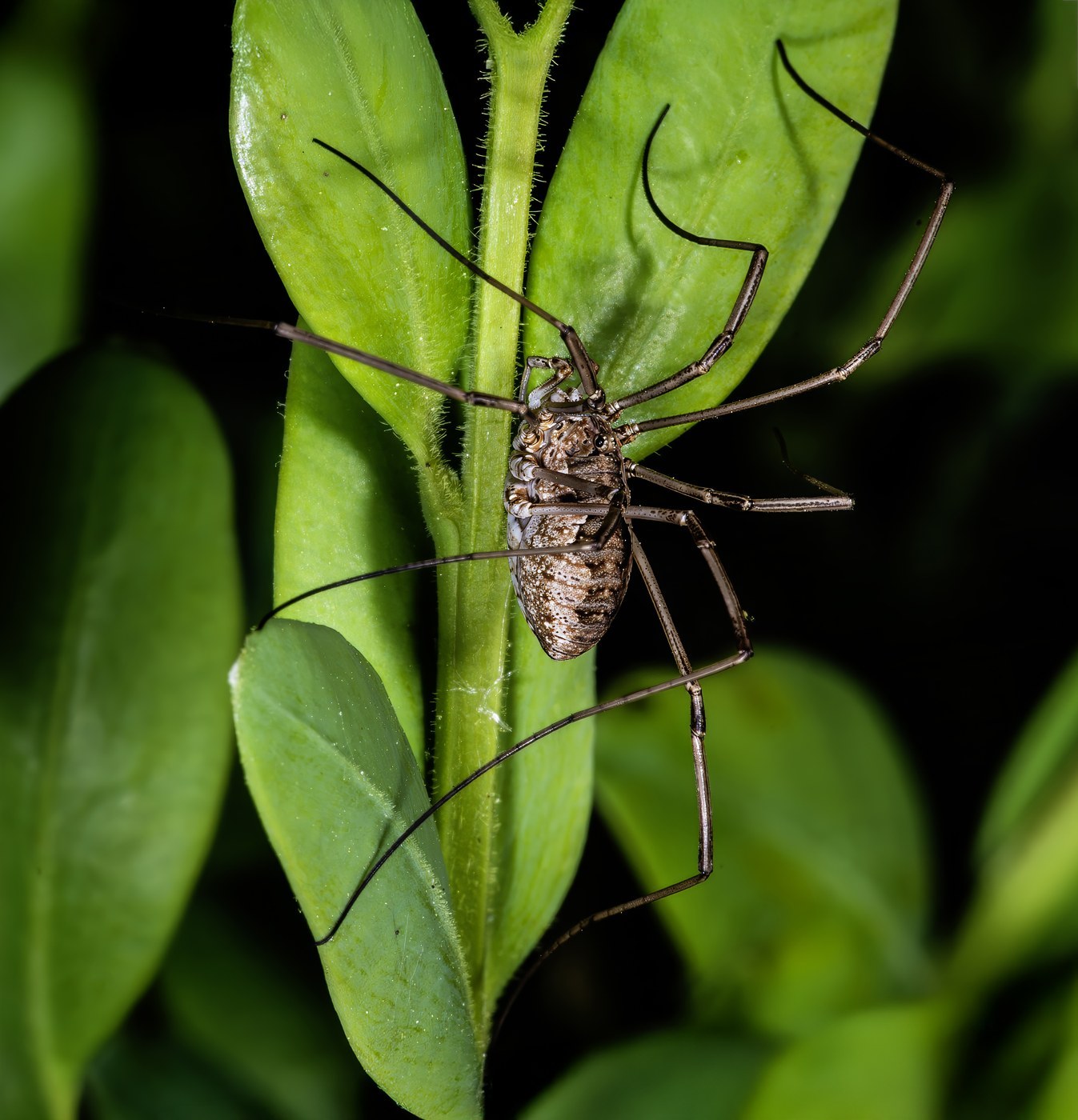
Key Visual Features
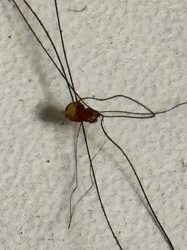
- A single, oval, fused body with no visible separation between a cephalothorax and abdomen, unlike true spiders
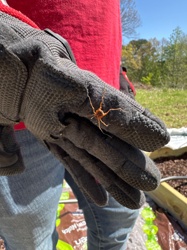
- Extremely long, thin legs that are many times the length of the body, giving the animal its familiar silhouette
- Body typically under 1/4 inch, with legs that can span several inches when fully extended
- Two simple eyes positioned on a small raised turret in the middle of the body, rather than the multiple eye clusters seen on spiders
- Tan, brown, or gray coloring, sometimes with subtle mottling, and legs often held bent so the body sits raised above the surface
- No silk-producing spinnerets and no fangs, which sets the internal anatomy apart from true spiders even though the overall silhouette looks similar
Where and When You'll See Them
- Damp, shady habitats: under logs, in leaf litter, garden beds, basements, and garages
- Often seen clustered together in groups, especially in fall, sometimes forming dense knots of many individuals
- Most active at dusk and night, moving about as an omnivorous scavenger feeding on small invertebrates and organic debris
- Legs are easily shed if grabbed by a predator and do not regrow, which is a notable defensive trait
- Common and widespread across many habitats worldwide, from forests to suburban yards
Similar-Looking Bugs
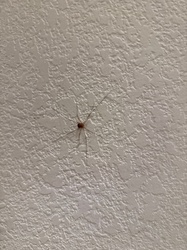
- Frequently confused with true spiders, especially cellar spiders, which are also sometimes called "daddy longlegs" in some regions but have two clearly separate body segments joined by a narrow waist and build a loose web
- Harvestmen (the true daddy longlegs) have a single fused oval body segment and never build webs
- Crane flies, an insect sometimes nicknamed "daddy longlegs," have six legs and a pair of wings, unlike the eight legs and wingless body of a harvestman
Quick ID Checklist
- Single oval body with no waist
- Extremely long, thin legs
- Two eyes on a small central turret
- No web-building behavior
- Often found clustered in groups in damp, shaded spots
Frequently asked questions
Is a daddy longlegs a spider?
No - harvestmen belong to a different arachnid order (Opiliones), distinct from true spiders, with a single fused body segment instead of two.
Do daddy longlegs spin webs?
No, harvestmen do not produce the type of silk needed to build a web.
Why do they cluster together in groups?
Some harvestman species show this grouping behavior, most noticeably in fall, though the exact reason can vary by species.
How do I tell a harvestman from a cellar spider?
Check the body shape - a harvestman has one fused oval body segment, while a cellar spider has two segments joined by a narrow waist and typically hangs in a loose web.
Daddy Longlegs identified by the community
Recent Daddy Longlegs finds identified with Bug Identifier.