
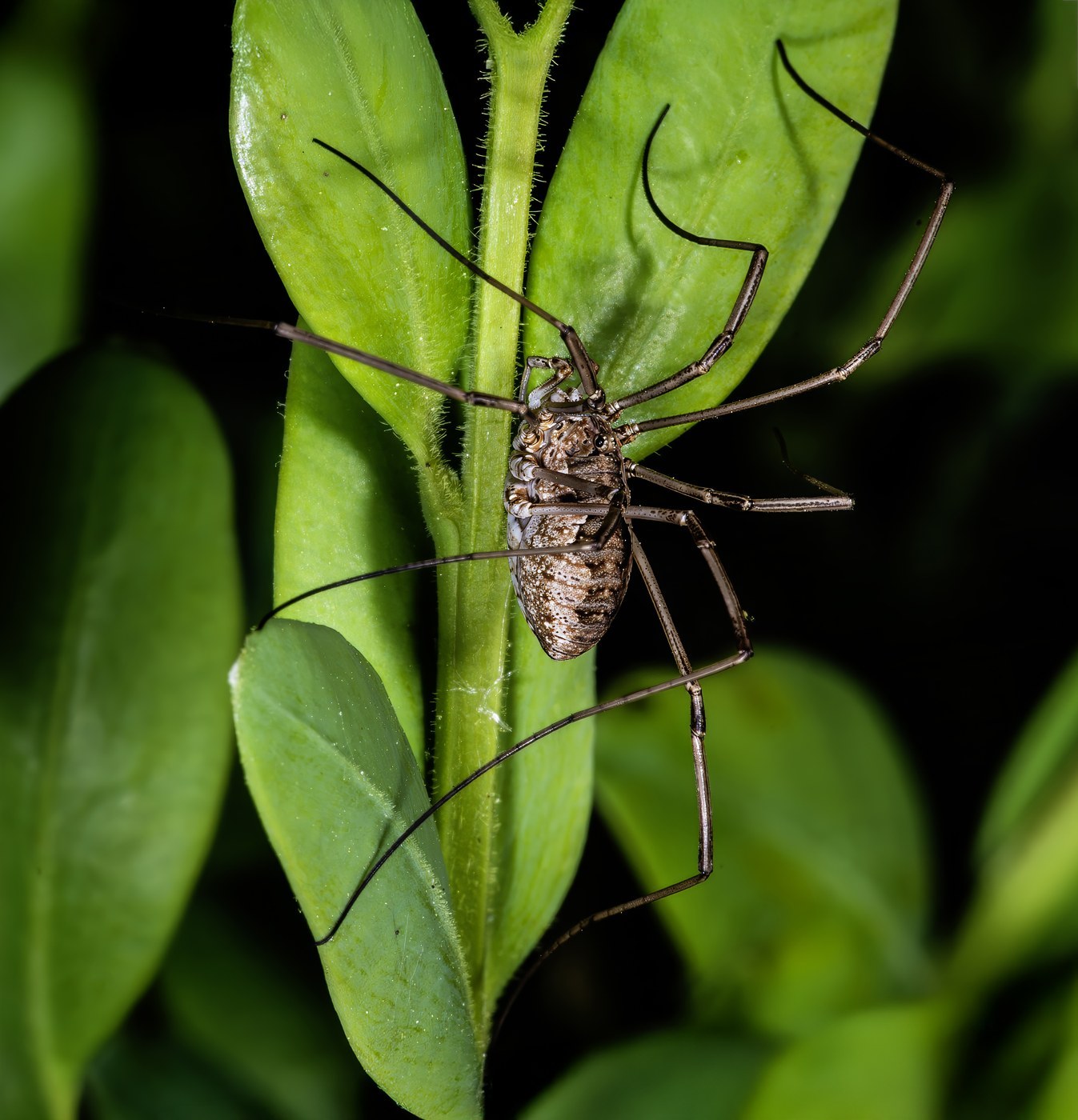
Daddy Longlegs
Phalangium opilio
A small, oval-bodied arachnid carried on extremely long, thread-like legs, distinct from true spiders in having a one-piece fused body and no silk glands or web.
- Size
- 5–10 mm body, legs to 50+ mm
- Habitat
- Gardens, forests, leaf litter, damp shaded areas
- Danger
- Harmless
Spotted a bug like this?
Identify any bug or insect from a photo, free.
Overview
'Daddy longlegs' is a common name most precisely applied to harvestmen, arachnids in the order Opiliones, though the same name is sometimes used regionally for cellar spiders or crane flies. True harvestmen, such as the widespread Phalangium opilio, are easily recognized by a small, compact, oval body carried on extremely long, thin legs.
Unlike spiders, harvestmen have a body that appears as a single fused segment rather than a clearly divided cephalothorax and abdomen, and they lack silk glands and venom glands entirely, placing them in a distinct order within the class Arachnida. They are found on every continent except Antarctica, with thousands of described species worldwide.
Harvestmen are notable in the natural world as generalist scavengers and predators that play a quiet but useful role in leaf-litter and garden ecosystems, feeding on a mix of small invertebrates, fungi, and decaying organic matter.
How to Identify
- Body: small, oval, and compact, appearing as a single fused unit rather than the two distinct body regions seen in true spiders.
- Legs: extremely long and thread-like, often many times the length of the body, giving the animal its common name.
- Size: body length about 5–10 mm, with a leg span that can exceed 50 mm in some species.
- Eyes: typically a single simple pair mounted on a small raised turret at the center of the body.
- Lookalikes: often confused with cellar spiders (family Pholcidae), which have a two-part spider body and spin webs; true harvestmen have a one-piece body and build no web at all.
Habitat & Range
Harvestmen are found worldwide in a wide variety of habitats including gardens, forests, meadows, and leaf litter, as well as around building exteriors and damp outdoor structures. They favor shaded, moist microhabitats where their preferred food sources are abundant.
They are most active from summer into fall in temperate regions, often seen in gatherings on tree trunks, fences, or walls, particularly during warm, humid evenings.
Behavior & Diet
Harvestmen are generalist omnivores, feeding on small invertebrates, plant material, fungi, and decomposing organic matter, making them useful scavengers within their ecosystems. Unlike spiders, they have no silk glands and do not build webs, instead moving about actively on their long legs to forage.
A notable defensive behavior is voluntary leg loss (autotomy): a harvestman can shed a leg if grabbed by a predator, and the detached leg may continue twitching briefly as a distraction. Some species also release a mildly odorous defensive secretion from scent glands when threatened.
Life Cycle
Harvestmen undergo simple, direct arachnid development: egg, several nymphal instars, and adult, with no pupal stage and no metamorphosis into a distinctly different juvenile form. Females lay eggs in soil or leaf litter, often in damp, protected microhabitats.
In temperate climates, many species complete one generation per year, with eggs overwintering and nymphs emerging in spring to mature by summer. Adults of most species live only a single season, dying off with the onset of cold weather after reproducing.
Frequently asked questions
Is a daddy longlegs a spider?
Not the harvestman type—true harvestmen belong to a separate arachnid order (Opiliones) with a one-piece body and no silk glands, distinct from true spiders.
Do daddy longlegs make webs?
No, harvestmen do not produce silk or build webs; that behavior belongs to the unrelated cellar spider, which is sometimes also called 'daddy longlegs.'
Why are the legs so long?
The elongated legs help harvestmen navigate uneven terrain like leaf litter and vegetation while foraging.
What do daddy longlegs eat?
They are generalist feeders, consuming small invertebrates, fungi, plant matter, and decaying organic material.
Daddy Longlegs guides
In-depth guides for identifying, understanding, and living alongside Daddy Longlegs.
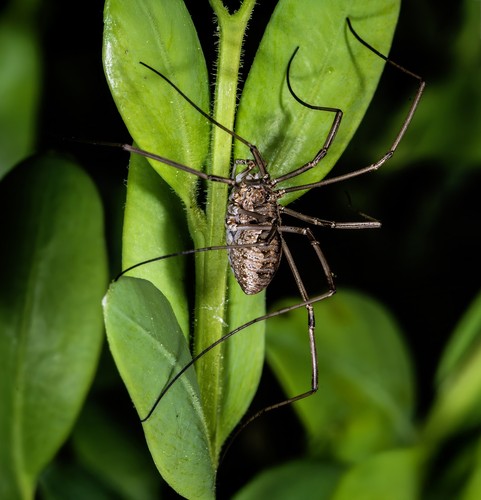
Daddy Longlegs identified by the community
Real finds identified with Bug Identifier.
Other bugs you may enjoy
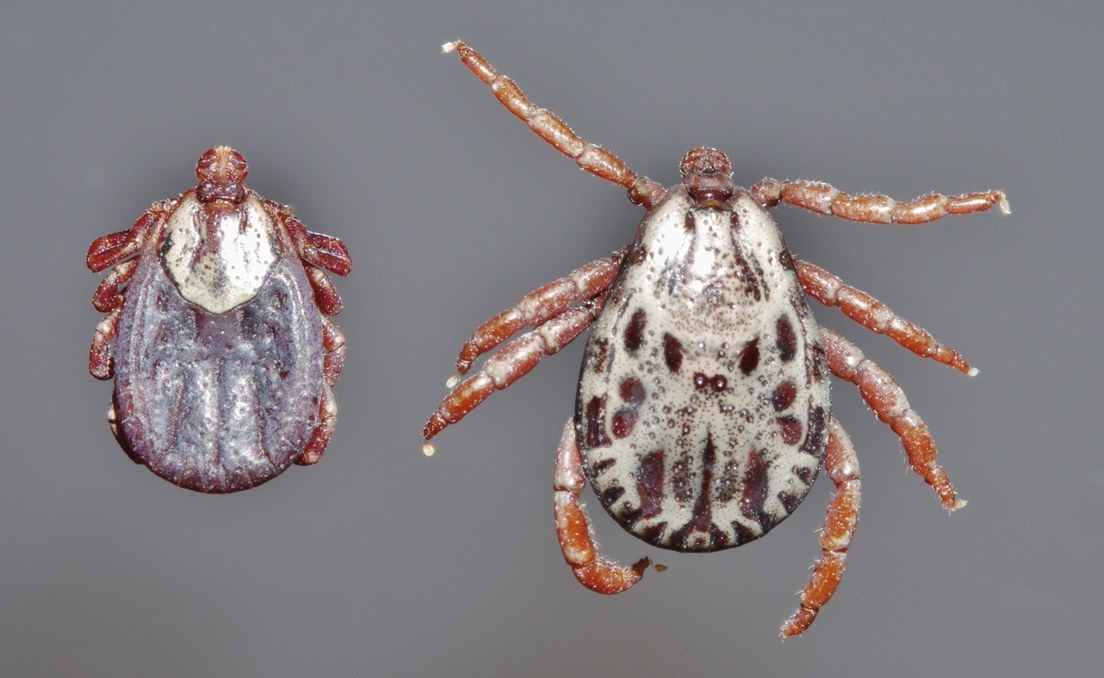
Wood Tick
Grassland, shrub-steppe, and open woodland of western North America
Yellow Scorpion
Arid scrubland, rocky slopes, and desert margins
Whip Spider
Tropical caves, rainforest leaf litter, and under bark
Water Mite
Ponds, lakes, streams, and other freshwater bodies
American Dog Tick
Grassy fields, trails, and low vegetation near woodlands
Arizona Bark Scorpion
Rocky desert terrain, tree bark, and structures in the Southwest
Tick
Tall grass, brush, woodland edges, and animal trails
Soil Mite
Soil, leaf litter, moss, and decaying organic matter worldwide
Rocky Mountain Wood Tick
Sagebrush shrublands, grasslands, and montane forest edges
Two-Spotted Spider Mite
Undersides of leaves on garden plants, crops, and houseplants
Spider Mite
Undersides of leaves on garden plants, houseplants, and field and orchard crops worldwide
Whip Scorpion
Tropical and subtropical caves, tree bark, and rock crevices worldwide