Damselfly Identification Guide
Spot a damselfly by its slender body, widely spaced eyes, and wings folded along its back.
Read the full Damselfly encyclopedia entry →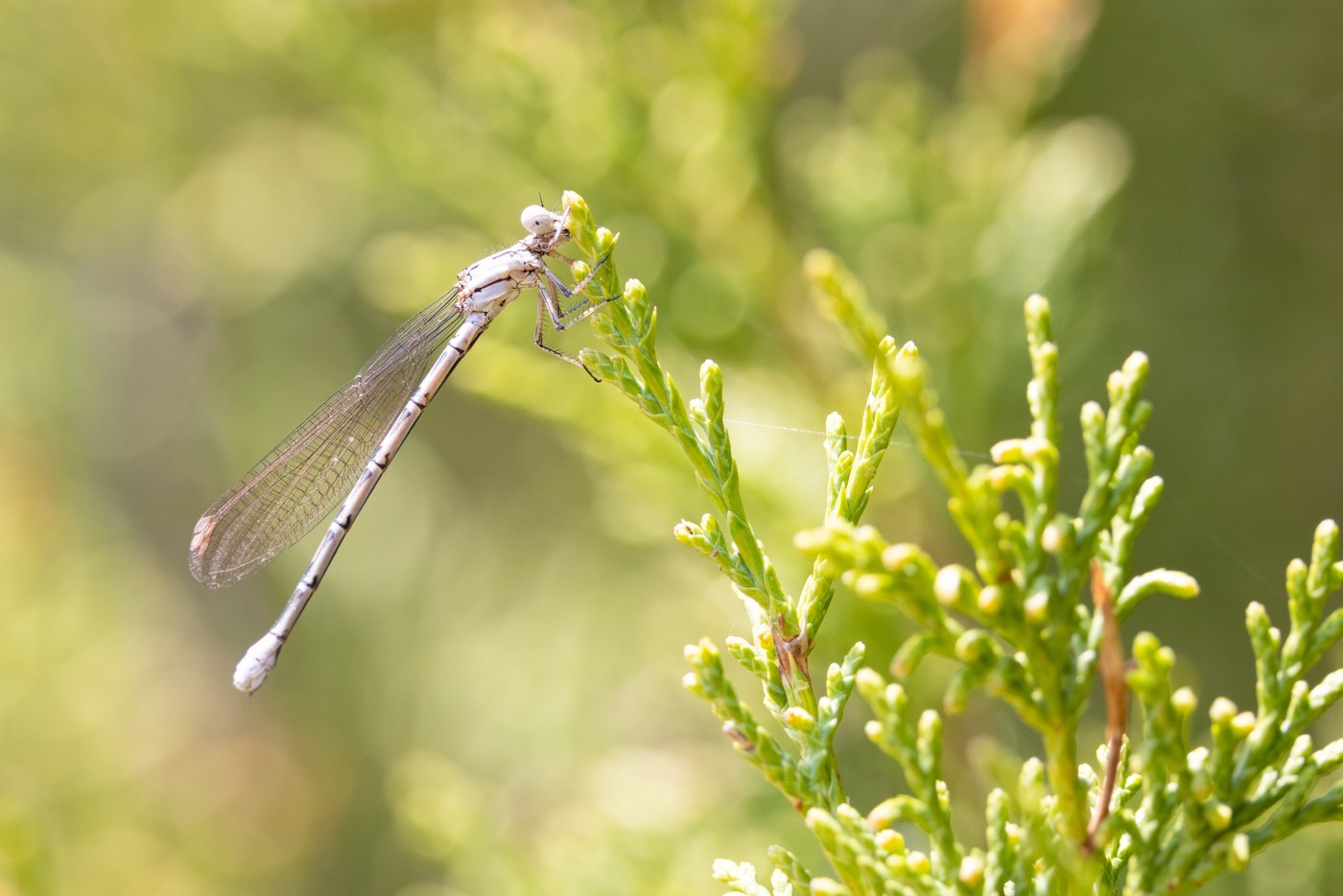
Key Visual Features
Damselflies (suborder Zygoptera) are slim, delicate relatives of dragonflies, generally more slender and often smaller-bodied. Their compound eyes are distinctly separated on either side of the head, never touching, which gives the head a dumbbell-like shape when viewed from above. At rest, damselflies hold their two pairs of narrow, similarly shaped wings together, folded along or over the top of the abdomen, rather than spread flat—this is the single most reliable field mark distinguishing them from dragonflies. Their flight is noticeably weaker and more fluttery. Coloring is often striking, with metallic blues, greens, or reds common on the thorax and abdomen.
Where and When You'll See It
Damselflies favor calmer waters than many dragonflies, including slow-moving streams, ponds, marshes, and vegetated shorelines. Adults are typically seen perched on grasses, reeds, or low shoreline plants near water, often staying close to cover rather than patrolling open water the way many dragonflies do. Rather than cruising long stretches of open water, they tend to make short, hopping flights between nearby perches, pausing frequently with wings closed. They are active during the day, with peak numbers from spring through summer in most temperate regions, and are especially easy to find on calm, sunny mornings when they bask on streamside vegetation to warm up.
Similar-Looking Bugs
- Dragonflies: The main lookalike. Dragonflies have eyes that touch at the top of the head, hold their wings flat and outstretched at rest, and have a stouter body with stronger, more direct flight.
- Mayflies: Slender-bodied and found near water, but with wings held upright together in a sail-like fashion and long, thread-like tail filaments not seen on damselflies.
- Lacewings: Delicate and winged, but with a different wing shape (broad and net-veined) and much shorter, less elongated abdomen.
Quick ID Checklist
- Wings folded together over or along the abdomen at rest
- Eyes clearly separated on the sides of the head
- Slender, delicate body, often metallic blue, green, or red
- Weak, fluttery flight compared to dragonflies
- Found perched on vegetation near calm, slow-moving water
Frequently asked questions
How do I quickly tell a damselfly from a dragonfly?
Check the wing position at rest: a damselfly folds its wings together over or along its body, while a dragonfly holds its wings flat and open.
Why does a damselfly's flight look different from a dragonfly's?
Damselflies have a lighter build and weaker wing muscles relative to their body, giving them a fluttery, less direct flight compared to a dragonfly's strong, fast flight.
What kind of water do damselflies prefer?
They tend to favor calmer habitats such as slow streams, ponds, and marshy shorelines with plenty of vegetation to perch on.
Are a damselfly's eyes different from a dragonfly's?
Yes, a damselfly's eyes are set apart on either side of the head, while a dragonfly's eyes are large and typically touch at the top of the head.
Damselfly identified by the community
Recent Damselfly finds identified with Bug Identifier.