
Dance Fly Identification Guide
Slender, long-legged dance flies perform hovering, bobbing aerial displays over vegetation, making their flight pattern as identifying as their looks.
Read the full Dance Fly encyclopedia entry →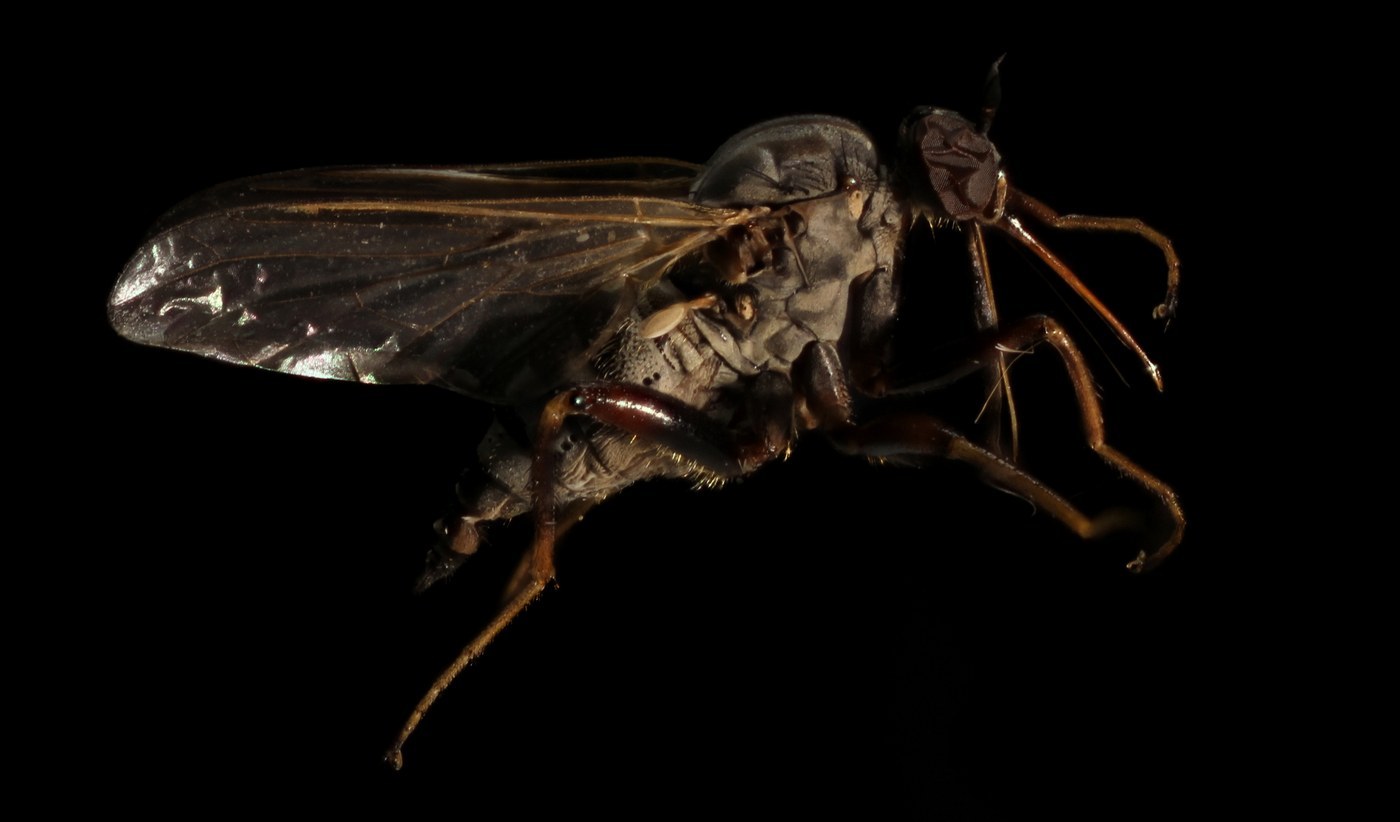
Key Visual Features
Dance flies (family Empididae) are slender, predatory-looking flies named for their distinctive hovering flight behavior.
- Size: Small to medium, typically 3-10 mm long depending on species.
- Body shape: Slim, elongated body with a small, rounded head and a somewhat humped thorax.
- Color: Usually gray, brown, or black, sometimes with a subtle sheen, and generally lacking bright or metallic colors.
- Legs: Notably long and thin, often held outstretched or dangling during flight, a key identifying trait.
- Mouthparts: A downward-pointing, beak-like proboscis used for capturing small prey, giving the head a slightly elongated look from the side.
- Wings: Narrow, clear wings held flat or slightly angled over the body at rest.
Where and When You'll See It
- Found in grassy meadows, woodland edges, gardens, and near streams, often where small flying insects are abundant as prey.
- Best identified by behavior: adults perform hovering, bobbing "dancing" flight patterns just above vegetation, especially during mating swarms.
- Most active on warm days from spring through summer, often seen hovering over sunlit patches of grass or foliage.
- Frequently seen carrying small captured insects while hovering, part of their courtship behavior in many species.
Similar-Looking Bugs
- Robber fly: Larger and more robust with a bearded face and stouter body, versus the slender build of a dance fly.
- Crane fly: Much larger overall with extremely long legs and a single pair of narrow wings, lacking the compact hovering flight of a dance fly.
- Long-legged fly: Often metallic green or blue and shinier, while dance flies tend to have a duller gray or brown body.
Quick ID Checklist
- Slender body with distinctly long, thin legs
- Downward-pointing, beak-like proboscis
- Dull gray, brown, or black coloring without metallic shine
- Hovering, bobbing "dance" flight over vegetation
- Often seen holding small prey while hovering
Frequently asked questions
Why are they called dance flies?
Adults, especially males, perform hovering, bobbing aerial displays above vegetation that resemble a dance, which is where the common name comes from.
How can I tell a dance fly from a crane fly?
Dance flies are much smaller and more compact with a hovering flight style, while crane flies are larger with extremely long legs and a slow, gangly flight.
What is the beak-like structure on a dance fly's head?
It is a downward-pointing proboscis used to capture and feed on small insects, and it's a useful field mark visible from the side of the head.
Where is the best place to look for dance flies?
Check sunlit patches of grass, meadow edges, and areas near streams during warm weather, watching for their characteristic hovering flight just above the vegetation.