Death Watch Beetle Identification Guide
Learn to identify the death watch beetle by its mottled, pitted wing covers and its habit of tapping inside old timber.
Read the full Death Watch Beetle encyclopedia entry →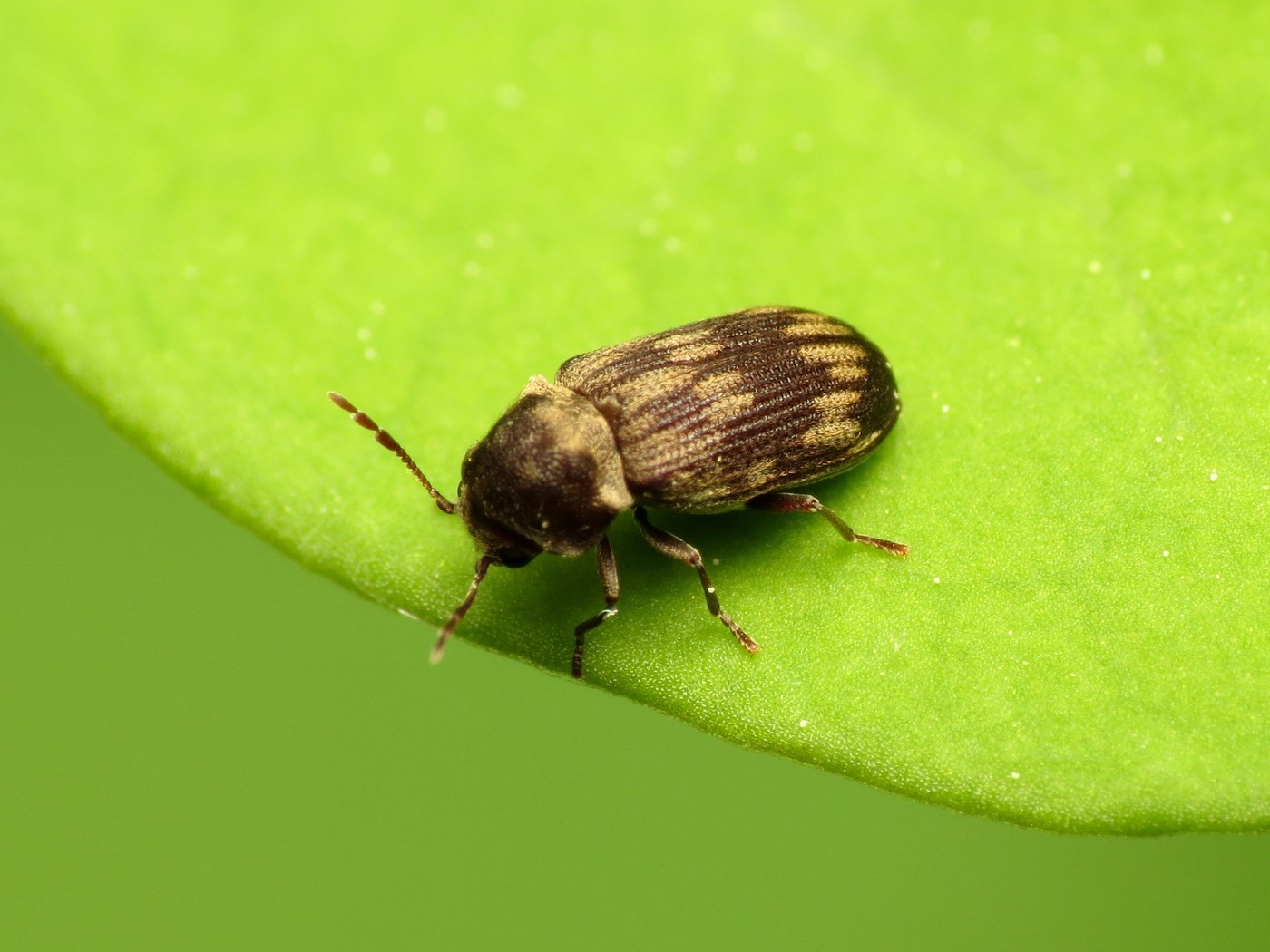
Key Visual Features
The death watch beetle (Xestobium rufovillosum) is a small wood-associated beetle known for its distinctive tapping sound as much as its appearance.
- Size: Adults measure roughly 6-9 mm in length, somewhat larger than many other small stored-product beetles.
- Shape: Compact, cylindrical body with a humped thorax and a head that is partly tucked underneath, similar in general form to other wood-boring beetles.
- Color & pattern: Dark chocolate-brown to blackish body, mottled with patches of fine, yellowish-gray hair-like scales that create an uneven, blotchy appearance rather than a solid color.
- Wing covers: Marked with rows of small pits or punctures running lengthwise, giving the surface a rough, textured look under magnification.
- Antennae: Short, with the last few segments enlarged into a loose club shape.
- Legs: Relatively short and often tucked beneath the body when the beetle is still.
- Exit holes: Adults emerge from timber through small, round holes roughly 2-3 mm across, often surrounded by fine, powdery wood debris (frass).
Where and When You'd See It
This beetle is associated with older, partly decayed hardwood timber, particularly oak, found in structural beams, old furniture, and aged wooden fixtures. Adult activity is most often noticed in spring, when adults emerge from wood and may be seen walking on nearby surfaces or timber. The species is best known for a tapping sound produced by adults striking their heads against wood during the mating season, typically heard in quiet conditions such as at night.
Similar-Looking Bugs
- Furniture beetle (common woodworm): Smaller and more uniformly brown, without the same mottled, blotchy scale pattern, and its exit holes tend to be smaller.
- Cigarette and drugstore beetles: Similarly humpbacked in shape but much smaller overall and associated with dry stored goods rather than timber.
- Powderpost beetles: Slimmer and more elongated, with wing covers that lack the pitted, mottled texture of the death watch beetle.
Quick ID Checklist
- Beetle about 6-9 mm long, dark brown-black with mottled yellowish-gray patches
- Wing covers show rows of small pits or punctures
- Short, clubbed antennae and a humped thorax with a tucked-in head
- Round exit holes (roughly 2-3 mm) in old timber, often with fine wood debris nearby
- Adults typically noticed in spring, sometimes accompanied by a faint tapping sound in quiet settings
Frequently asked questions
What does death watch beetle damage in wood look like?
Look for small, round exit holes about 2-3 mm across on the surface of old timber, often accompanied by fine, powdery wood debris pushed out from tunnels underneath.
How is the death watch beetle different from common furniture beetles?
The death watch beetle is somewhat larger and has a distinctly mottled, blotchy pattern of yellowish-gray scales over a dark brown body, whereas furniture beetles tend to be smaller and more evenly colored.
What kind of wood is the death watch beetle typically found in?
It is most associated with older, partly decayed hardwood, especially oak, commonly found in aged structural beams and older wooden furniture.
When are death watch beetles most often seen?
Adult beetles are most frequently noticed in spring, which is when they emerge from timber and may be spotted moving across nearby wood surfaces.
Death Watch Beetle identified by the community
Recent Death Watch Beetle finds identified with Bug Identifier.