
Deathstalker Scorpion Identification Guide
Learn the slender build and pale yellow coloring that identify the deathstalker scorpion.
Read the full Deathstalker Scorpion encyclopedia entry →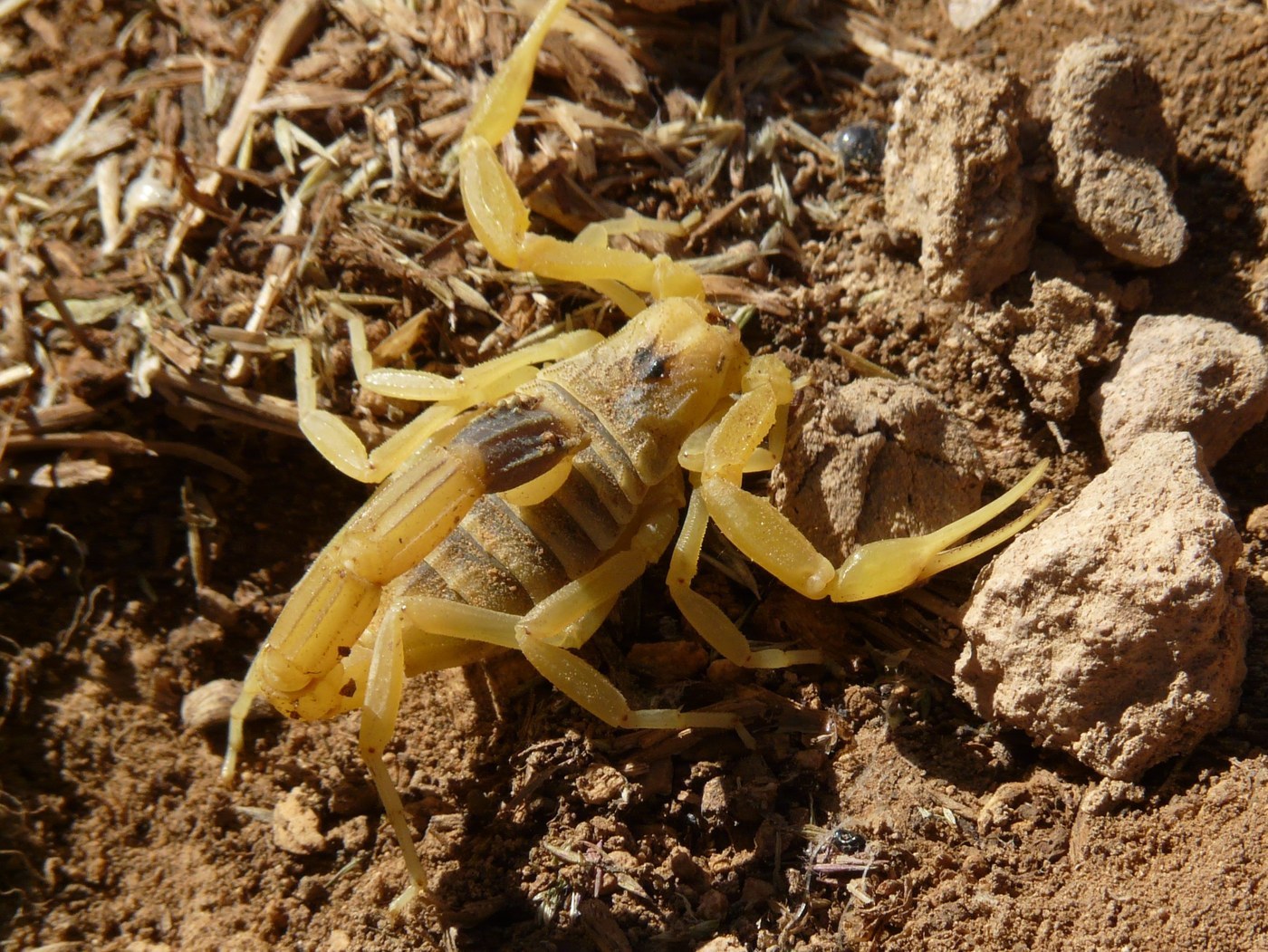
Key Visual Features
The deathstalker is a slender, pale-colored scorpion native to arid regions of North Africa and the Middle East, and its proportions are a key identification clue.
- Size: Adults typically measure 3–4 inches (7.7–10 cm) in length, on the smaller side for a scorpion of its notoriety.
- Color: Uniform yellowish to pale tan or straw-colored across the entire body, sometimes with a faint olive tinge, and generally without strong dark patterning.
- Body shape: Slender and streamlined compared to heavier-bodied desert scorpions, with a narrow tail.
- Legs: Eight thin, pale legs.
- Wings/antennae: None; like all scorpions, it lacks wings and antennae, sensing its surroundings with pedipalps and pectines.
- Markings: The tail (metasoma) segments are notably slender and elongated, and the pincers (pedipalps) are thin and delicate-looking rather than bulky.
Where and When You'd See Them
Deathstalkers inhabit deserts and dry scrubland across North Africa and the Middle East, sheltering under rocks, in burrows, or in cracks during the day. They are nocturnal, emerging at night to hunt on open sandy or rocky ground, and are most commonly encountered after dark during warm months, when they can sometimes be spotted with a UV flashlight due to a faint fluorescent glow shared by most scorpion species.
Similar-Looking Bugs
- Fat-tailed scorpions (Androctonus species) share the arid range but have a noticeably thicker, bulkier tail and darker coloring, in contrast to the deathstalker's slender tail and pale straw color.
- Giant desert hairy scorpions are much larger and heavier, with a two-tone tan-and-dark pattern rather than a uniform pale color.
- Bark scorpions are similarly slender and pale but are native to different regions (notably the southwestern United States) and have proportionally smaller pincers.
- Emperor scorpions are far larger and almost black, easily distinguished by size and color alone.
Quick ID Checklist
- Slender, streamlined body, 3–4 inches long
- Uniform pale yellow to straw-tan coloring with little contrast
- Thin, elongated tail segments and delicate, narrow pincers
- Nocturnal, sheltering under rocks or in burrows during the day
- Found in arid desert and scrubland habitats of North Africa and the Middle East
Frequently asked questions
What color is a deathstalker scorpion?
It is a fairly uniform pale yellow to straw-tan color across its whole body, without strong dark markings.
How can I tell a deathstalker from a fat-tailed scorpion?
The deathstalker has a slender, narrow tail and thin pincers, while fat-tailed scorpions have a noticeably thicker, bulkier tail and darker overall coloring.
How big does a deathstalker scorpion get?
Adults typically reach around 3 to 4 inches in length, making it a relatively small to mid-sized scorpion.
Where in the world would you encounter a deathstalker scorpion?
It is native to arid deserts and dry scrubland across North Africa and the Middle East, sheltering under rocks and emerging at night.