Devil's Coach Horse Beetle Identification Guide
Spot this large, glossy black rove beetle by its short wing covers and dramatic scorpion-like defensive stance.
Read the full Devil's Coach Horse Beetle encyclopedia entry →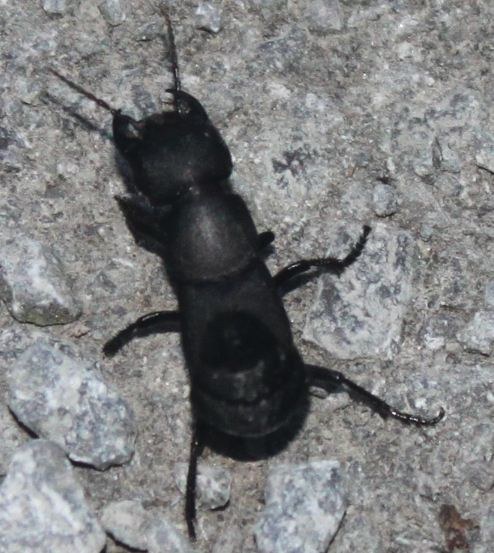
Key Visual Features
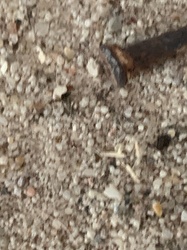
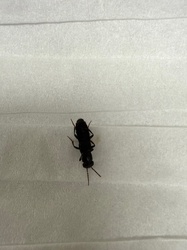
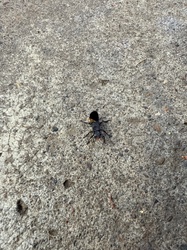
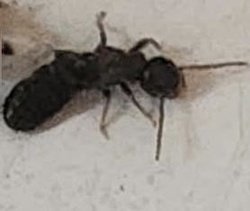
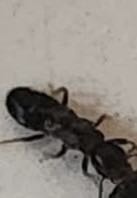
The devil's coach horse (Ocypus olens) is a large, striking member of the rove beetle family, typically 3/4 to 1 inch long. Its body is uniformly glossy black to dark brown, elongated, and somewhat flattened, with short elytra that cover only the front portion of the abdomen, leaving five or six flexible segments exposed and visible from above. The head is broad with prominent mandibles, and the antennae are long and thread-like. Legs are dark and built for fast running rather than digging. Its most memorable trait is behavioral: when threatened, it arches its exposed abdomen up and forward over its back, scorpion-style, sometimes opening its jaws at the same time — a bluff display, since it has no stinger.
Where and When You'll See Them
This beetle favors cool, damp, sheltered spots: under stones, logs, leaf litter, compost heaps, and garden debris. It's originally native to Europe and has become established in parts of North America and elsewhere. It's largely nocturnal, hunting smaller invertebrates after dark and hiding under cover during the day, though it's sometimes flushed out while gardening or turning over stones. Sightings peak in the warmer months, spring through autumn, and it's often encountered singly rather than in groups, moving quickly for cover the moment its hiding spot is disturbed.
Similar-Looking Bugs
- Common rove beetle — many smaller rove beetle species share the short-elytra body plan, but the devil's coach horse is notably larger and uniformly matte black.
- Ground beetles — have full-length wing covers hiding the abdomen, unlike the exposed segments of a coach horse beetle.
- Earwigs — similarly elongated, but earwigs have pincers at the tail tip, which this beetle lacks.
Quick ID Checklist
- Large size (up to about 1 inch), glossy black or dark brown
- Short elytra exposing several flexible abdominal segments
- Curls its tail up over its back like a scorpion when disturbed
- Fast runner, found under stones, logs, and garden debris
- Mostly active at night, hidden by day
Frequently asked questions
Is the devil's coach horse beetle actually related to scorpions?
No. It only mimics a scorpion's posture by arching its flexible abdomen upward when threatened; it belongs to the rove beetle family and has no stinger.
How big does the devil's coach horse beetle get?
Adults typically measure around 3/4 to 1 inch, making them one of the larger rove beetles you're likely to encounter.
Where does the devil's coach horse beetle hide during the day?
It shelters under stones, logs, mulch, and garden debris in cool, damp spots, emerging mainly at night to hunt.
What color are devil's coach horse beetles?
They are a uniform glossy black to dark brown across the entire body, without spots or banding.
Devil's Coach Horse Beetle identified by the community
Recent Devil's Coach Horse Beetle finds identified with Bug Identifier.