
Devil's Flower Mantis Identification Guide
Learn to recognize one of the largest and most dramatically patterned mantis species in the world.
Read the full Devil's Flower Mantis encyclopedia entry →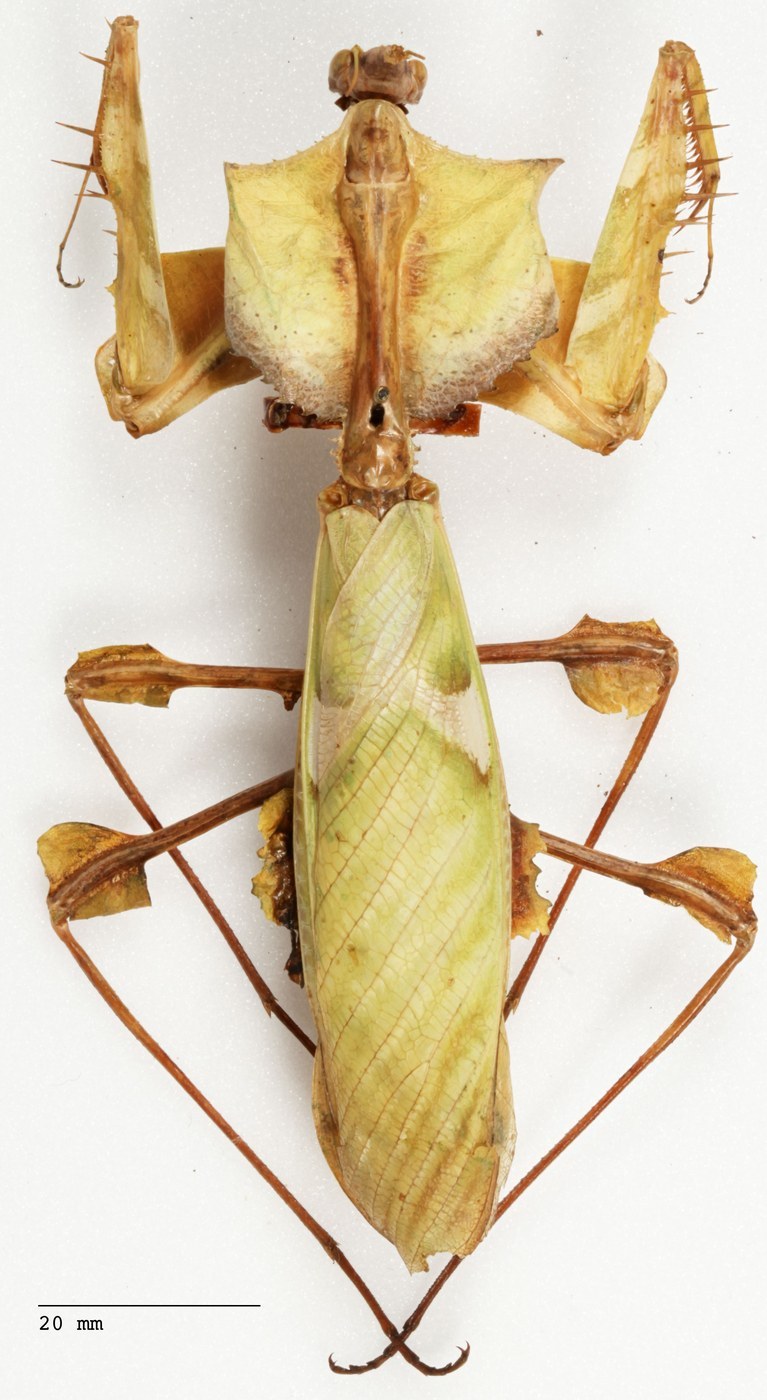
Key Visual Features
The devil's flower mantis (Idolomantis diabolica) is among the largest mantis species and is famous for its elaborate flower-mimicking appearance. Look for:
- Large size, with adult females reaching 10–13 cm (4–5 inches) in body length
- Mottled green, brown, and white body that resembles foliage and petals
- Colorful raised forelegs, marked with bands of purple, white, and black, which are flashed outward during a dramatic threat display
- Broad hindwings patterned with bold black, white, and orange coloring, also revealed during defensive displays
- Leaf-like lobes or flaps on the legs and thorax that add to the flower disguise
- Large triangular head with prominent eyes capable of tracking movement
Where and When You'd See It
This species is native to arid and semi-arid scrubland regions of East Africa, including parts of Ethiopia, Somalia, Kenya, and Tanzania. It perches on shrubs and low bushes, relying on its still, flower-like posture to ambush passing insects. Devil's flower mantises are most easily observed during warm months, often after dusk or in the cooler parts of the day when they are more likely to move between perches. The species is slow-growing, taking many months to reach the large adult size that makes its markings most striking.
Similar-Looking Bugs
- Spiny flower mantis: much smaller, with a distinct circular eye-spot on the wings rather than the devil's flower mantis's banded, multicolored forelegs
- Orchid mantis: pink-and-white coloring focused on mimicking a single flower, versus the devil's flower mantis's larger, more muted mottled body with hidden bright colors revealed only in display
- Giant African mantises: generally lack the ornate colored leg flaps and dramatic wing patterning used specifically for threat displays
- Other large mantis species: sheer size alone can be misleading, so the banded leg coloring and hidden hindwing pattern remain the most reliable confirming features
Quick ID Checklist
- Very large mantis, often exceeding 10 cm as an adult
- Mottled green-brown body resembling dried foliage
- Purple, white, and black banded forelegs
- Bold black-white-orange pattern on hindwings, shown only when threatened
- Found on scrubland shrubs in East Africa
Frequently asked questions
What is the fastest way to identify a devil's flower mantis?
Its very large size combined with the boldly banded purple, white, and black coloring on its raised forelegs during a threat display are the clearest identifying features.
Why are the bright colors on this mantis not always visible?
The colorful forelegs and hindwing patterns are normally folded away and only revealed when the mantis raises its body in a defensive display, so a resting individual looks much more muted and leaf-like.
Where does the devil's flower mantis live in the wild?
It is native to arid scrubland habitats in East Africa, including Ethiopia, Somalia, Kenya, and Tanzania.
How does its size compare to other flower mantis species?
It is one of the largest mantis species overall, considerably bigger than related flower mantises such as the spiny flower mantis or orchid mantis.