
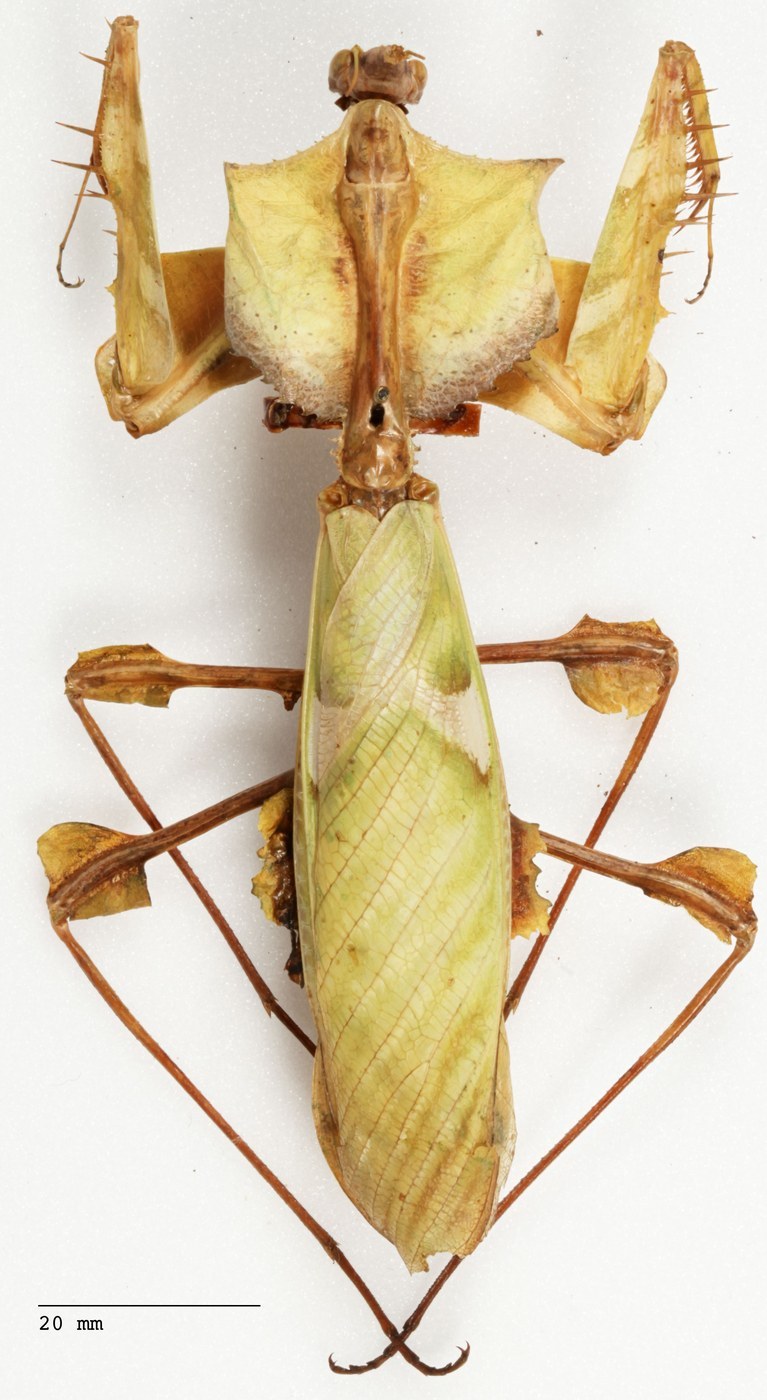
Devil's Flower Mantis
Idolomantis diabolica
One of the largest mantis species on Earth, this striking insect can suddenly rear up and fan out vividly colored wings and legs into a dramatic, flower-like threat display.
- Size
- Females up to 13 cm, among the largest mantis species
- Habitat
- Dry African savanna and thornbush scrubland
- Danger
- Bites
Spotted a bug like this?
Identify any bug or insect from a photo, free.
Overview
The devil's flower mantis is renowned as one of the largest and most visually dramatic mantis species, with females capable of reaching lengths of 13 cm. Its resting coloration is a muted brown or tan that blends with dry vegetation, but when threatened it performs one of the most striking displays in the insect world, rearing upright and spreading its raptorial forelegs and hindwings to reveal bold patches of purple, white, and iridescent blue that resemble an exotic flower.
Native to dry savanna and thornbush habitats in eastern and central Africa, this species is an ambush predator that relies on stillness and camouflage while waiting for flying insects to approach. As a large mantis with powerful raptorial forelegs, it can deliver a defensive pinch or nip if handled.
How to Identify
- Very large body size for a mantis, with females reaching up to 13 cm and males somewhat smaller
- Resting coloration is mottled brown, tan, or grayish, resembling dry twigs and bark
- Threat display reveals brightly colored forelegs and hindwings in patterns of purple, white, and iridescent blue
- Broad, leaf-shaped extensions along the legs enhance camouflage at rest
- Large, triangular head with prominent compound eyes and a raised crest between the antennae
- Distinguished from other large mantises by the specific coloration and pattern revealed during its threat display
Habitat & Range
This species is native to dry savanna, scrubland, and thornbush habitats across parts of eastern and central Africa, including regions of Tanzania, Kenya, Ethiopia, and neighboring countries. It favors warm, arid environments with scattered shrubs and trees, where it perches among branches and dry foliage, remaining active mainly during the warmer, drier months typical of its range.
Behavior & Diet
The devil's flower mantis is a sit-and-wait predator that remains motionless on branches or shrubs, relying on camouflage to ambush passing flying insects such as moths, flies, and other winged prey, which it seizes with its powerful raptorial forelegs. When it perceives a threat, it performs a dramatic deimatic display, rearing upright, spreading its brightly patterned forelegs and wings, and sometimes swaying, in an effort to startle or deter the potential predator; if the display fails to discourage further contact, it may deliver a defensive nip with its forelegs. As one of the larger insect predators in its habitat, it plays a role in regulating populations of flying insects and is in turn preyed upon by birds and other larger predators.
Life Cycle
Females produce a large, ridged ootheca containing numerous eggs, typically attached to a branch or similar support in their arid habitat. Nymphs hatch synchronously and initially display dark coloration, some species-specific patterns aiding early camouflage, before molting through numerous nymphal stages as they grow toward their large adult size. There is no pupal stage, consistent with a mantis's incomplete metamorphosis, and full development to adulthood can take several months given the species' large final size. Adults are relatively long-lived for mantises, with females often surviving many months after reaching maturity.
Frequently asked questions
Why is it called the devil's flower mantis?
The name refers to its dramatic threat display, in which it spreads brightly colored forelegs and wings resembling an exotic flower while rearing up in a devilish, intimidating posture.
How large does the devil's flower mantis get?
It is one of the largest mantis species in the world, with females reaching up to about 13 cm in length.
What does this mantis eat?
It is a predator of flying insects such as moths and flies, which it ambushes and captures with its raptorial forelegs.
Can it bite if handled?
Like other large mantises, it can deliver a defensive nip with its forelegs if it feels threatened.
Devil's Flower Mantis guides
In-depth guides for identifying, understanding, and living alongside Devil's Flower Mantis.
Other bugs you may enjoy
Walking Stick Insect
Trees, shrubs and leaf litter in forests, woodlands and gardens
African Mantis
grasslands, shrubs, and gardens across sub-Saharan Africa
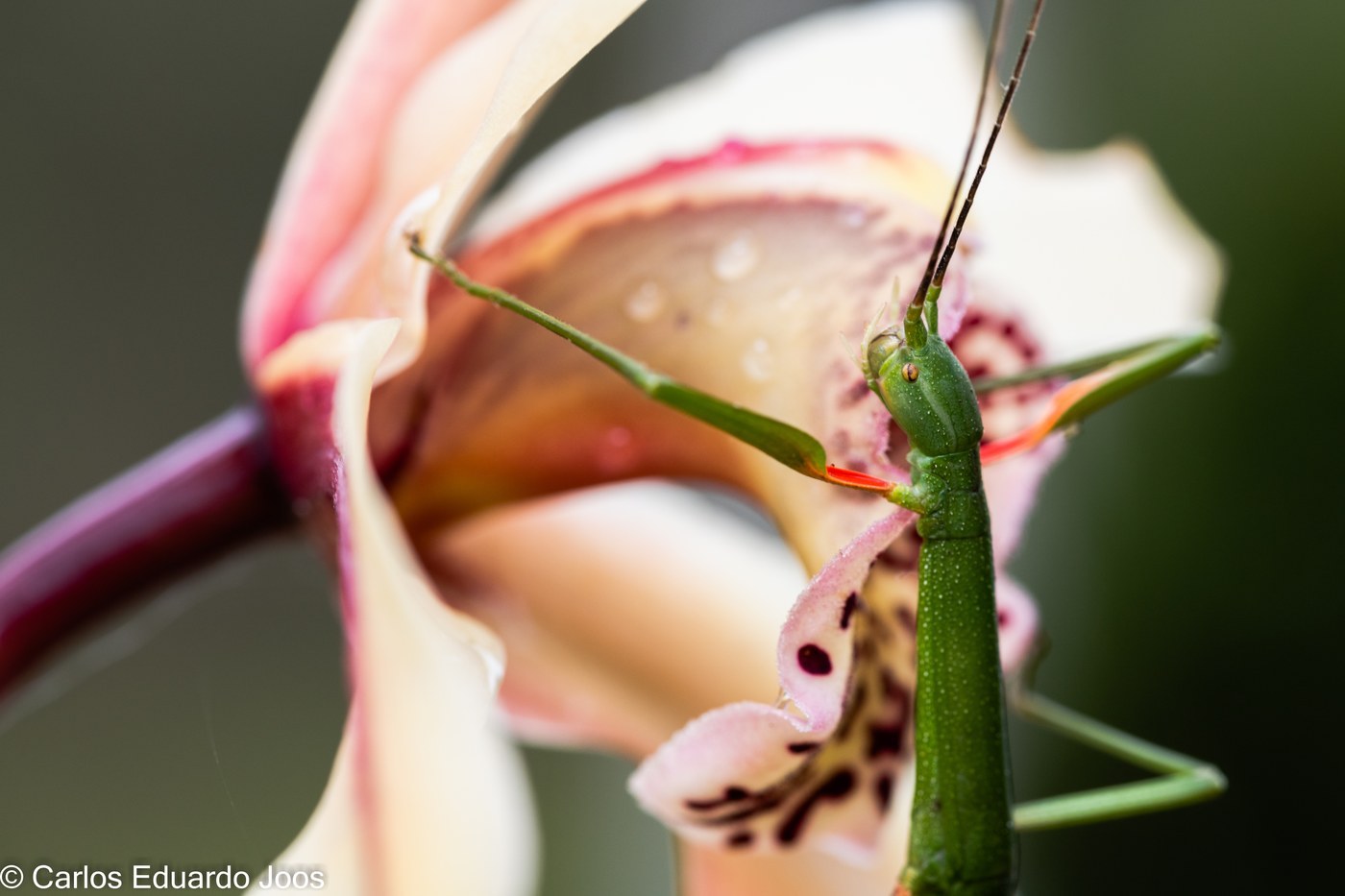
Walking Stick
Deciduous woodlands, forest edges, and shrubby vegetation
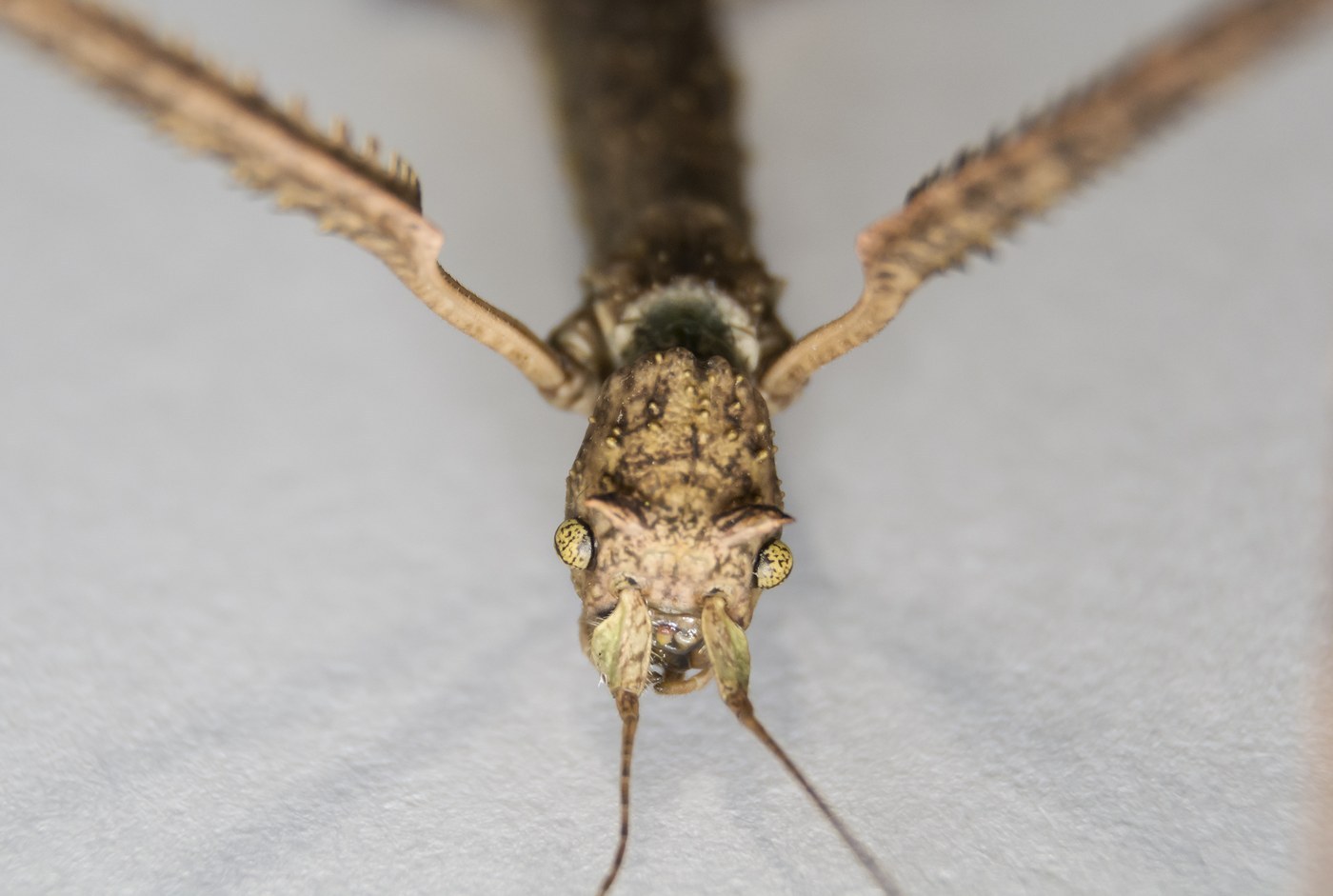
Vietnamese Walking Stick
tropical forests of Vietnam; widely kept in captivity worldwide
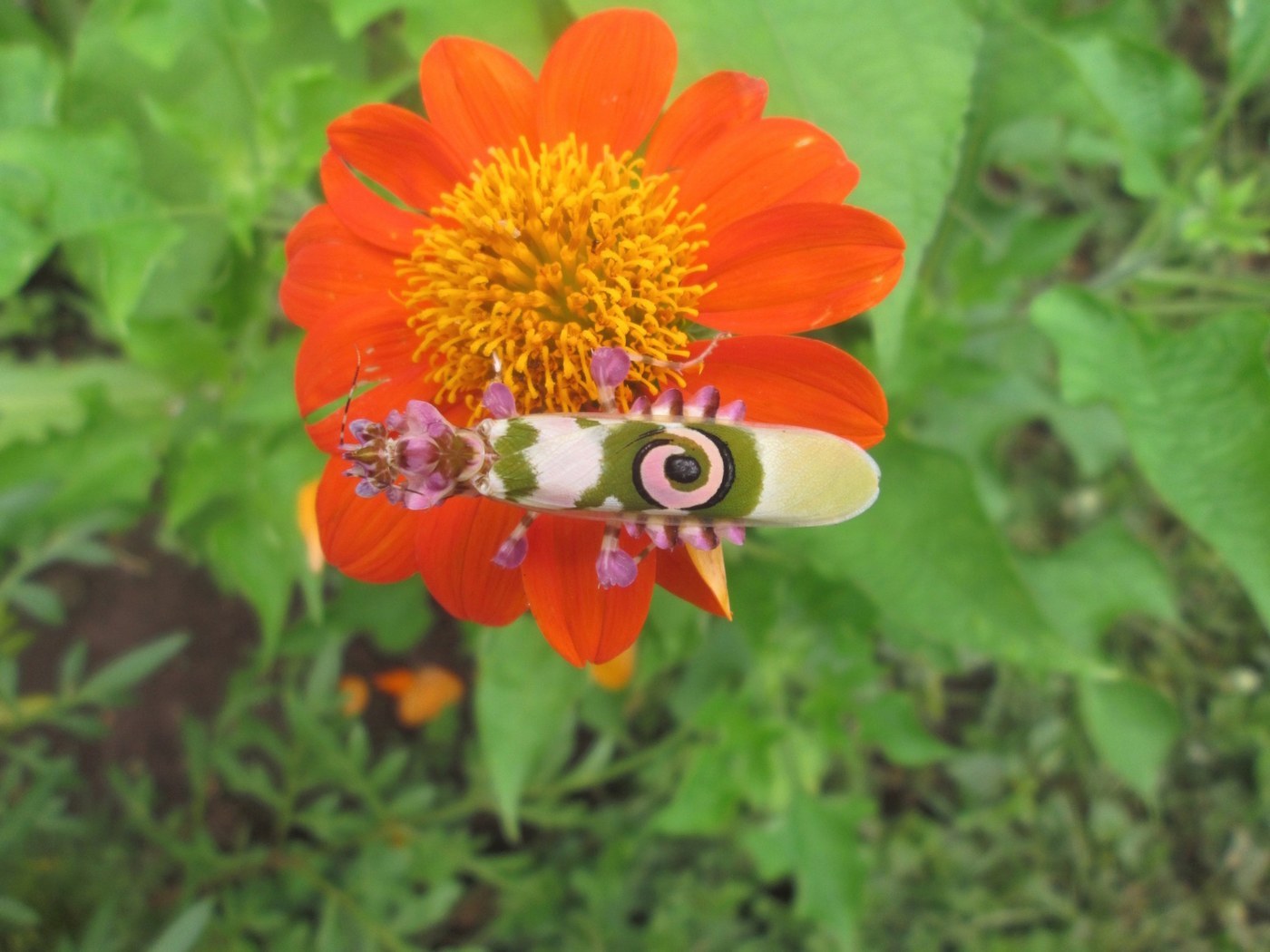
Spiny Flower Mantis
African savanna and woodland shrubs and flowering plants
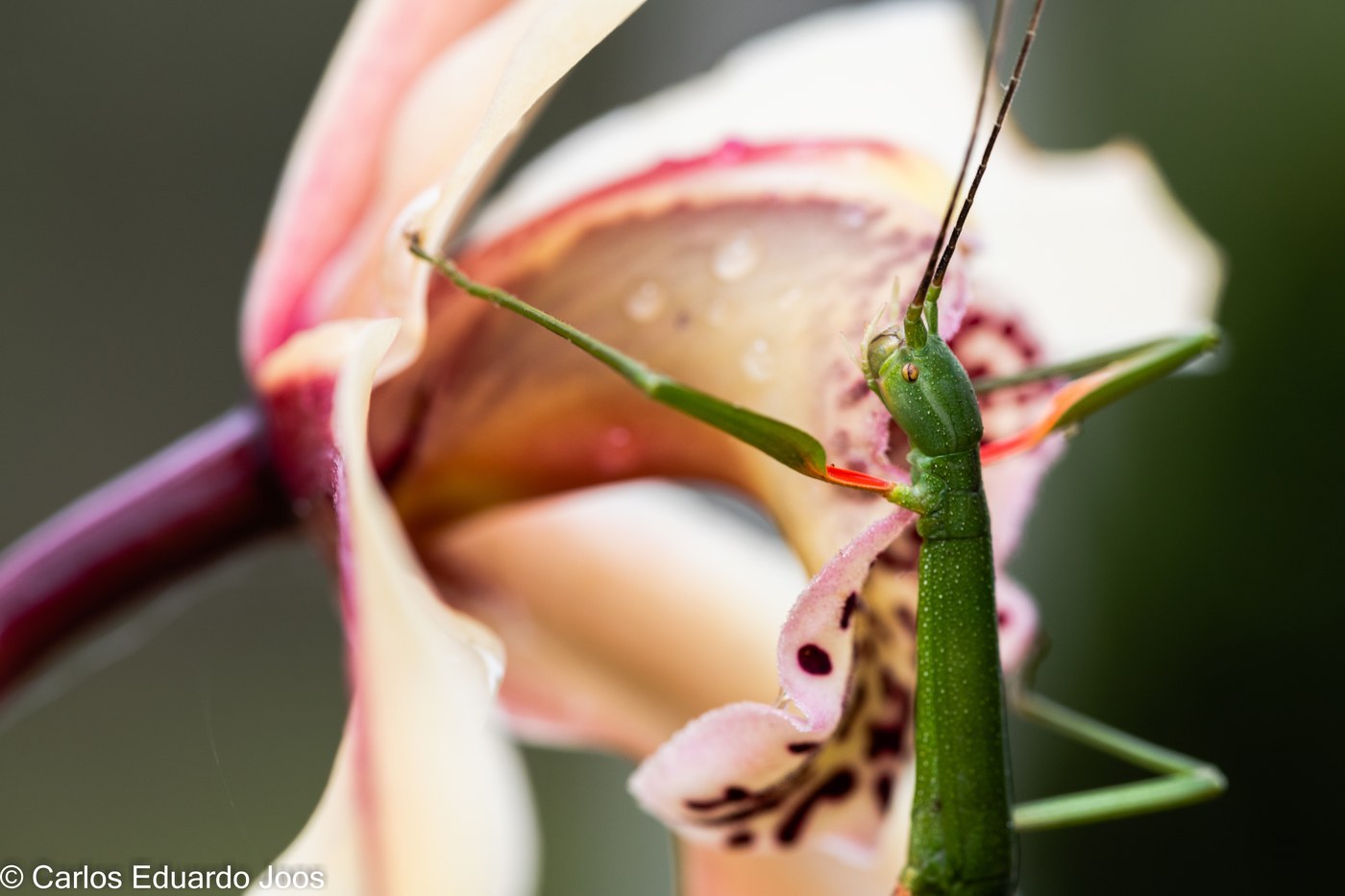
Northern Walkingstick
deciduous forests and woodland edges of the eastern and central United States and southern Canada
Praying Mantis
Gardens, meadows, shrubs, and tall grass
Orchid Mantis
tropical rainforests and flowering shrubs of Southeast Asia
Goliath Stick Insect
Tropical and subtropical eucalypt forests and woodland canopy
Giant Prickly Stick Insect
eucalyptus forests and shrubland of eastern Australia and New Guinea
Javanese Leaf Insect
Tropical lowland and montane forest foliage
Giant Walking Stick
Deciduous woodlands, forest edges, and shrubby thickets