
Digger Wasp Identification Guide
Identify ground-nesting digger wasps by their burrowing habit, stout build, and banded abdomen.
Read the full Digger Wasp encyclopedia entry →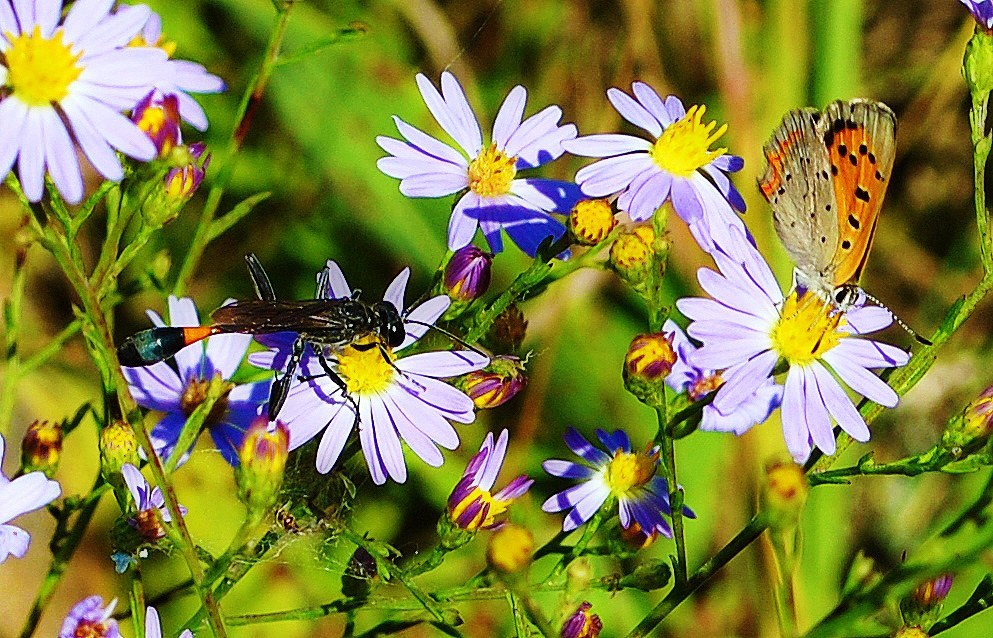
Key Visual Features
Digger wasps are a large, varied group of solitary wasps united by their habit of excavating burrows in the ground rather than building above-ground nests. Appearance varies by species, but several traits are broadly consistent.
- Size: Ranges widely from about 1 to 3 centimeters depending on species, with many common garden digger wasps falling in the 1.5–2.5 centimeter range.
- Body shape: Sturdy and somewhat cylindrical, with a moderate waist — less pinched than a mud dauber's but still narrower than a bee's.
- Color: Frequently black or dark brown with yellow, cream, or white banding across the abdomen; some species show rusty-orange patches on the thorax or legs.
- Legs: Strong, often spiny hind legs adapted for digging and kicking soil out of a burrow.
- Wings: Two pairs of clear to lightly smoky wings, folded flat over the back at rest.
- Head: Broad with strong mandibles used for both digging and handling prey.
Where and When You'd See Them
Digger wasps are most active on warm, sunny days from late spring through summer, particularly in areas of bare, sandy, or loose soil — lawns with thin patches, sandy banks, garden borders, and path edges are favorite nesting sites. Watch for small mounds of excavated soil with a burrow entrance about the width of a pencil, often with a female wasp hovering nearby or emerging backward while clearing debris. Multiple individuals may nest in loose aggregations in the same patch of ground without forming a true shared colony.
Similar-Looking Bugs
- Cicada killers: A type of large digger wasp, but distinctly larger (up to 4–5 cm) with bold black-and-yellow banding, making them the giants of this group.
- Mining bees: Also dig ground burrows and can look superficially similar, but bees have a fuzzier, more robust body and branched body hairs adapted for carrying pollen, while digger wasps are smoother-bodied.
- Yellowjackets: Similarly banded in black and yellow, but yellowjackets are social, nest in larger colonies, and have a more compact, less elongated body.
- Sand wasps: Closely related to digger wasps generally, with a similar burrowing lifestyle and stocky build, often distinguished only by subtle color and size differences.
Quick ID Checklist
- Sturdy, moderately waisted body with a broad head
- Black or dark brown, often banded with yellow or cream on the abdomen
- Spiny hind legs adapted for digging
- Small burrow entrance in bare or sandy soil, often with a soil mound
- Solitary or loosely aggregated, active on warm sunny days
Frequently asked questions
How can I tell a digger wasp burrow from an ant hill?
A digger wasp burrow typically has a single, pencil-width entrance hole with a small mound of loose soil around it, rather than the larger, more structured mounds ants create.
Are digger wasps social like yellowjackets?
No, most digger wasps are solitary, though several individuals may nest close together in the same patch of soil without forming an organized colony.
What soil conditions do digger wasps prefer for nesting?
Bare, sandy, or loosely packed soil with good drainage, often found in thin lawn patches, garden borders, or sandy banks.
How big are digger wasps compared to cicada killers?
Most digger wasps are around 1.5 to 2.5 centimeters, noticeably smaller than cicada killers, which are a type of digger wasp that can reach 4–5 centimeters.