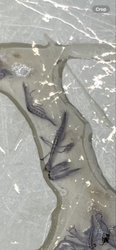
Diving Beetle Larva (Water Tiger) Identification Guide
A slender, sickle-jawed aquatic predator that lurks among pond plants waiting to ambush passing prey.
Read the full Diving Beetle Larva (Water Tiger) encyclopedia entry →Key Visual Features
- Elongated, tapering body that can range from about 0.5 to 2.5 inches (12-65 mm) depending on species and age
- Brown, tan, or yellowish coloring, often with darker mottling along the segments
- Large, curved, sickle-shaped mandibles projecting from the head, longer and more visible than in most other aquatic larvae
- Six legs clustered near the head, used for grasping and crawling through vegetation
- Segmented, somewhat flattened abdomen that narrows toward the rear
- Two thread-like tail filaments (cerci) at the tip of the abdomen, sometimes used to break the surface for air
- No wings, since this is an immature aquatic stage
Where and When You'll See It
Water tigers live among submerged plants, debris, and along the muddy or sandy margins of ponds, marshes, and slow streams. They are active predators from spring through late summer/fall, hunting other aquatic invertebrates, small tadpoles, or larvae by ambushing prey and injecting digestive fluids through their hollow mandibles. They can often be spotted hanging near the surface at an angle, using the tip of the abdomen to access air, then diving back down when disturbed. They tend to remain motionless for long stretches while waiting for prey to pass within striking range, making them easy to overlook until movement gives them away. As they grow through several molts, later-stage larvae become noticeably longer and more robust than newly hatched individuals.
Similar-Looking Bugs
- Dobsonfly/hellgrammite larva: much larger and more heavily armored, with branched lateral filaments running down the sides of the abdomen that water tigers lack.
- Damselfly nymph: has three leaf-like external gills at the tail tip instead of a pair of thin filaments, and lacks the prominent sickle jaws.
- Alderfly larva: has a single tail filament and simpler, unbranched body, without the oversized curved mandibles.
- Predaceous mosquito larva: much smaller and lacks the long grasping jaws entirely.
Quick ID Checklist
- Long, curved, sickle-shaped jaws at the front of the head
- Slender, tapering, segmented body
- Six legs clustered near the head
- Paired thin tail filaments at the rear tip
- Found lurking among pond vegetation or debris, often hanging at an angle near the surface
Frequently asked questions
Why is it called a water tiger?
The name refers to its predatory, ambush-hunting behavior and prominent curved jaws, which it uses to seize other small aquatic creatures much like a stalking hunter.
How big does a water tiger get?
Size varies widely by species and instar, ranging from around half an inch in early stages up to two and a half inches in the larvae of the largest diving beetle species.
How is a water tiger different from a hellgrammite?
Water tigers have a more slender, tapering body with two thin tail filaments and no side filaments, while hellgrammites are bulkier, more armored, and have eight pairs of branched filaments along the abdomen.
Where would I find a water tiger in a pond?
Look among submerged plants, leaf litter, and debris near the pond edges, often near the surface where it periodically positions its abdomen tip to access air.
Diving Beetle Larva (Water Tiger) identified by the community
Recent Diving Beetle Larva (Water Tiger) finds identified with Bug Identifier.