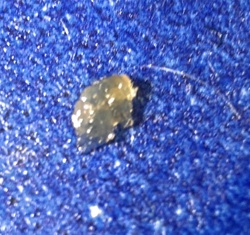
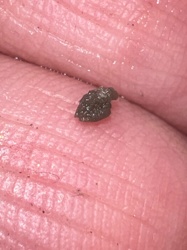
Dobsonfly Larva (Hellgrammite) Identification Guide
A fearsome-looking, armored aquatic larva with pincer-like jaws that lives for years under stream rocks before becoming a dobsonfly.
Read the full Dobsonfly Larva (Hellgrammite) encyclopedia entry →Key Visual Features
- Large, elongated larva reaching 2-3 inches (5-7.5 cm) long at maturity
- Dark brown to nearly black body with a tough, segmented, almost armored appearance
- Prominent pair of curved, pincer-like mandibles at the front of the head
- Eight pairs of branched lateral filaments running down the sides of the abdomen, used as gills
- A single pair of hooked prolegs (anal prolegs) at the rear tip, used to grip surfaces
- Flattened body shape that lets it wedge into crevices between rocks
- No wings at this life stage since it is an immature, aquatic form
Where and When You'll See It
Hellgrammites live underneath and between rocks in cool, well-oxygenated, fast-flowing streams and rivers with rocky or gravel bottoms. They avoid stagnant or silty water. Because their larval stage can last one to three years, they can be found at almost any time of year, though they are most often turned up by wading anglers or stream surveys in spring through fall when water levels make rock-turning easiest. They stay hidden under cover during the day and are more active at night.
Similar-Looking Bugs
- Alderfly larva: smaller, with a single unbranched tail filament instead of paired anal prolegs, and simpler unbranched lateral filaments.
- Fishfly larva: very similar overall shape, but fishfly larvae typically have tufted gills at the base of each lateral filament, which hellgrammites lack.
- Stonefly nymph: has two long tail filaments (cerci) instead of hooked prolegs, and a more streamlined, less armored body.
- Diving beetle larva: has large sickle-shaped jaws too, but a smoother, tapering body without the branched side filaments.
Quick ID Checklist
- Eight pairs of branched filaments along the sides of the abdomen
- Dark, tough, armor-like segmented body up to 3 inches long
- Strong curved pincer jaws at the head
- Hooked paired prolegs at the tail end for gripping rocks
- Found clinging to the underside of rocks in fast, clean stream water
Frequently asked questions
How can I tell a hellgrammite from a fishfly larva?
Look closely at the base of the lateral filaments along the abdomen. Fishfly larvae usually have small tufted gills at the base of these filaments, while hellgrammites (dobsonfly larvae) generally lack these tufts and have a more uniformly armored look.
Why does a hellgrammite have pincer-like jaws?
The prominent mandibles are used to grip and hold onto prey items it encounters on the stream bottom, and they also help it wedge itself firmly under and between rocks.
What kind of water body should I check to find one?
Search under flat rocks in riffles and runs of clean, fast-moving, well-oxygenated streams or rivers with rocky or gravel substrate; they are rarely found in still or muddy water.
Does a hellgrammite have wings?
No. This is the aquatic larval stage of the dobsonfly, and it lacks wings entirely; wings only appear once it transforms into the winged adult dobsonfly.
Dobsonfly Larva (Hellgrammite) identified by the community
Recent Dobsonfly Larva (Hellgrammite) finds identified with Bug Identifier.