Dogbane Beetle Identification Guide
Recognize this small leaf beetle by its shifting rainbow-metallic shell and close ties to dogbane and milkweed plants.
Read the full Dogbane Beetle encyclopedia entry →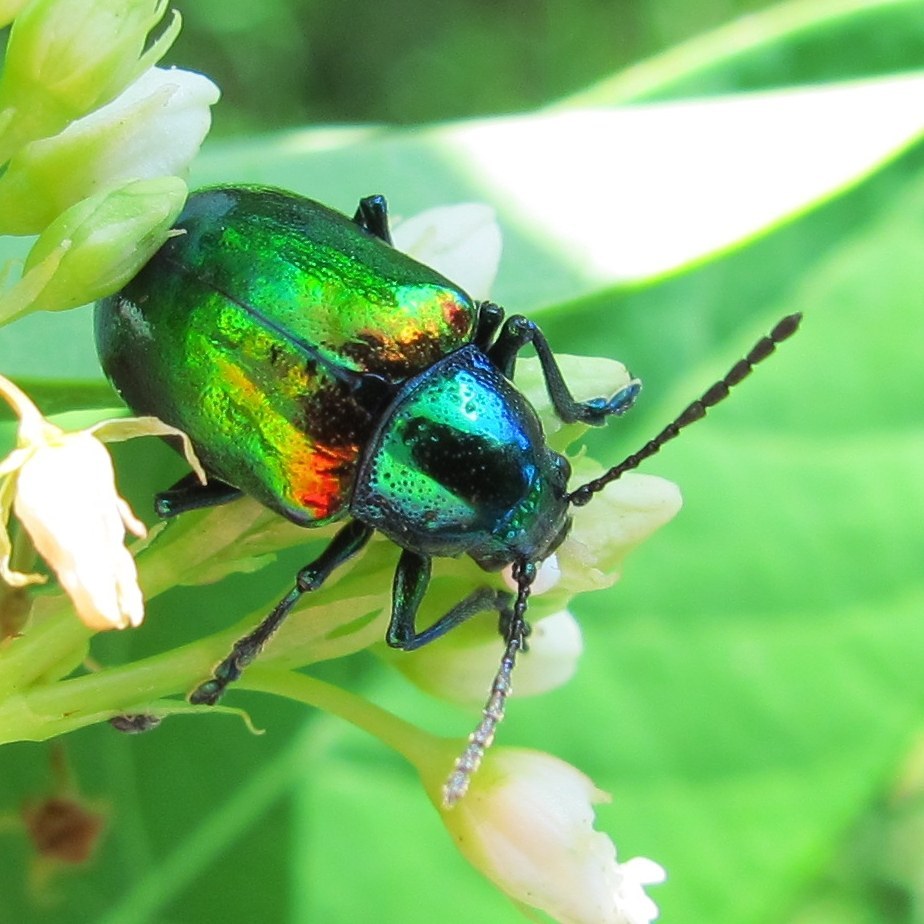
Key Visual Features
The dogbane beetle is a small but eye-catching leaf beetle known for its dazzling color-shifting shell:
- Size and shape: A compact, oval, domed body about 0.3-0.4 inches (8-11mm) long, typical of leaf beetles.
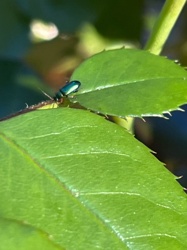
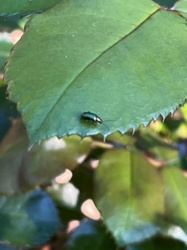
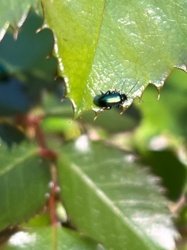
- Coloring: An iridescent metallic shell that shifts between green, gold, copper, blue, and red depending on the angle of light, similar to an oil-slick effect.
- Body texture: Smooth and glossy, without hairs or dull patches.
- Legs and antennae: Slender legs and thin, thread-like antennae typical of the leaf beetle family.
- Wings: Hardened, rounded elytra that fully cover the abdomen, giving the beetle a smooth, rounded silhouette.
Where and When You'll See One
Dogbane beetles are found across much of North America wherever their host plants grow. Look for them clinging to the leaves and stems of dogbane (Apocynum species) and, less commonly, milkweed, during the warmer months of late spring through summer. They are diurnal and most visible on sunny days when their metallic colors catch the light.
Similar-Looking Bugs
- Tiger beetles: Also show metallic coloring, but have a longer, flatter, more elongated body and long visible mandibles, unlike the dogbane beetle's rounded, domed shape.
- Other iridescent leaf beetles: Some flea beetles and leaf beetles share metallic sheens, but the dogbane beetle's strong, multi-color shift and near-exclusive association with dogbane and milkweed plants is a reliable clue.
- Japanese beetle: Similar size range but has a more consistent coppery-and-green two-tone pattern rather than the dogbane beetle's full rainbow shift, and small tufts of white hair along its sides which dogbane beetles lack.
Behavior Notes
Adults tend to move slowly and deliberately across the leaves of their host plant, making them relatively easy to observe and photograph once spotted. Because dogbane and milkweed contain compounds that many other insects avoid, the beetles that specialize on these plants, including the dogbane beetle, are often found feeding openly in daylight without much cover, relying on their host plant association as much as their coloring for identification.
Quick ID Checklist
- Small, domed, oval body under half an inch long
- Iridescent shell that shifts color (green, gold, copper, blue) with viewing angle
- Found specifically on dogbane or milkweed leaves and stems
- Smooth, hairless, glossy shell
- Active on sunny days in late spring and summer
Frequently asked questions
Why does the dogbane beetle look like it changes color?
Its shell has microscopic structural layers that reflect light differently depending on the viewing angle, producing an iridescent shift between green, gold, copper, and blue rather than a fixed pigment color.
Where is the most reliable place to find a dogbane beetle?
Check the leaves and stems of dogbane plants, and occasionally milkweed, since these beetles are closely tied to these specific host plants.
How big is an adult dogbane beetle?
Adults are small, typically around 8-11mm (roughly a third to nearly half an inch) long, with a compact, rounded body.
How can I tell a dogbane beetle apart from a tiger beetle?
Tiger beetles have a longer, flatter, more elongated body with prominent jaws, while the dogbane beetle has a shorter, rounded, domed body typical of leaf beetles.
Dogbane Beetle identified by the community
Recent Dogbane Beetle finds identified with Bug Identifier.