
Dogface Butterfly Identification Guide
Spot this striking sulphur by the unmistakable dog-head silhouette marking on its forewing.
Read the full Dogface Butterfly encyclopedia entry →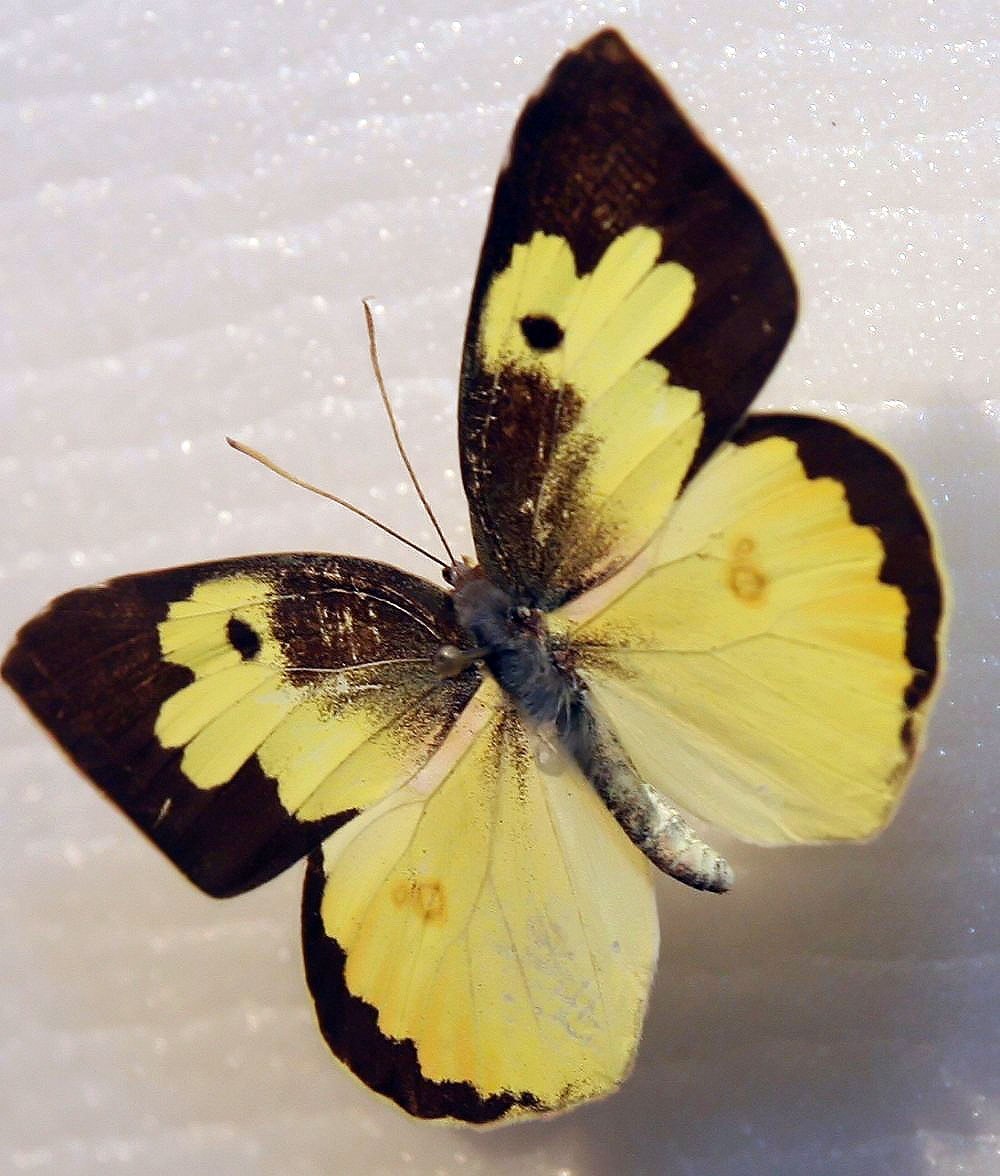
Key Visual Features
The Dogface Butterfly, most commonly the Southern Dogface (Zerene cesonia), is a medium-to-large sulphur with a wingspan of about 2 to 3 inches.
- Signature mark: The dorsal forewing displays a pattern outlined in black on a yellow background that resembles the silhouette of a dog's or poodle's head, the species' most distinctive and diagnostic feature.
- Hindwing: Solid yellow with a black border that often has a scalloped or wavy edge.
- Iridescence: In certain light and angles, a purple-pink sheen can appear near the base of the forewing.
- Underside: Yellow to olive-yellow with a mottled, camouflage-like pattern and a small central spot, quite different and much more muted than the bold dorsal pattern.
- Body: Slender yellow body matching the wing color.
Where and When You'll See It
Dogface Butterflies are found in open fields, prairies, roadsides, and weedy open areas, and are most common in the southern and southwestern United States, with occasional strays into more northern regions during warmer months. Adults have a fast, somewhat erratic flight and are active during sunny daytime hours. Multiple broods occur through the warmer seasons, and the mottled underside pattern helps them blend in well when perched with wings closed.
Similar-Looking Species
- Other sulphurs: No other common sulphur species shows the distinctive dog-head silhouette pattern, making the Dogface Butterfly essentially unmistakable once the dorsal wing pattern is visible, whether in flight or while basking with wings spread.
- When wings are closed: The muted, mottled underside can make it harder to distinguish from other yellow butterflies at rest, so getting a look at the open wings is the most reliable way to confirm identification.
Quick ID Checklist
- Dog-head silhouette pattern outlined in black on the forewing (diagnostic)
- Yellow hindwing with scalloped black border
- Possible purple-pink iridescent sheen near the forewing base
- Mottled, camouflage-like underside when wings are closed
- Found in open fields and prairies, mainly in southern and southwestern regions
Frequently asked questions
What is the easiest way to identify a Dogface Butterfly?
Look for the distinctive dog-head silhouette pattern outlined in black on the yellow forewing, which is unique to this species among sulphurs.
Why is it harder to identify a Dogface Butterfly at rest?
When perched with wings closed, only the more muted, mottled underside is visible, which can resemble other yellow butterflies until the wings open to reveal the dog-head pattern.
Where are Dogface Butterflies most commonly found?
They are most common in open fields, prairies, and roadsides in the southern and southwestern United States, occasionally straying farther north.
Does the Dogface Butterfly have any iridescent coloring?
Yes, in certain light a purple-pink iridescent sheen can sometimes be seen near the base of the forewing.