
Eastern Comma Identification Guide
Identify the eastern comma by its ragged wings and the silvery comma mark hidden underneath.
Read the full Eastern Comma encyclopedia entry →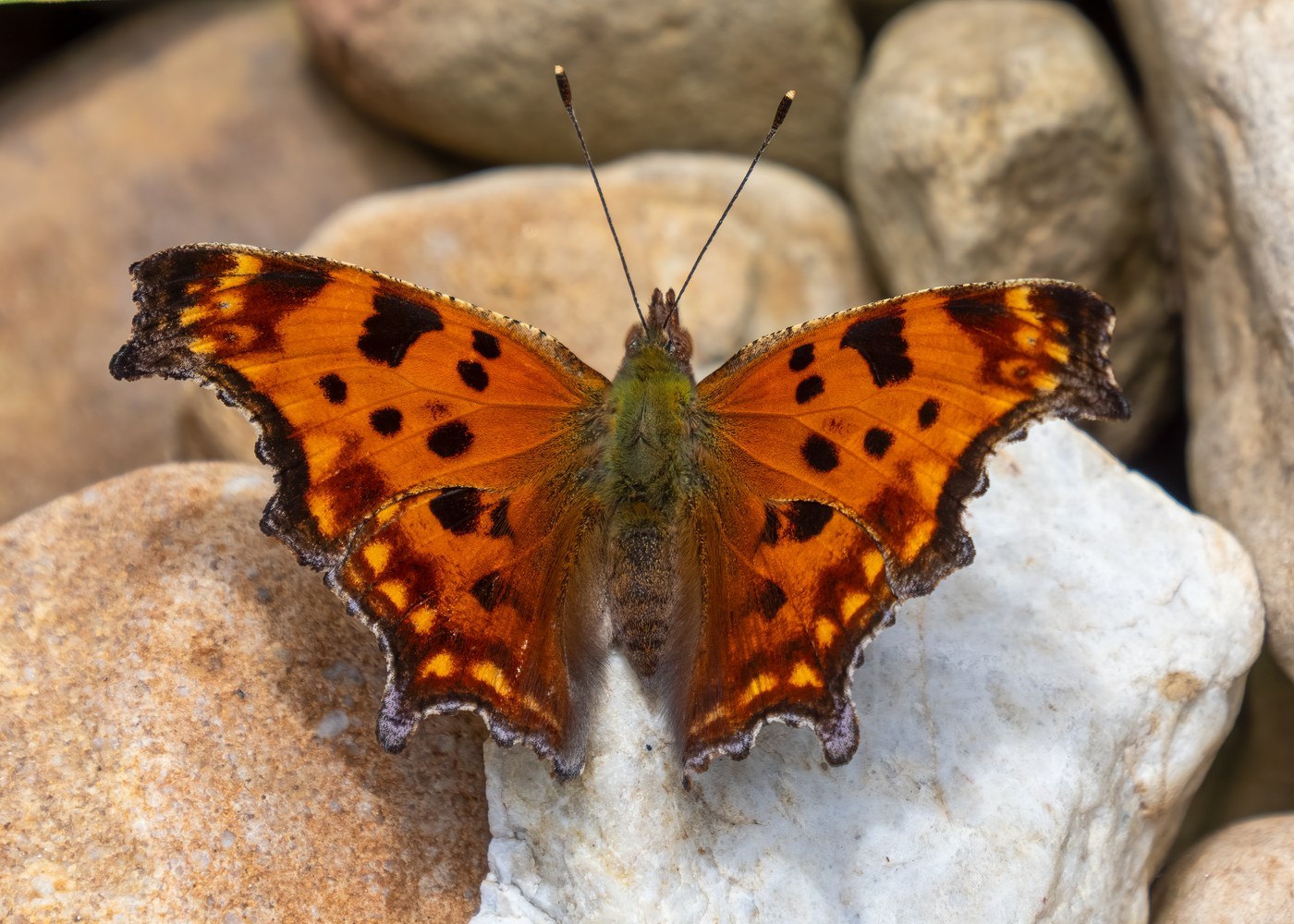
Key Visual Features
The eastern comma (Polygonia comma) is named for a small silvery mark on its underside and is known for its irregular, leaf-like wing shape.
- Size: Wingspan of about 1 3/4 to 2 3/8 inches (4.5–6 cm).
- Color: Upper wings are orange with dark brown to black spots and blotches, and dark borders along the wing edges.
- Wing shape: Highly irregular, ragged, and angular wing margins with notches and projections, unlike the smooth curves of most butterflies — this shape helps it resemble a dead leaf when at rest.
- Underside: The underside is mottled brown and gray, providing camouflage against tree bark and leaf litter; a small, silvery-white mark shaped like a comma (or hook) sits in the center of the hindwing underside, giving the species its name.
- Seasonal forms: Individuals from the summer brood tend to be darker with more black on the hindwing, while fall/winter-form individuals are more orange with a lighter hindwing.
- Antennae: Clubbed antennae typical of anglewing butterflies.
Where and When You'll See One
Eastern commas live in wooded areas, forest edges, and shaded gardens across the eastern United States and southeastern Canada, often near host plants like elm, hops, and nettle. They are frequently seen basking on tree trunks, dirt paths, or fallen logs with wings spread, and are strongly attracted to tree sap, rotting fruit, and animal droppings rather than flowers. Adults overwinter, so they can appear on warm days in very early spring and again in fall before cold weather sets in.
Similar-Looking Bugs
- Question mark butterfly: Very similar ragged shape and coloring, but the underside mark is a comma plus a separate dot (resembling a question mark), and question marks are typically larger with a more elongated forewing tip.
- Gray comma: Smaller and grayer overall, with less contrast between light and dark patches on the underside.
- Satyr comma: Found more in northern/western ranges, with a yellower orange tone and a thicker underside comma mark.
Quick ID Checklist
- Ragged, notched wing edges rather than smooth curves
- Orange upperwing with dark brown-black spots
- Mottled brown-gray underside for camouflage
- Small silvery comma-shaped mark on hindwing underside
- Basks on tree trunks and is drawn to sap or rotting fruit rather than flowers
Frequently asked questions
How did the eastern comma get its name?
It comes from a small, silvery-white, comma-shaped mark located in the center of the hindwing's underside, visible when the butterfly rests with its wings closed.
How do I tell an eastern comma from a question mark butterfly?
Check the underside mark closely — the eastern comma shows just a curved comma shape, while the question mark butterfly has that same curve plus an additional separate dot, together resembling a question mark.
Why does the eastern comma have such ragged wings?
The irregular, notched wing outline helps the butterfly blend in with dead leaves when it rests with wings closed, offering camouflage against tree bark and leaf litter.
What does an eastern comma feed on as an adult?
Rather than favoring flowers, eastern commas are strongly drawn to tree sap, rotting fruit, and similar organic material, so checking these spots is often more productive than checking flower beds.