
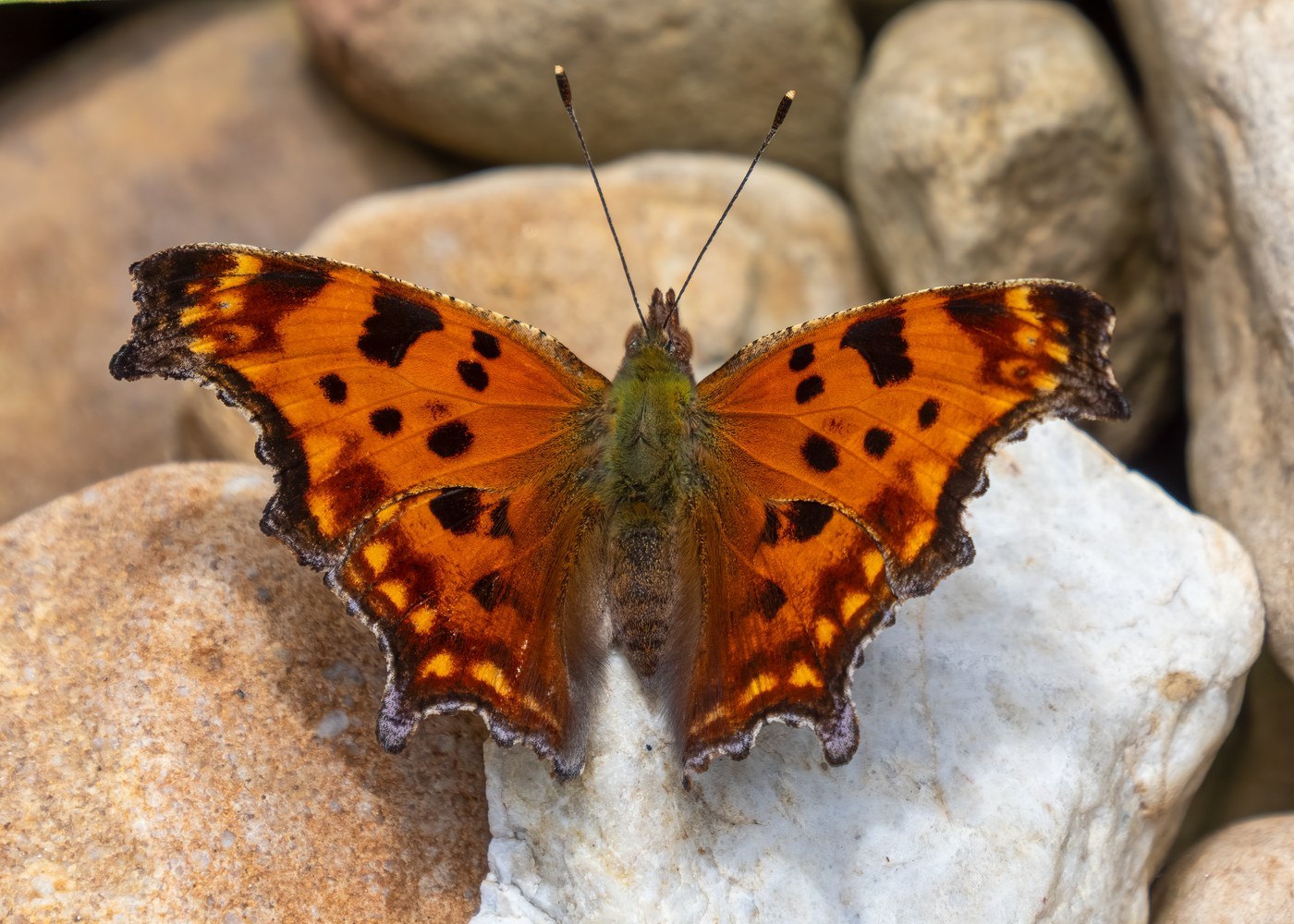
Eastern Comma
Polygonia comma
A ragged-edged orange-and-brown woodland butterfly named for the small, silvery comma-shaped mark on the underside of its hindwing, with a cryptic dead-leaf pattern that camouflages it perfectly when its wings are closed.
- Size
- 4.5–6.5 cm wingspan
- Habitat
- Deciduous woodlands, forest edges, streamsides (eastern North America)
- Danger
- Harmless
Spotted a bug like this?
Identify any bug or insect from a photo, free.
Overview
The eastern comma is a brushfoot butterfly (Nymphalidae) belonging to the genus Polygonia, a group commonly known as anglewings for their irregular, angular, and scalloped wing margins that give them a jagged, leaf-like outline. It is found throughout much of eastern North America, favoring wooded habitats over the open fields and meadows preferred by many other butterflies.
The species gets its common name from a small, pale, comma-shaped mark on the underside of the hindwing, a feature shared with several related Polygonia species but useful, along with subtle differences in mark shape, hindwing color, and shape of the projections, for identification. Like the mourning cloak, the eastern comma overwinters as an adult, sheltering in bark crevices, hollow logs, or similar cover, and can be one of the first butterflies seen flying on warm days in late winter or early spring.
An old alternate name, "hop merchant," reflects a folk belief tied to the caterpillar's association with hop vines, an example of how vernacular names for butterflies sometimes carry historical or folkloric associations rather than purely descriptive ones.
How to Identify
- Wingspan roughly 4.5–6.5 cm; upperwings are orange with dark brown-black spots and blotches, deeper toward the wing bases.
- Wing margins are deeply notched and angular ("anglewing" shape) rather than smoothly rounded, giving a ragged silhouette.
- Underside is mottled brown and gray, closely resembling a dead leaf, with a small silvery-white comma-shaped mark near the center of the hindwing.
- Seasonal forms differ: summer-form individuals tend to have darker hindwings, while the overwintering fall/winter form is typically more orange overall.
- Lookalikes: the question mark butterfly (Polygonia interrogationis) is very similar but larger, with an added small dot next to the comma mark forming a "question mark" shape on the hindwing underside; the gray comma is another close relative distinguished by subtler differences in the underside pattern.
Habitat & Range
Found in deciduous woodlands, forest edges, streamside corridors, and wooded parks across much of eastern North America, generally avoiding wide-open treeless habitats. Adults overwinter in sheltered spots such as bark crevices or woodpiles and can be seen flying on unusually mild days in very early spring, well before most butterflies emerge. Activity continues through summer and fall, with the species often perching on tree trunks, fallen logs, or bare ground rather than flowers.
Behavior & Diet
Adults feed mainly on tree sap, rotting fruit, and occasionally animal droppings rather than flower nectar, and are frequently seen basking with wings spread on sunlit tree trunks or the forest floor. When at rest with wings closed, the dead-leaf pattern on the underside provides effective camouflage against tree bark and leaf litter. Caterpillars feed on the leaves of host plants including elm, hop vines, and nettles, and are spiny with variable coloring, often resting along leaf edges or the undersides of leaves.
Life Cycle
Complete metamorphosis, with two to three generations per year across most of its range. Eggs are laid singly or in small stacks on the leaves of host plants such as elm, hop, and nettle; caterpillars are spiny, variably colored from pale to dark, and feed through several molts before pupating in an angular, mottled chrysalis suspended from a leaf or twig. The final generation of the year emerges in the darker summer form initially before later individuals shift to the brighter overwintering form, which survives the cold months as a dormant adult sheltering in bark crevices or similar cover, emerging again the following spring.
Frequently asked questions
Why is it called the "comma"?
It's named for a small, silvery, comma-shaped mark on the underside of the hindwing, visible when the wings are closed.
How do I tell it apart from the question mark butterfly?
The question mark is larger and has an extra small dot next to the comma-shaped mark, forming what looks like a punctuation question mark on the hindwing underside.
Why does it look like a dead leaf when its wings are closed?
The mottled brown-gray underside pattern closely mimics dead foliage, providing camouflage while the butterfly rests on bark or leaf litter.
Where would I be most likely to see one?
In wooded habitats such as forest edges and streamside woodlands in eastern North America, often perched on a tree trunk or on the ground rather than on flowers.
Eastern Comma guides
In-depth guides for identifying, understanding, and living alongside Eastern Comma.
Other bugs you may enjoy
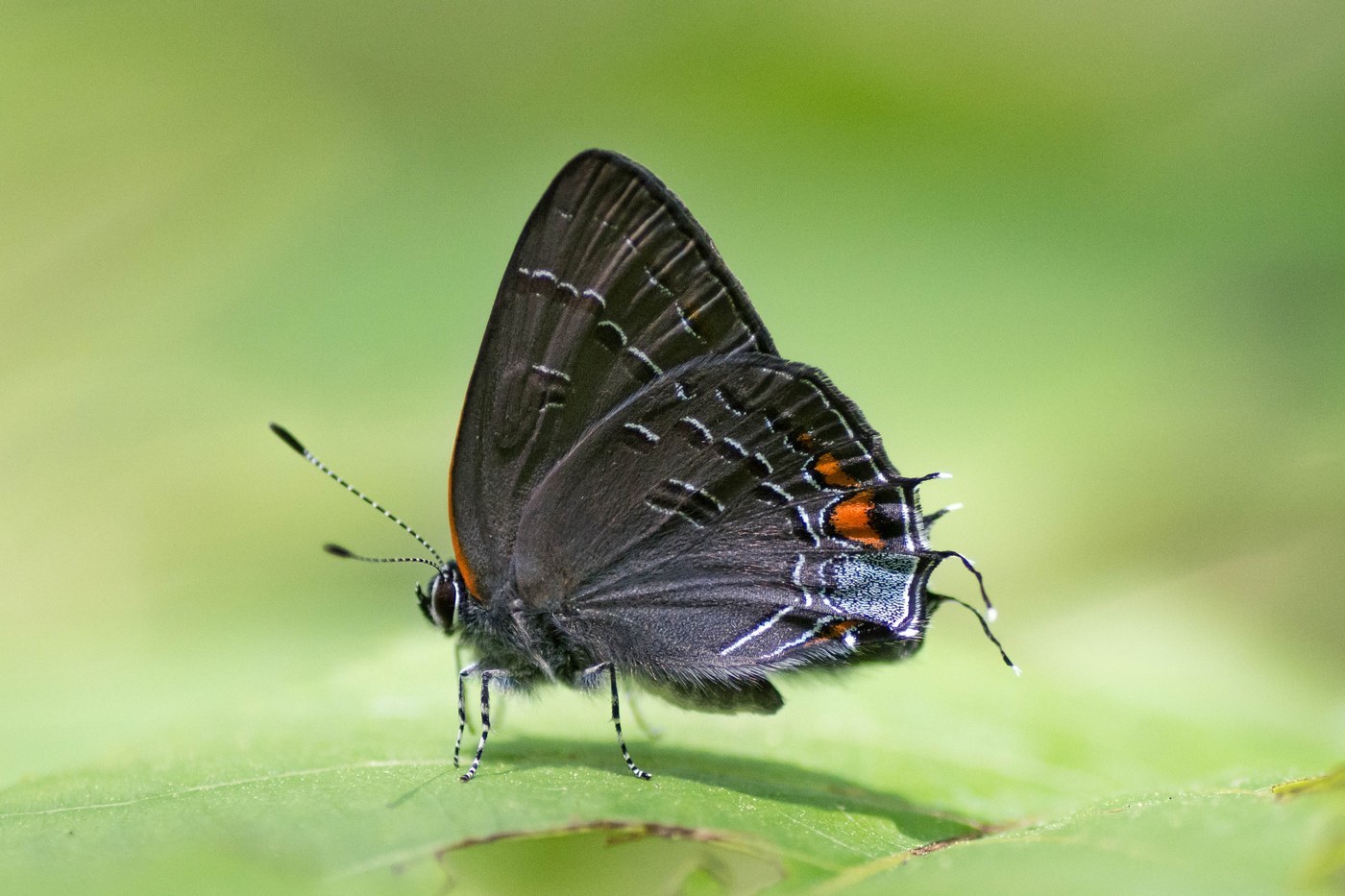
Banded Hairstreak
Deciduous woodlands and edges with oaks and hickories
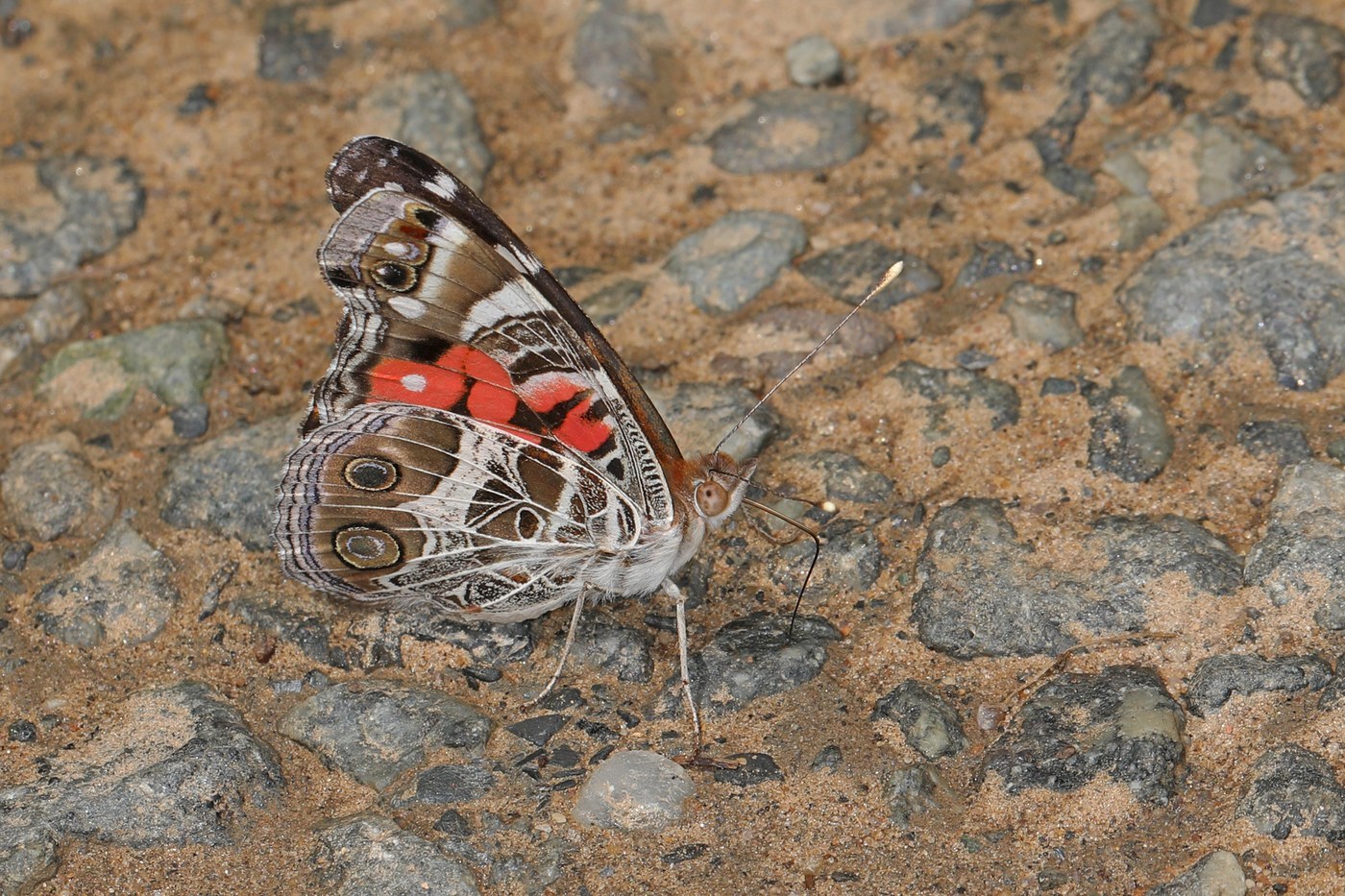
American Lady
Open fields, meadows, gardens, roadsides
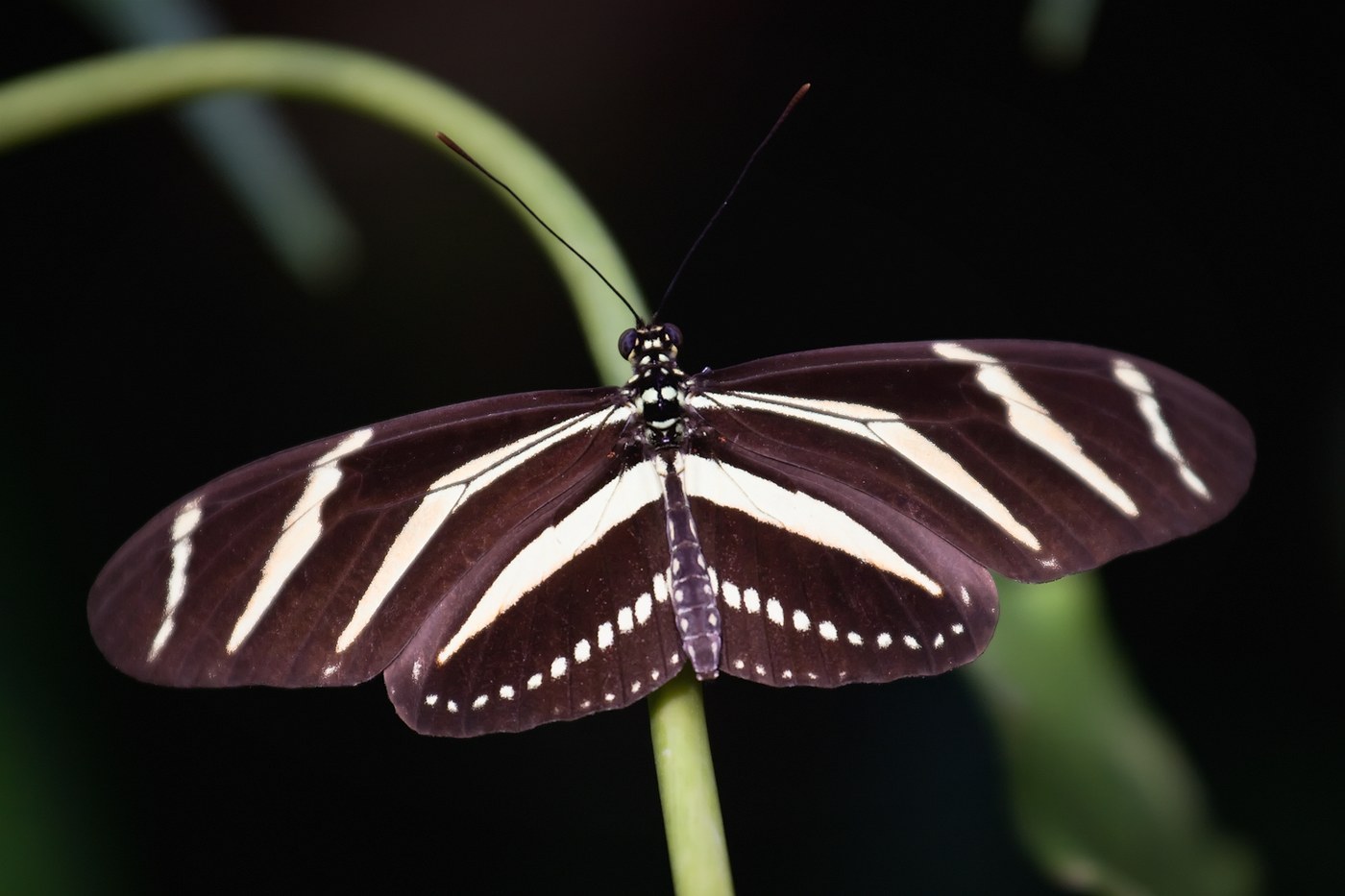
Zebra Longwing
Tropical hammocks, gardens, forest edges
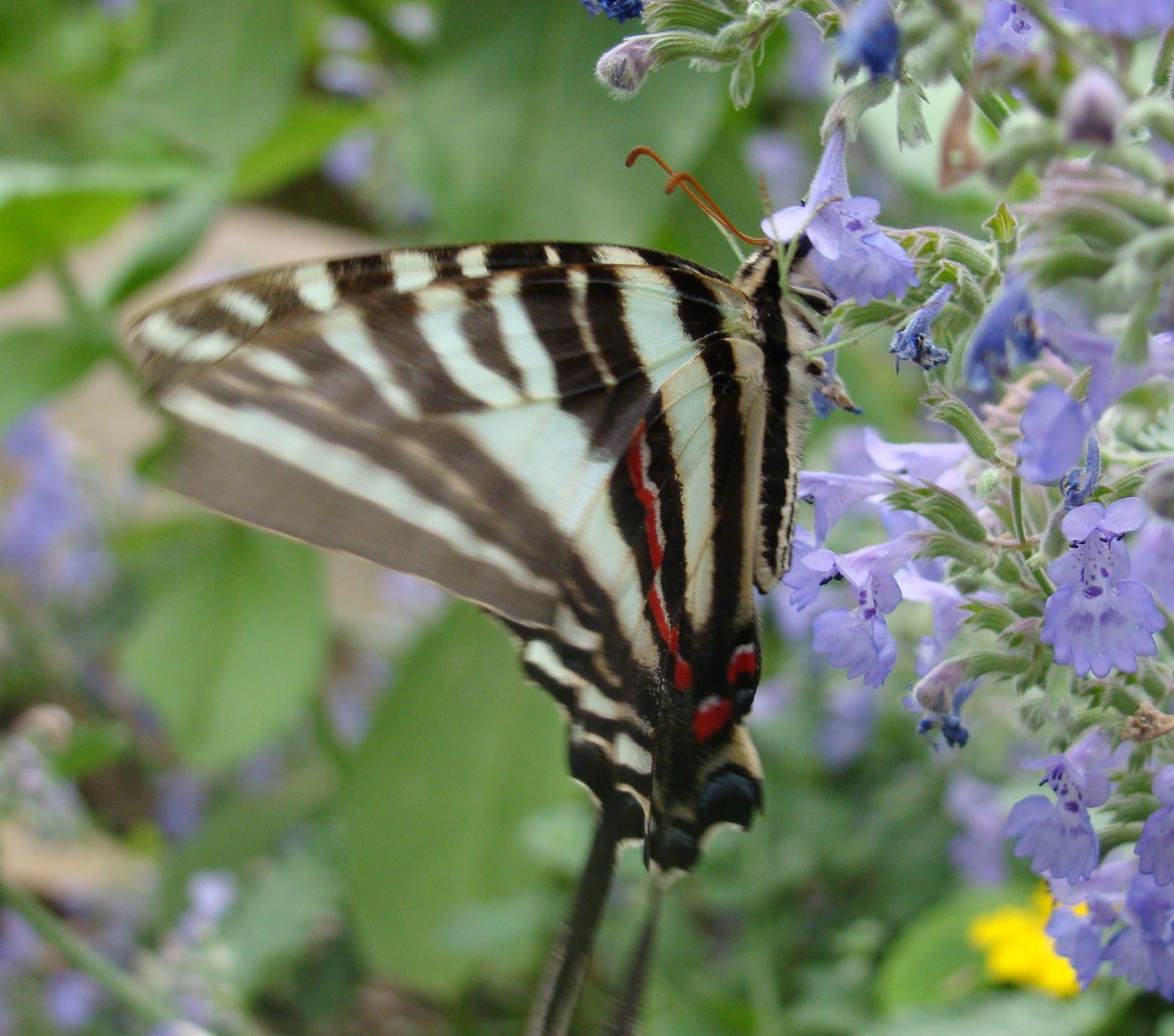
Zebra Swallowtail
Woodlands, floodplains, forest edges near pawpaw
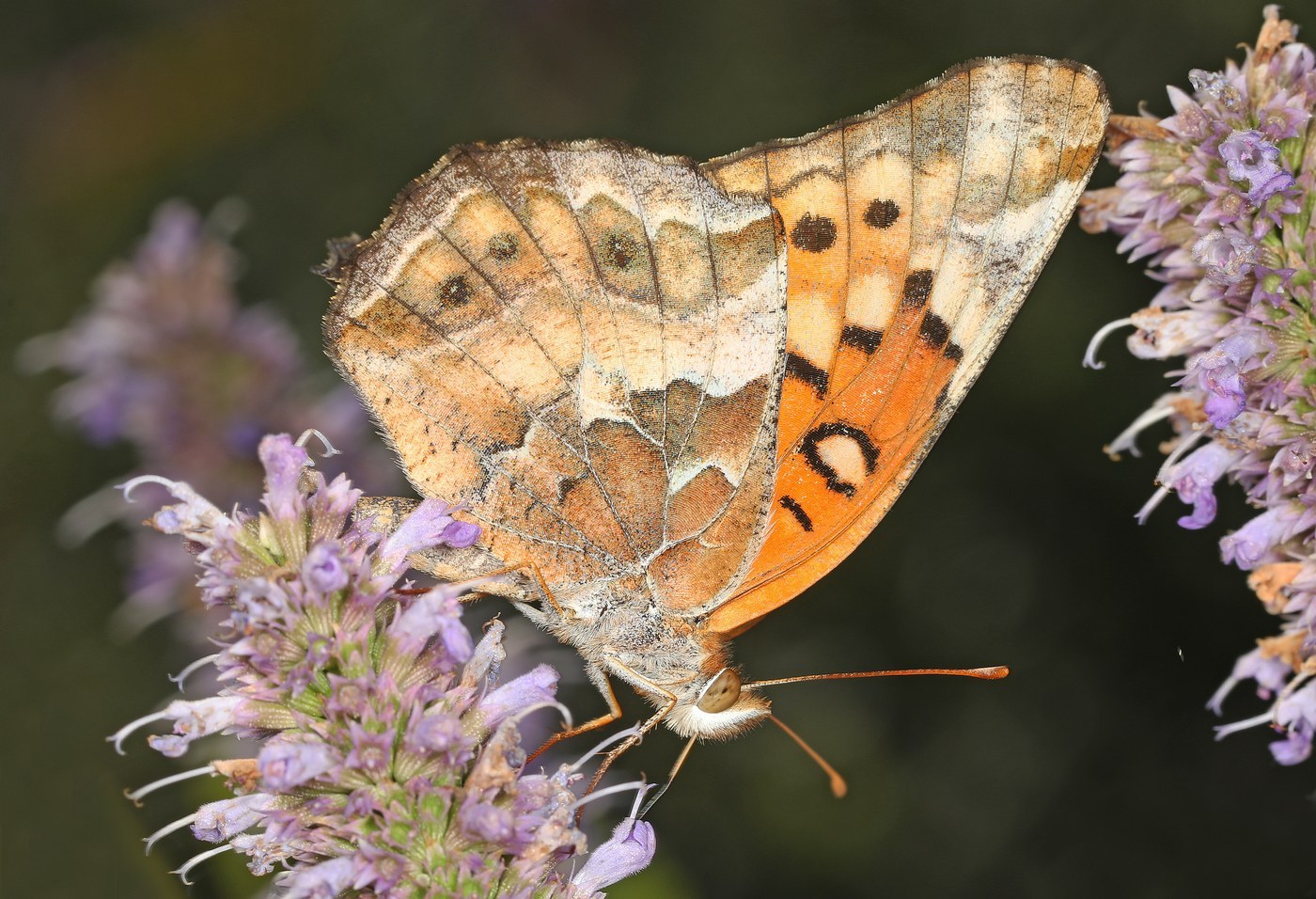
Variegated Fritillary
Open fields, prairies, roadsides, and disturbed ground across most of the United States
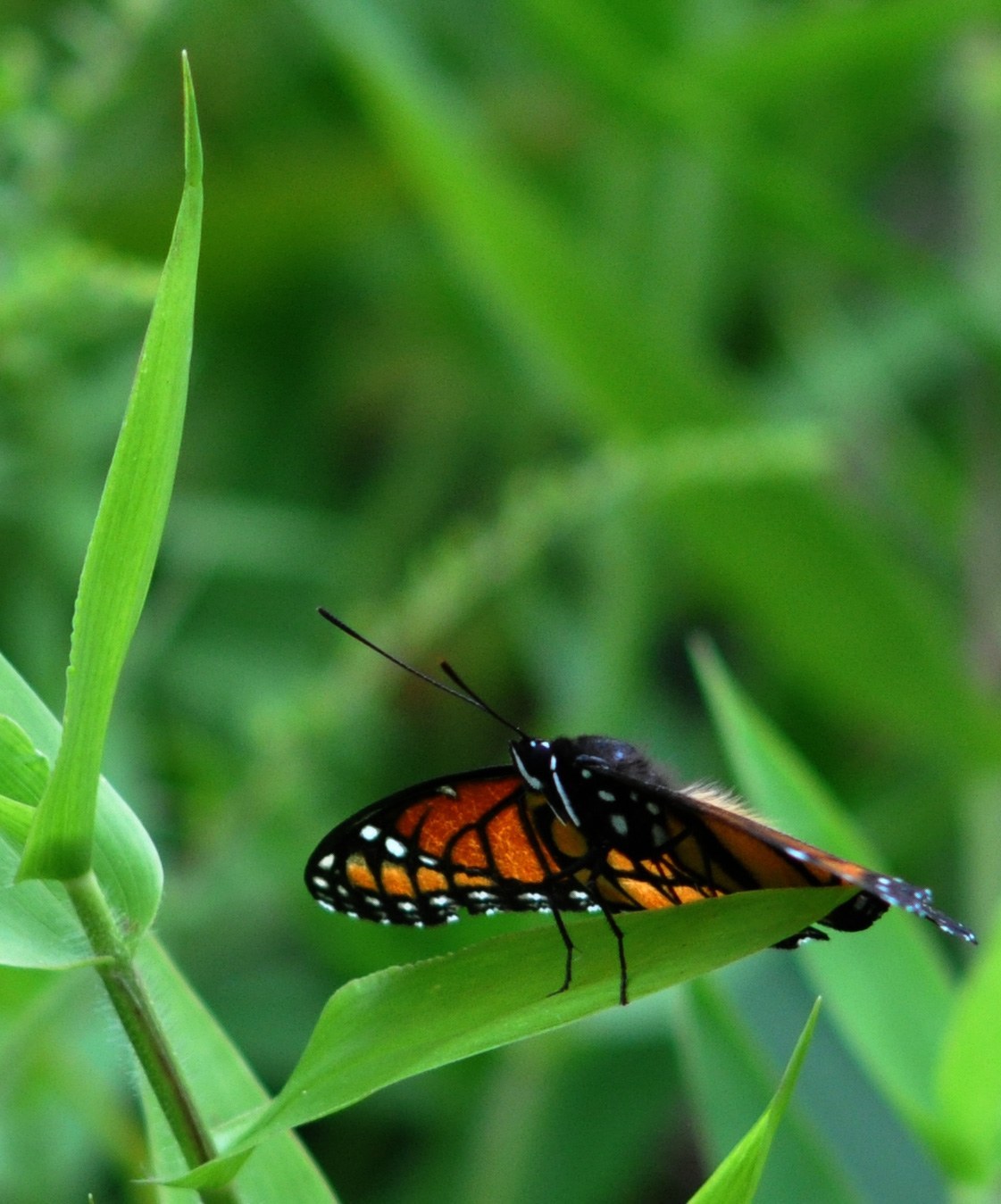
Viceroy Butterfly
Wetlands, meadows, riverbanks, willow thickets (North America)
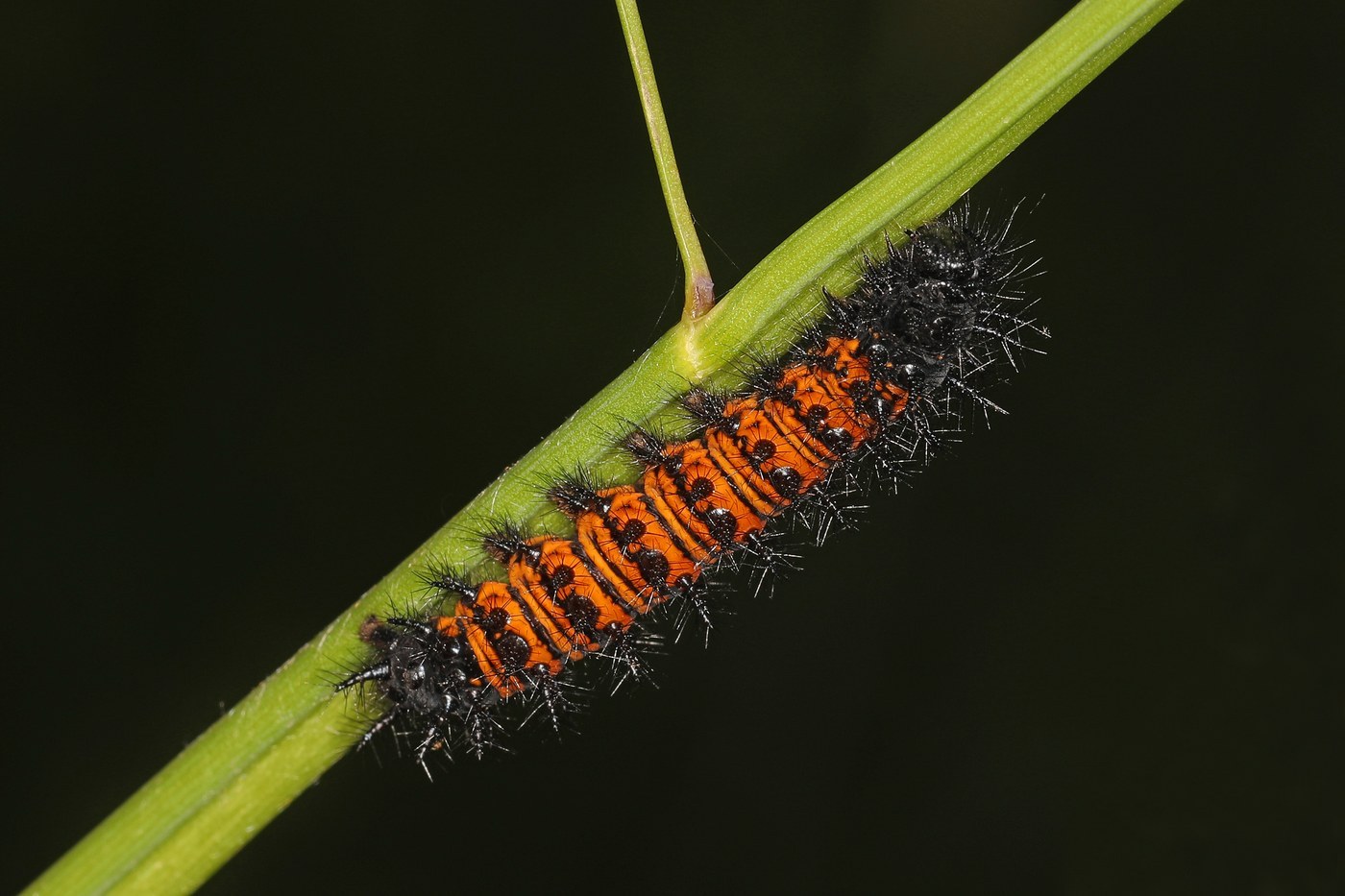
Baltimore Checkerspot
Wet meadows, bogs, and marshy fields in the northeastern and Appalachian US
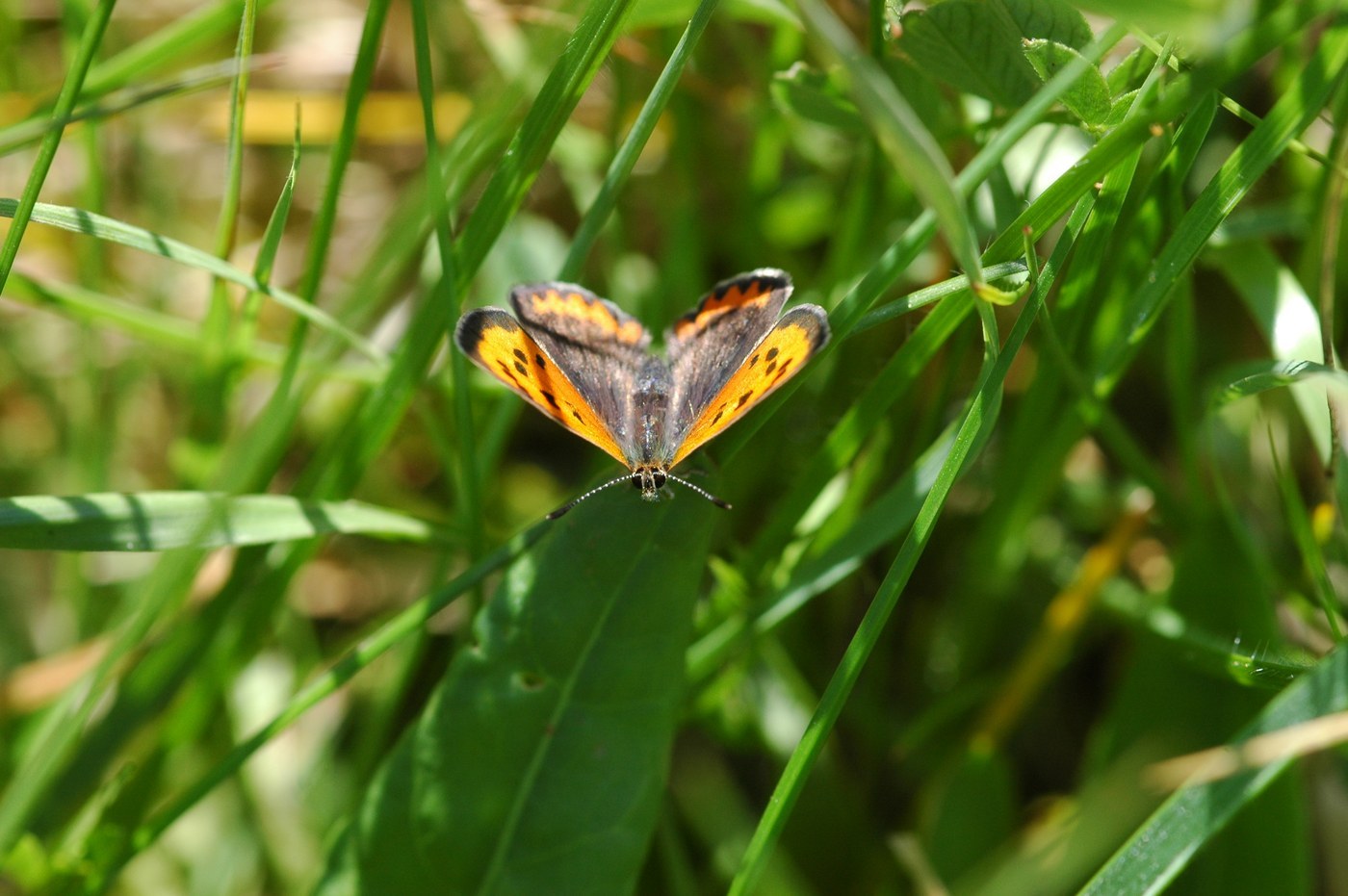
American Copper
Old fields, roadsides, and disturbed open ground with sorrel or dock
West Virginia White
Rich deciduous forest floors, especially near seeps and streams
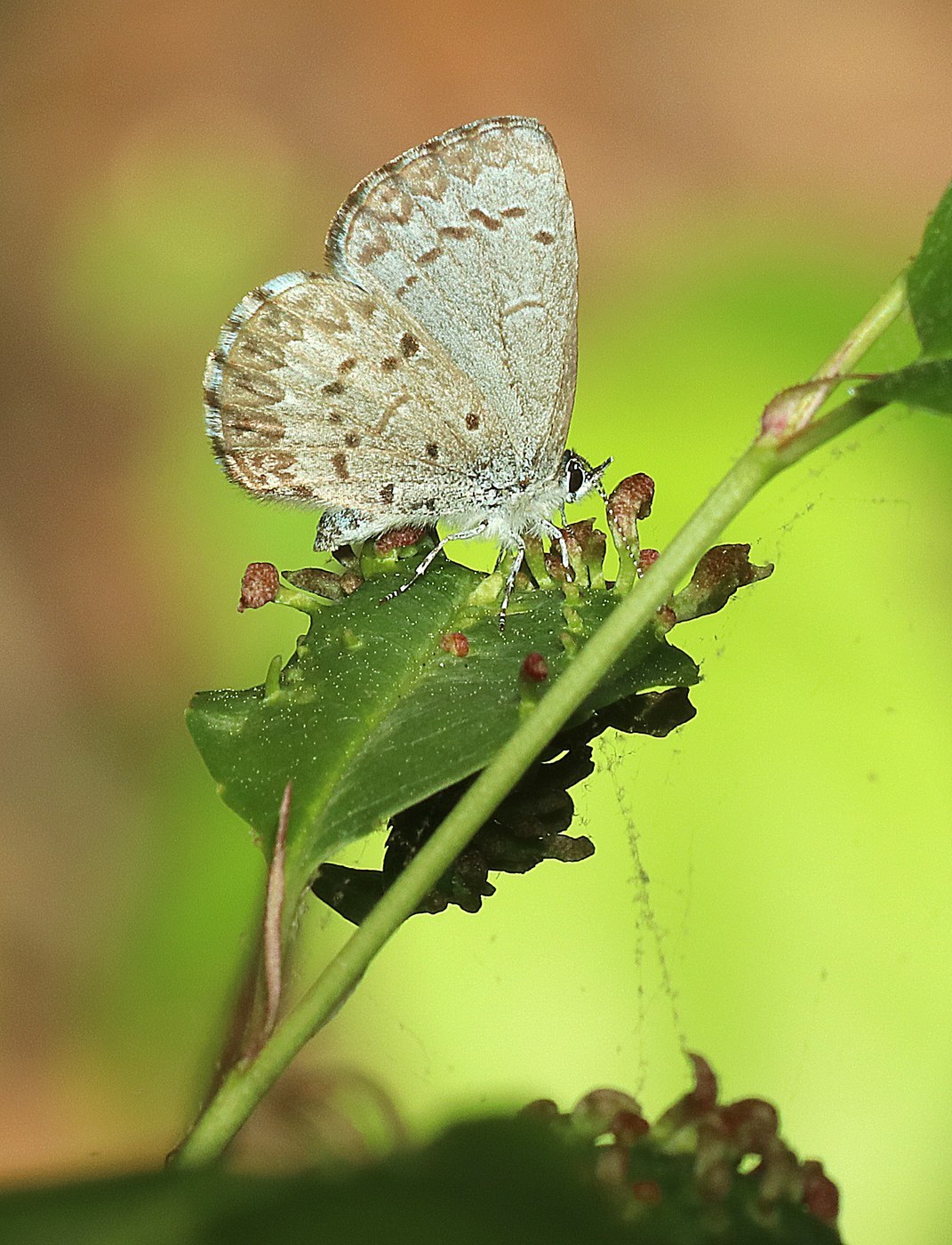
Spring Azure
Woodland edges, gardens, shrubby clearings
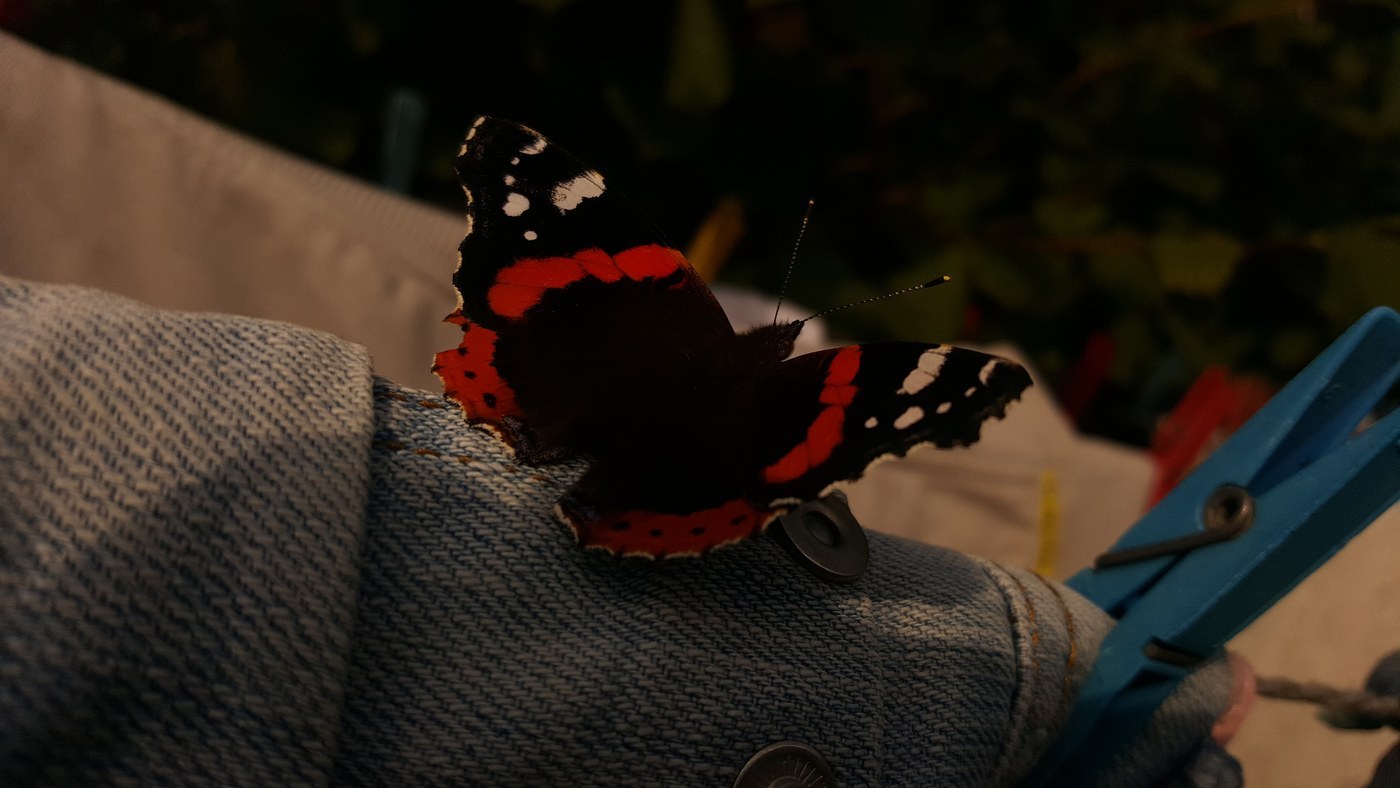
Red Admiral
Gardens, woodland edges, parks, meadows
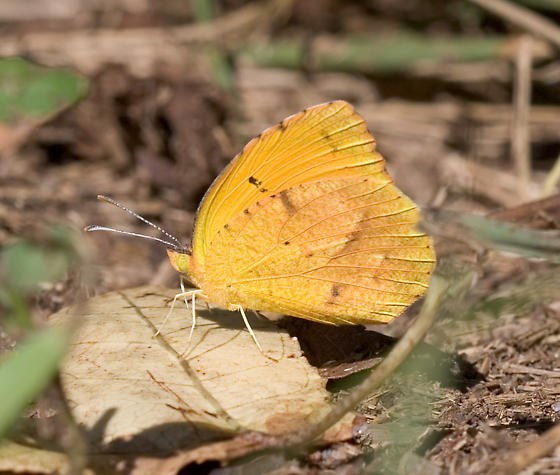
Sleepy Orange
Open woodland, fields, roadsides, and disturbed ground