Eastern Lubber Grasshopper Identification Guide
Learn to identify the largest and most boldly marked lubber species by its size, short wings, and vivid warning colors.
Read the full Eastern Lubber Grasshopper encyclopedia entry →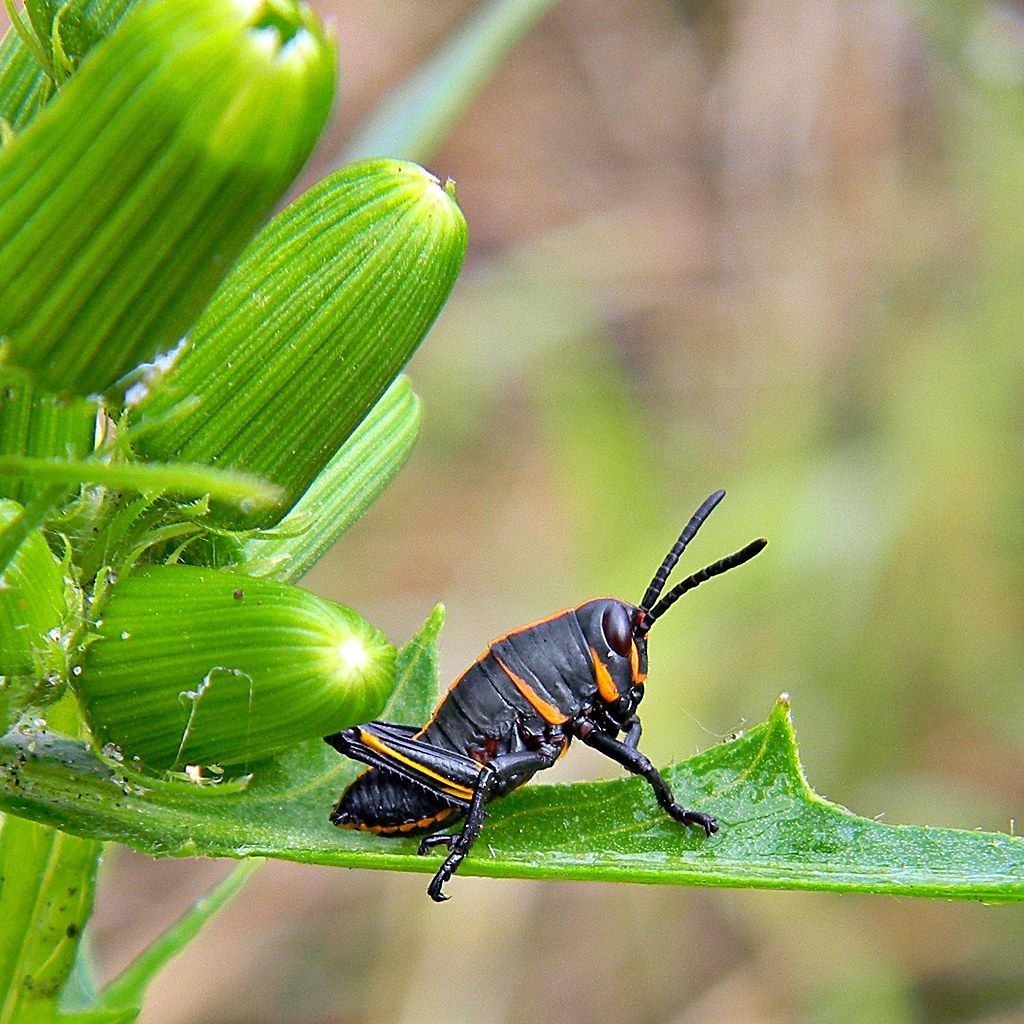
Key Visual Features
The eastern lubber grasshopper (Romalea microptera) is the largest and most commonly encountered lubber species, with adults reaching up to 3 inches long, among the biggest grasshoppers in North America.
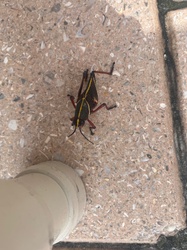
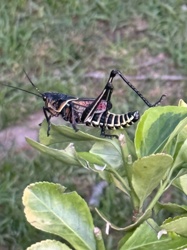
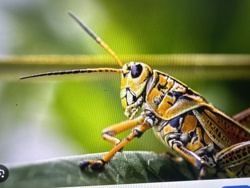
- Color forms: Adults commonly appear bright yellow or gold with scattered black spots and markings; in parts of the range, a darker form is also common, with a mostly black body marked by yellow, orange, or red stripes and highlights.
- Wings: Very short wings that fall far short of covering the abdomen, giving this species its "microptera" (small-wing) name and leaving it essentially flightless.
- Hindwings: When threatened, this species may partially spread its wings to reveal reddish or pink coloring underneath, adding to its bold appearance.
- Body shape: Thick, heavy body with a large head and short, stout antennae.
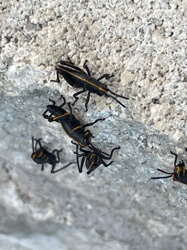
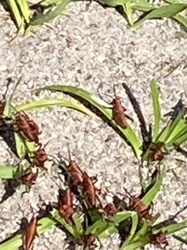
- Nymphs: Young lubbers are typically black with yellow, orange, or red stripes running down the body, looking quite different from some adult color forms.
Where and When You'll See It
Eastern lubbers are found throughout the southeastern United States, especially common in Florida and along the Gulf Coast, in open pine woods, fields, gardens, and roadside vegetation. Nymphs emerge in spring, and adults are most visible from summer into fall. Being flightless and slow-moving, they're often seen crawling deliberately across open ground or clustering on low plants in full sun.
Similar-Looking Species
- Other lubber grasshoppers: The eastern lubber is generally the largest and most brightly marked lubber species encountered; other lubbers may show more muted coloring or a smaller size.
- Large winged grasshoppers (differential, American grasshopper): These have long wings that extend past the abdomen and can fly, unlike the short-winged, ground-bound eastern lubber.
- Other black-and-yellow striped insects: The combination of very large size, short wings, and slow crawling movement helps distinguish nymph and adult lubbers from other striped insects.
Quick ID Checklist
- Very large body, up to about 3 inches
- Short wings that don't reach the abdomen tip
- Bright yellow/gold with black spots, or black with yellow/orange/red stripes
- Slow, deliberate crawling rather than jumping or flying
- Nymphs are black with bold yellow/orange/red stripes; found across the southeastern US, especially Florida and the Gulf Coast
Frequently asked questions
How big does an eastern lubber grasshopper get?
Adults can reach up to about 3 inches long, making it one of the largest grasshoppers found in North America.
Why is it called a 'lubber'?
The name reflects its slow, clumsy, lumbering movement on the ground, a result of having very short wings that prevent effective flight.
What colors can eastern lubber grasshoppers be?
Adults are commonly bright yellow or gold with black spots, or in some populations mostly black with yellow, orange, or red stripes; nymphs are typically black with bold yellow, orange, or red striping.
Where in the US is the eastern lubber grasshopper most common?
It's especially abundant throughout the southeastern United States, particularly in Florida and along the Gulf Coast, in fields, open woods, and gardens.
Eastern Lubber Grasshopper identified by the community
Recent Eastern Lubber Grasshopper finds identified with Bug Identifier.