Eastern Tailed-Blue Identification Guide
Spot this tiny, common blue butterfly by its hair-like hindwing tail and small orange spot.
Read the full Eastern Tailed-Blue encyclopedia entry →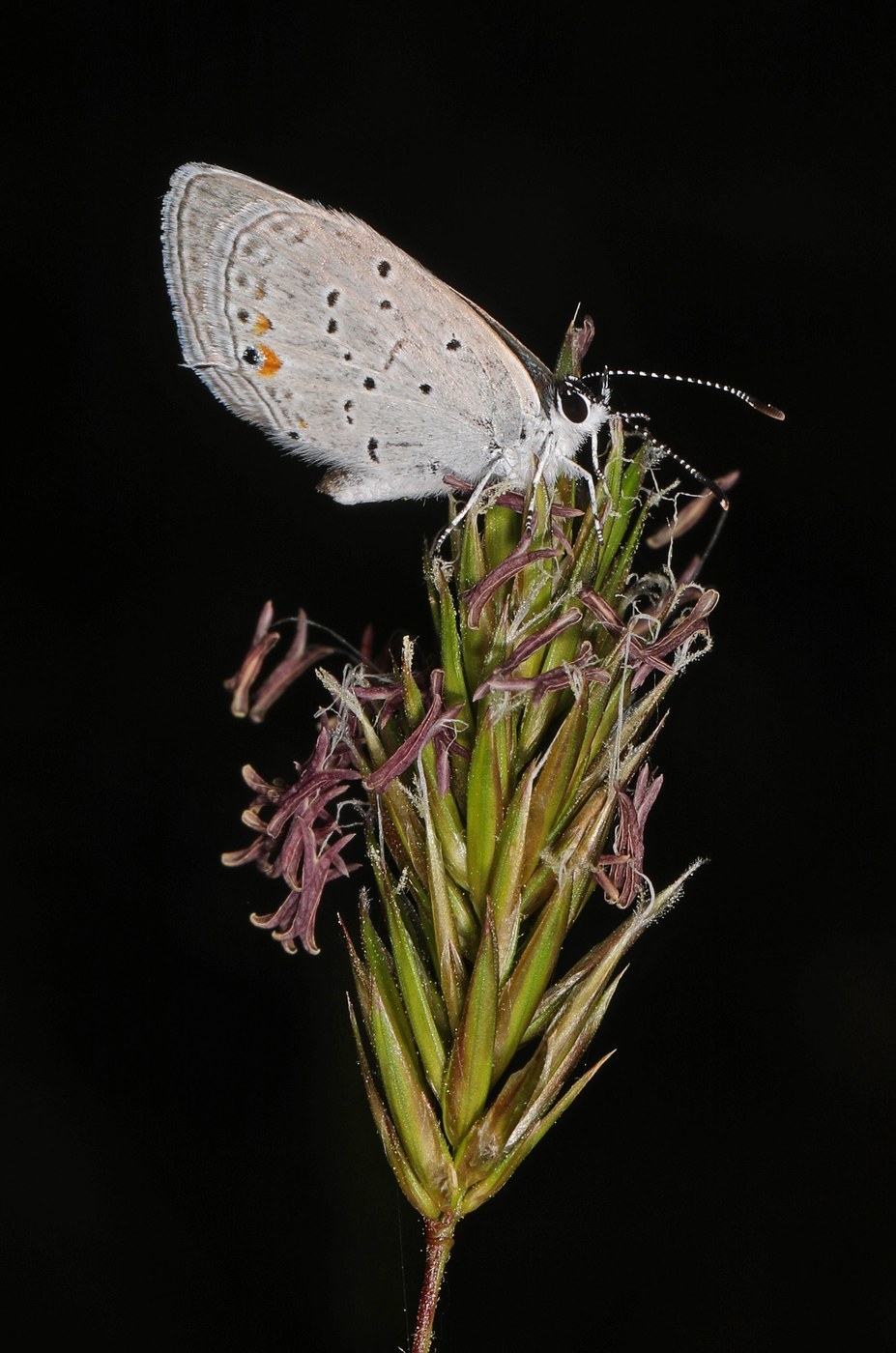
Key Visual Features
The Eastern Tailed-Blue (Cupido comyntas) is one of the smallest butterflies commonly seen in North America, with a wingspan of under 1 inch.
- Males: Dorsal wings are bright blue, often with a violet tint in fresh individuals.
- Females: Dorsal wings are more brownish-gray, sometimes with a dusting of blue near the wing base, especially in spring individuals.
- Underside: Pale gray to nearly white, marked with small scattered black spots.
- Distinctive tail: A very thin, thread-like tail extends from each hindwing, often paired with one or two small orange spots near its base.
- Body: Small and slender, matching the wing coloration.
Where and When You'll See It
This species is widespread and common across most of the eastern and central United States, extending into parts of the West. It favors open habitats such as fields, meadows, roadsides, vacant lots, and gardens, particularly where clover and other legumes grow, since these serve as host plants. Eastern Tailed-Blues fly low to the ground and are active from spring through fall, with multiple broods produced each year in most of their range.
Similar-Looking Species
- Spring Azure: Lacks the thin hindwing tail and the orange spot near the tail base that define the Eastern Tailed-Blue.
- Karner Blue: Also lacks tails, and shows a fuller band of orange crescents on the ventral hindwing rather than just one or two isolated spots.
- Other small blues: The combination of a hair-like tail plus a small orange spot near its base is the most reliable feature separating this species from similar look-alikes.
Quick ID Checklist
- Very small size, under 1-inch wingspan
- Thin, thread-like tail on each hindwing
- One or two small orange spots near the tail base
- Males bright blue above; females brownish-gray
- Common in open fields, meadows, and gardens near clover
Frequently asked questions
What is the easiest feature to spot an Eastern Tailed-Blue by?
Look for the thin, hair-like tail on the hindwing paired with a small orange spot near its base, which most similar blues lack.
Are Eastern Tailed-Blues common?
Yes, they are one of the most widespread and frequently seen small blue butterflies across much of the eastern and central United States.
What habitat is best for finding this species?
Open, sunny areas like fields, meadows, roadsides, and gardens with clover or other legumes tend to attract Eastern Tailed-Blues.
How can I tell males and females apart?
Males have bright blue upper wings, while females tend to be more brownish-gray, sometimes with a hint of blue dusting near the wing base.
Eastern Tailed-Blue identified by the community
Recent Eastern Tailed-Blue finds identified with Bug Identifier.