
Ebony Jewelwing Damselfly Identification Guide
Spot this striking, slow-fluttering damselfly by its jet-black wings and iridescent metallic green or blue body.
Read the full Ebony Jewelwing Damselfly encyclopedia entry →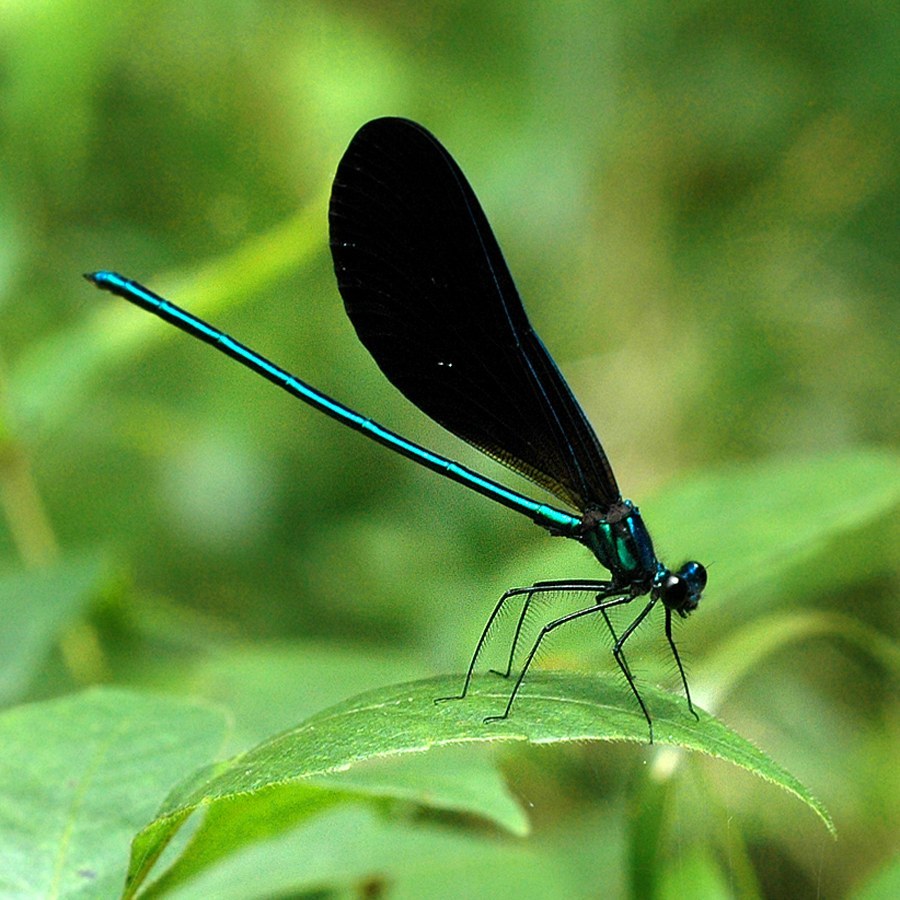
Key Visual Features
The ebony jewelwing is a large, showy damselfly known for its solid dark wings and metallic body.
- Size: Body length around 45-55 mm, with a wingspan making it one of the larger and more conspicuous damselflies in its range.
- Color: The body is brilliant iridescent metallic green to blue-green in males, catching the light with a jewel-like sheen; females are typically a duller metallic bronze-green.
- Wings: Both sexes have entirely dark, smoky-black to deep brown wings with no clear or transparent patches — a key distinguishing trait, since most other damselflies have clear or partly clear wings.
- Body shape: Slender, elongated abdomen typical of damselflies, with the body noticeably longer and thinner than the wings are wide.
- Wing posture at rest: Like other damselflies, wings are held together, folded above the body when perched, rather than spread out flat as in dragonflies.
- Wing markings: Females often show a small white or pale spot (pseudostigma) near the wingtip, absent in males.
Where and When You'd See It
Ebony jewelwings are found along shaded, slow-flowing streams and creeks with clean water, often perching on overhanging vegetation near the water's edge. They fly with a distinctive slow, fluttery, almost butterfly-like wingbeat rather than the fast darting flight of many other damselflies. Active from late spring through summer, they are most easily observed on sunny days perched in dappled shade along wooded stream banks.
Similar-Looking Bugs
- Other broad-winged damselflies (spreadwings, rubyspots): Rubyspots have red wing bases rather than fully dark wings; most spreadwings have clear or lightly tinted wings, not solid black.
- Dragonflies: Rest with wings spread flat out to the sides rather than folded above the body, and generally have thicker bodies and larger eyes that touch at the top of the head.
- Damselflies with clear wings: The vast majority of common pond damselflies (bluets, forktails) have transparent wings, making the ebony jewelwing's solid dark wings distinctive at a glance.
Quick ID Checklist
- Entirely dark, smoky-black wings with no clear areas
- Iridescent metallic green or blue-green body
- Slow, fluttery, butterfly-like flight near shaded streams
- Wings held folded together above the body at rest
- Females show a small pale spot near the wingtip; males do not
Frequently asked questions
What is the most reliable feature for identifying an ebony jewelwing?
Its entirely dark, smoky-black wings with no clear or transparent patches are the most distinctive feature, since most other damselflies in its range have clear wings.
How can you tell a male from a female ebony jewelwing?
Males have brilliant metallic green to blue-green bodies and fully dark wings, while females are a duller bronze-green and usually show a small pale spot near each wingtip.
How does its flight style help with identification?
The ebony jewelwing flies with a slow, fluttering, almost butterfly-like wingbeat, which is noticeably different from the fast, darting flight of many other damselflies.
What habitat should you check to find this damselfly?
Shaded, clean, slow-flowing woodland streams and creeks with overhanging vegetation are the typical habitat where ebony jewelwings perch and fly.