
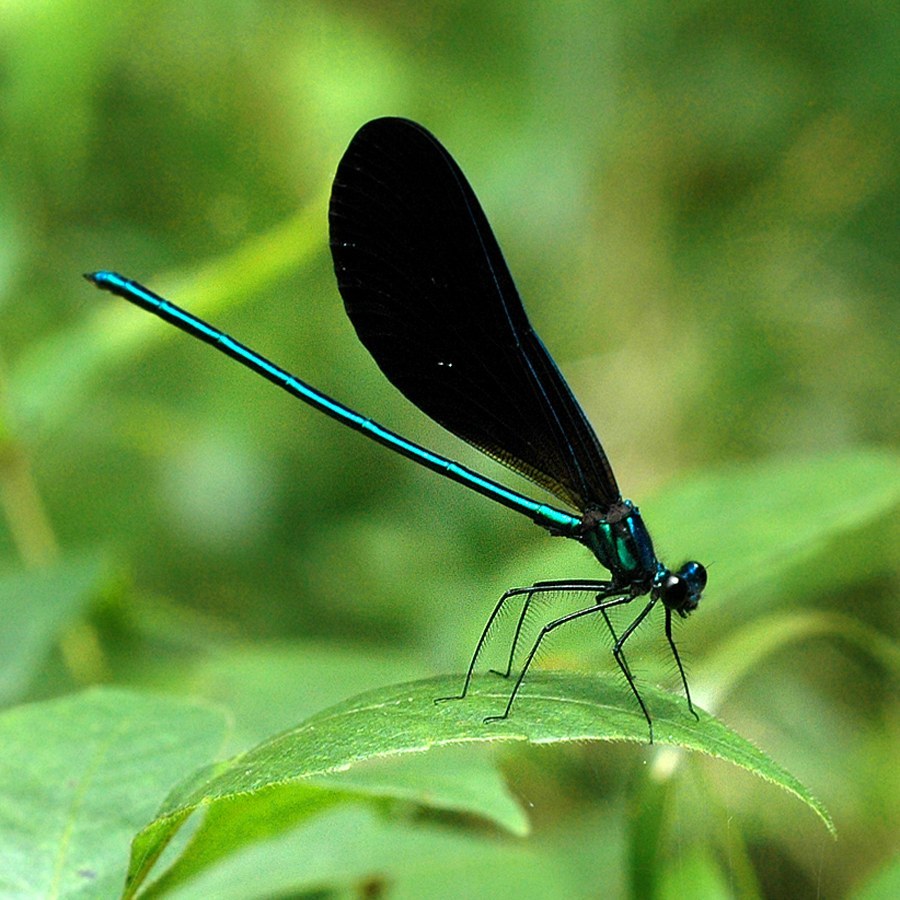
Ebony Jewelwing Damselfly
Calopteryx maculata
With a metallic emerald body and wings of solid inky black, the ebony jewelwing flutters like a delicate butterfly along shaded forest streams rather than darting like most other damselflies.
- Size
- Body length 4-5.5 cm (1.6-2.2 in)
- Habitat
- Shaded, slow-flowing forest streams
- Danger
- Harmless
Spotted a bug like this?
Identify any bug or insect from a photo, free.
Overview
The ebony jewelwing is a striking broad-winged damselfly found along wooded streams in eastern North America. Males have a brilliant metallic green to blue-black body and completely black wings, while females share the same metallic body coloring but have smoky brown wings marked with a small white spot, called a pseudostigma, near each wingtip.
Unlike the fast, direct flight of many dragonflies, the ebony jewelwing has a slow, fluttering flight pattern reminiscent of a butterfly, often flitting along stream banks and pausing on overhanging vegetation with its wings held together above the body, a resting posture typical of damselflies. Both the aquatic nymphs and terrestrial adults are predators, making this species an important link in the food webs of clean, shaded woodland streams.
How to Identify
- Slender, elongated body with brilliant metallic green to blue-black coloring in good light
- Males have entirely black wings; females have smoky brown wings each marked with a small white pseudostigma spot near the tip
- Wings held closed together above the body at rest, distinguishing it from true dragonflies, which rest with wings spread
- Fluttering, buoyant flight style compared to the fast, darting flight of most dragonflies
- Found perched on vegetation directly along the water's edge in shaded stream corridors
Habitat & Range
Ebony jewelwings are closely tied to shaded, slow to moderately flowing streams within or near wooded areas across eastern North America, from southern Canada to the Gulf Coast states. Adults are typically seen from late spring through summer, rarely straying far from the stream corridor where they developed.
Behavior & Diet
Adults are active daytime predators, catching small flying insects such as midges and mosquitoes on the wing near the stream. Males defend territories along favored stretches of stream bank, performing fluttering courtship displays for visiting females. The aquatic nymphs are likewise predatory, hunting small invertebrates among submerged roots, leaf litter, and debris, and both life stages are sensitive indicators of good water quality due to their reliance on clean, well-shaded streams.
Life Cycle
Females lay eggs into the stems of aquatic or waterside plants, sometimes submerging part of their body to do so. The aquatic nymphs hatch and develop over one to two years, molting through numerous instars while hunting small invertebrates among stream debris. When ready to transform, the mature nymph climbs out of the water onto streamside vegetation, where the adult damselfly emerges, expands its wings, and hardens before taking flight to begin its adult life along the same stream.
Frequently asked questions
How can I tell a male from a female ebony jewelwing?
Males have entirely black wings, while females have smoky brown wings each marked with a small white spot near the tip, called a pseudostigma.
Why does the ebony jewelwing fly like a butterfly?
Its broad wings and light body give it a slow, fluttering flight style quite different from the fast, direct flight typical of true dragonflies.
Where is the best place to see ebony jewelwings?
Look along shaded, slow-flowing streams within or near wooded areas in eastern North America, especially where sunlight filters through the canopy onto the water.
What do ebony jewelwing nymphs eat?
The aquatic nymphs are predators that hunt small invertebrates among submerged roots, leaf litter, and debris in the stream.
Ebony Jewelwing Damselfly guides
In-depth guides for identifying, understanding, and living alongside Ebony Jewelwing Damselfly.
Other bugs you may enjoy
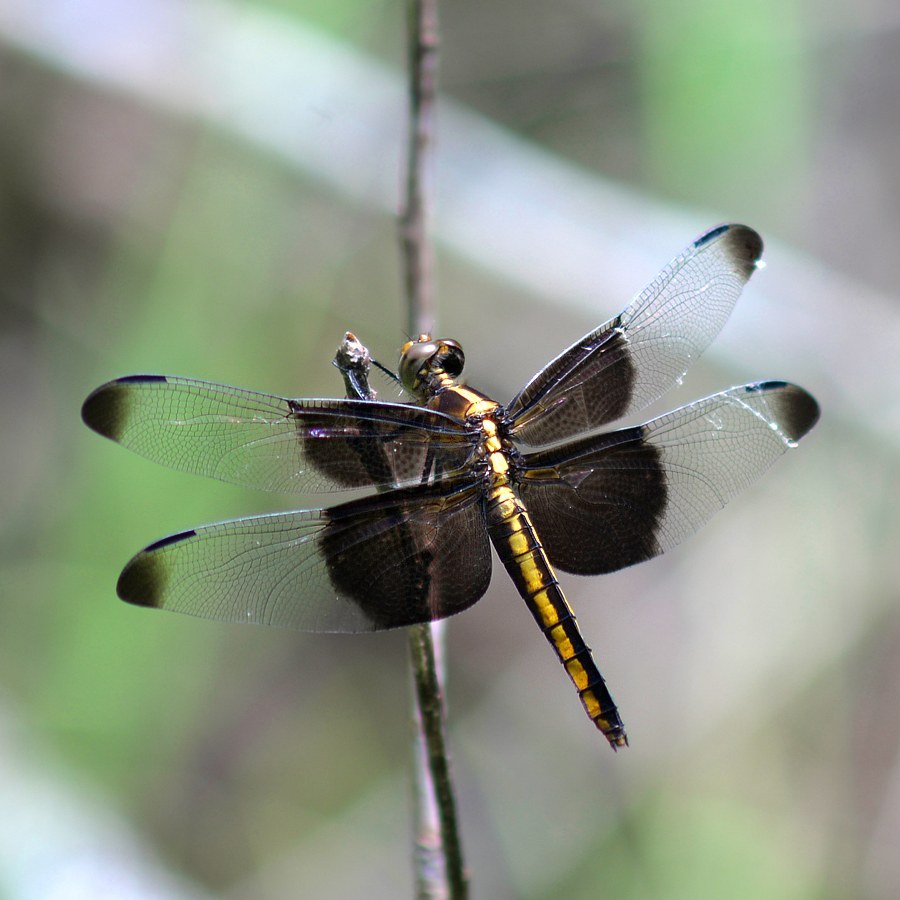
Widow Skimmer
ponds, lakes, and slow-moving streams with open shoreline vegetation across much of the United States
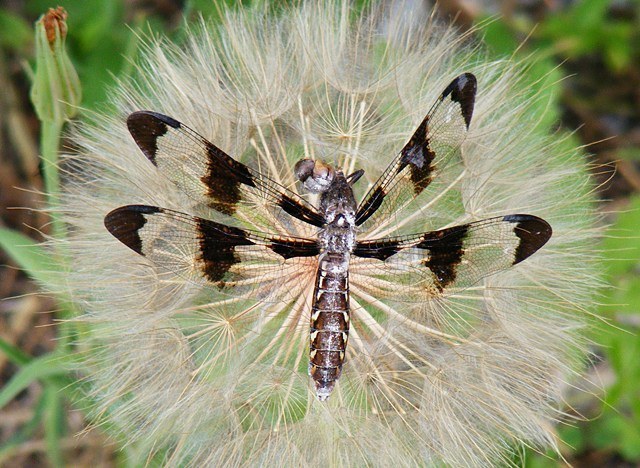
Twelve-spotted Skimmer
Ponds, lakes, and slow streams with open, sunny shorelines
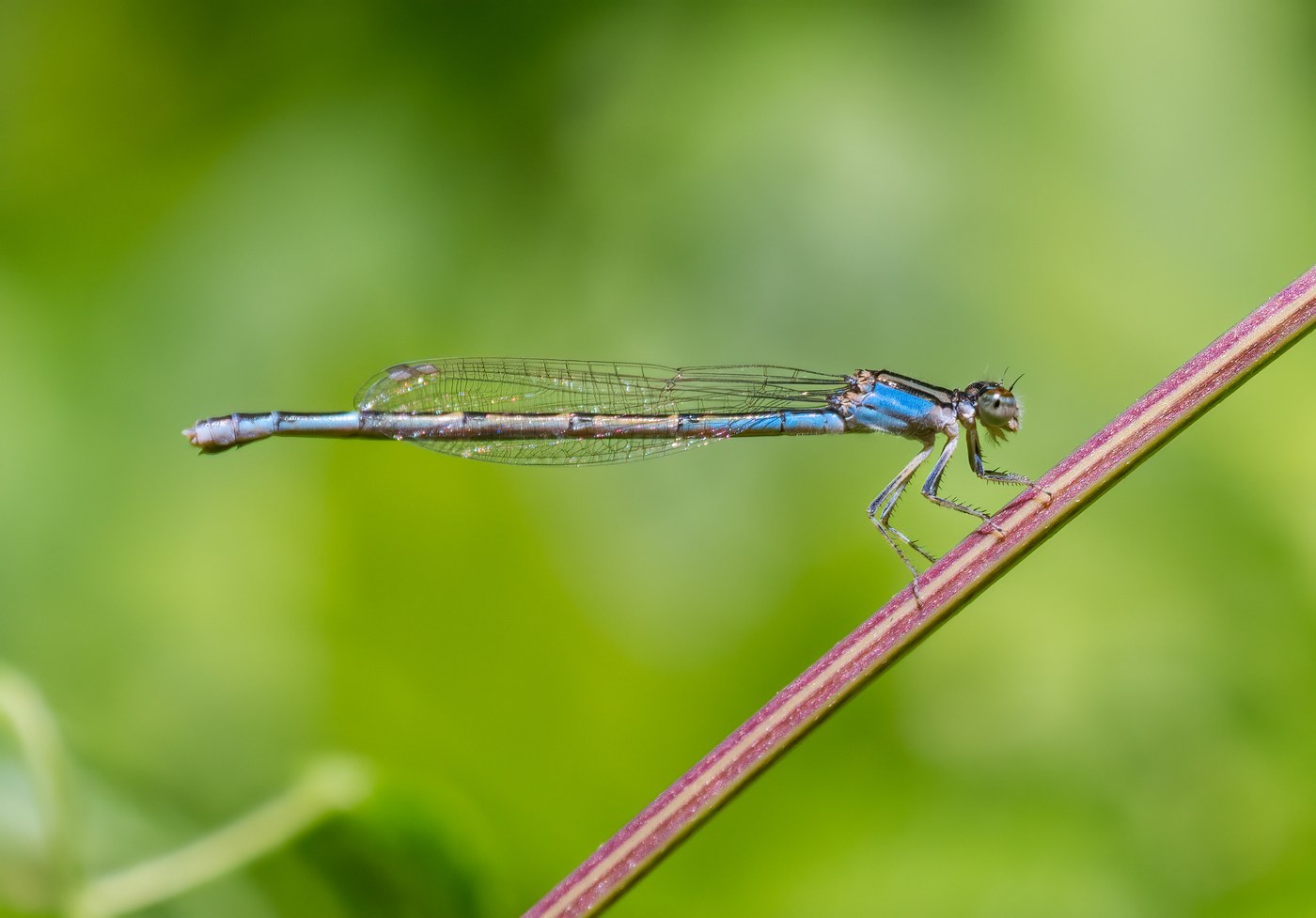
Azure Bluet
ponds, lakes, and slow streams with abundant aquatic vegetation
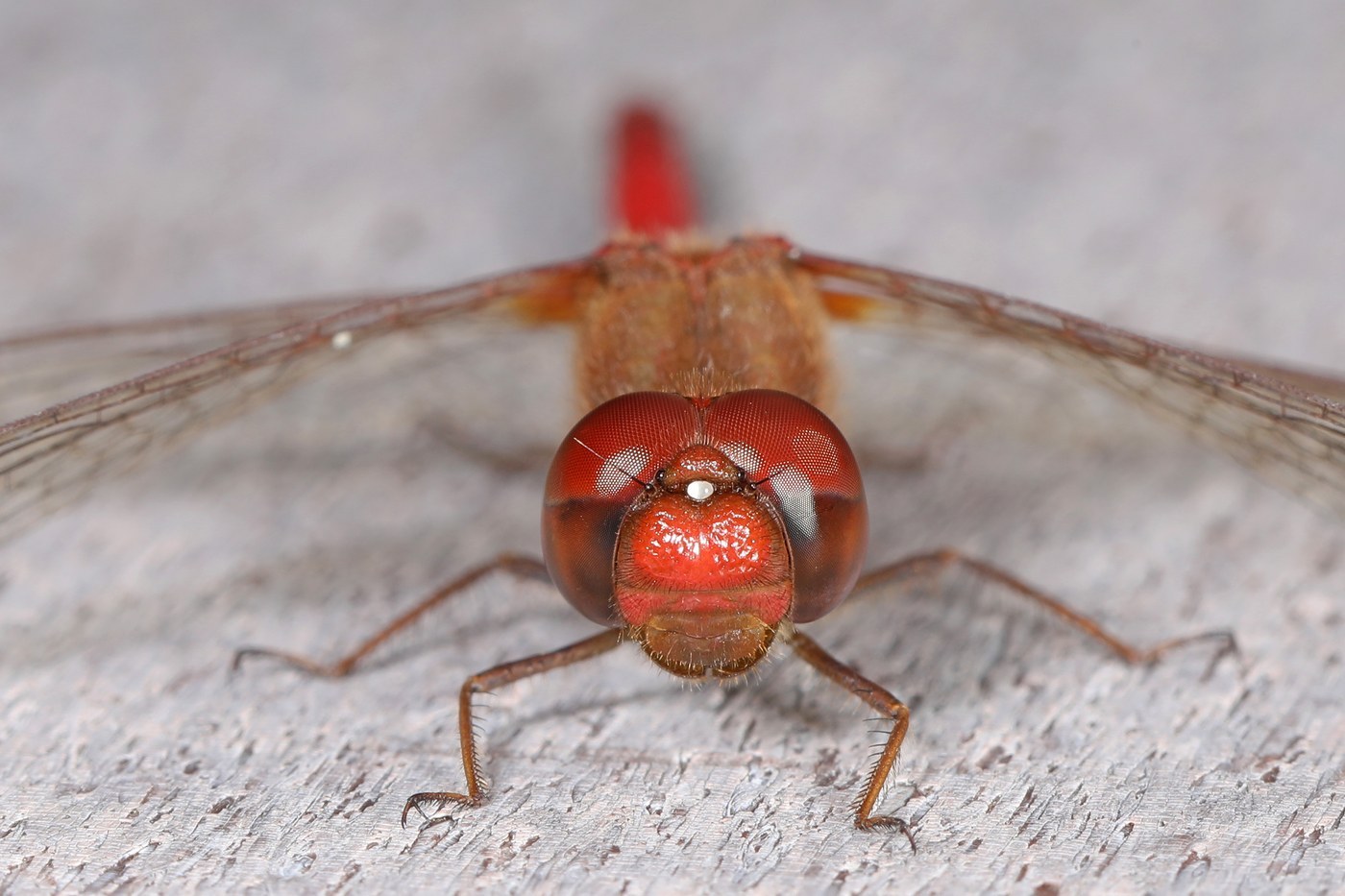
Autumn Meadowhawk
Ponds, marshes, and slow streams, often lingering into late fall
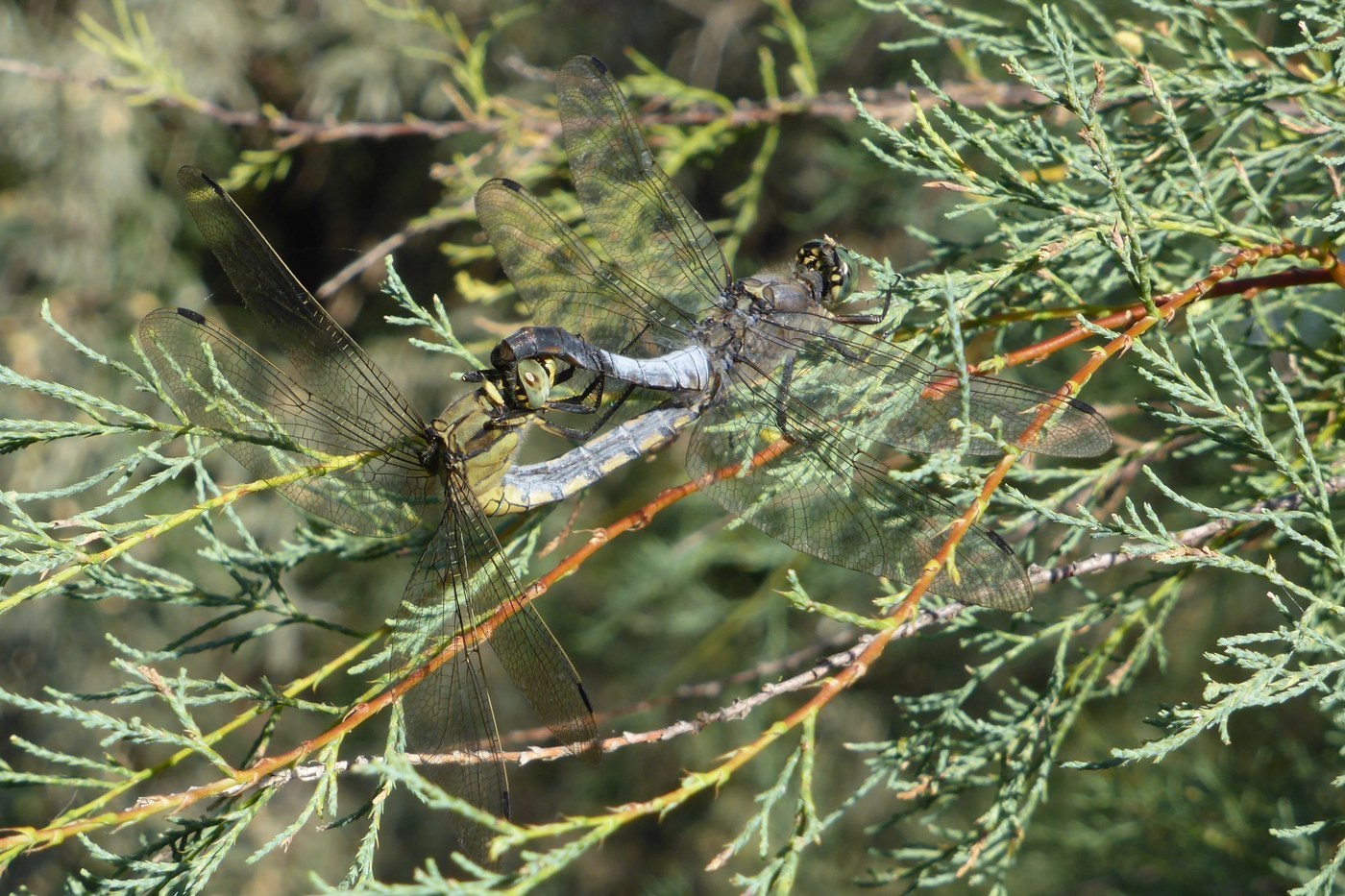
Spangled Skimmer
Ponds, lakes, and marshes with open sunny shorelines
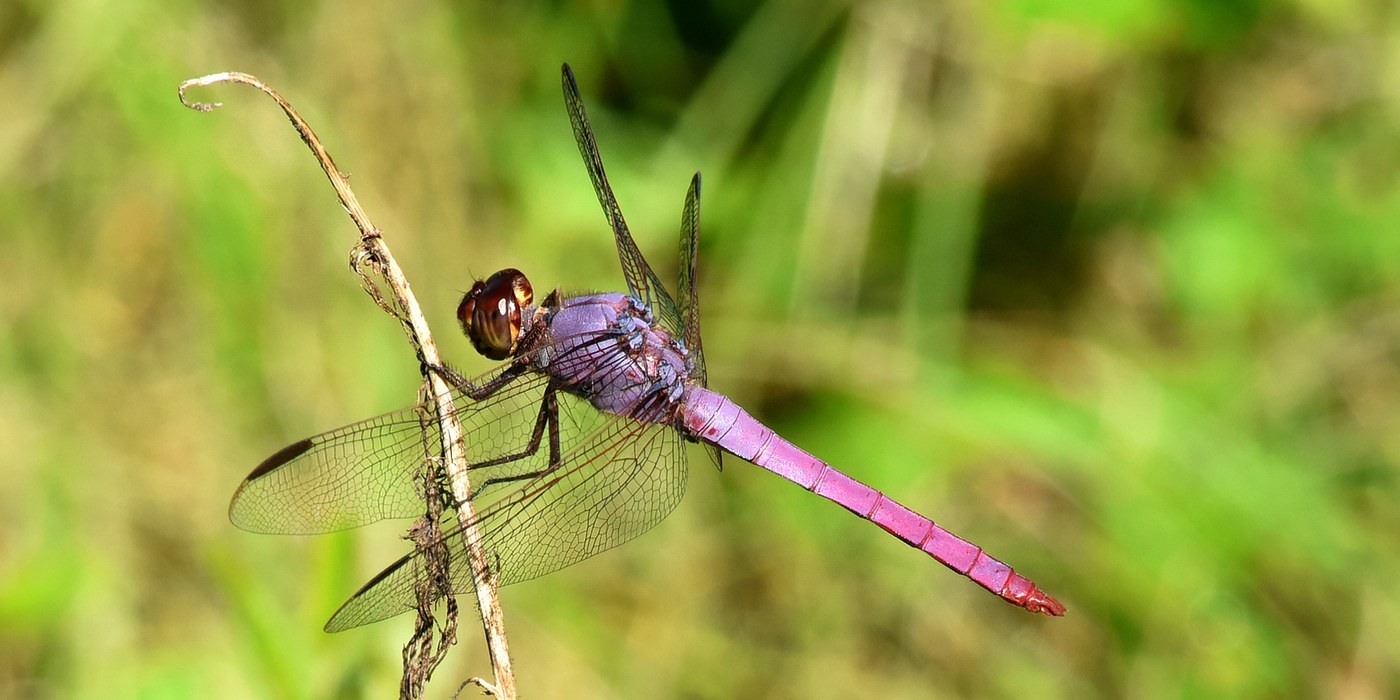
Roseate Skimmer
Ponds, ditches, and canals across the southern United States
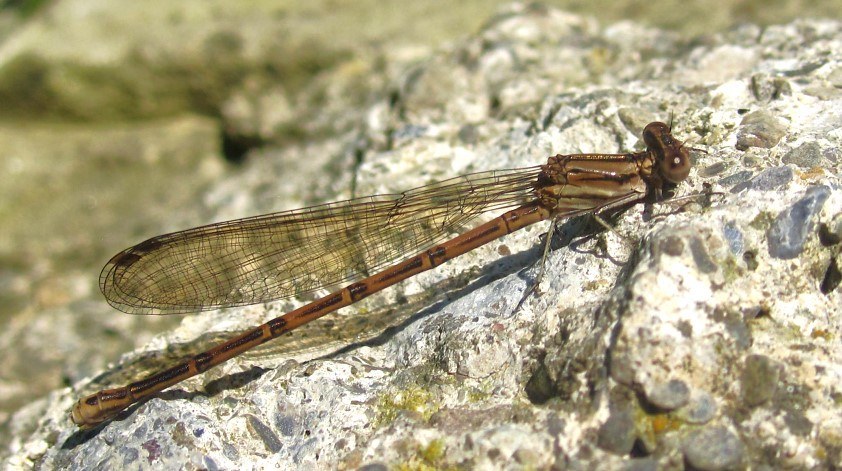
Variable Dancer
streams, rivers, and pond margins, especially in wooded or partly shaded settings
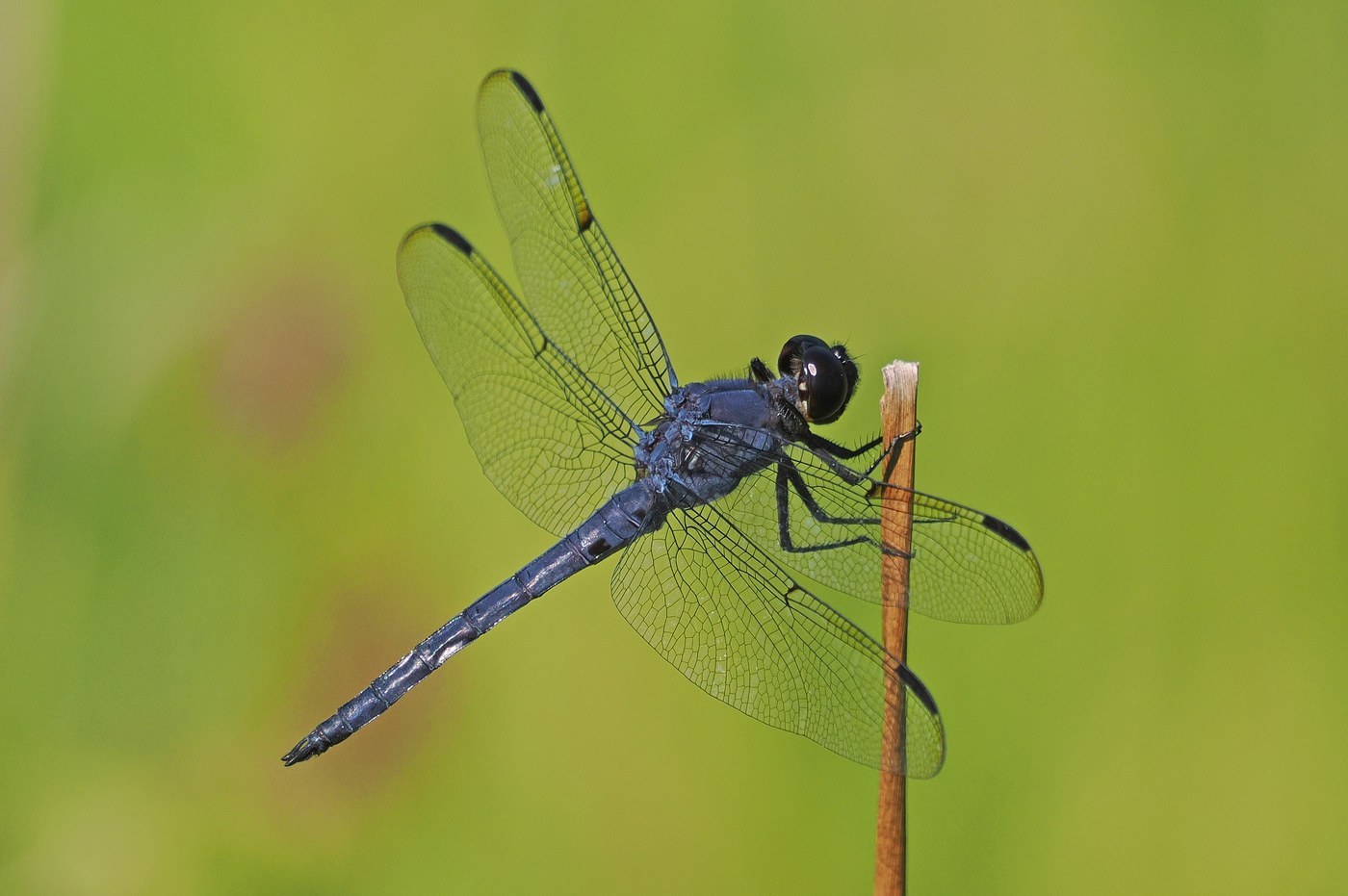
Slaty Skimmer
Still or slow-moving ponds, lakes, and marshes with open shoreline
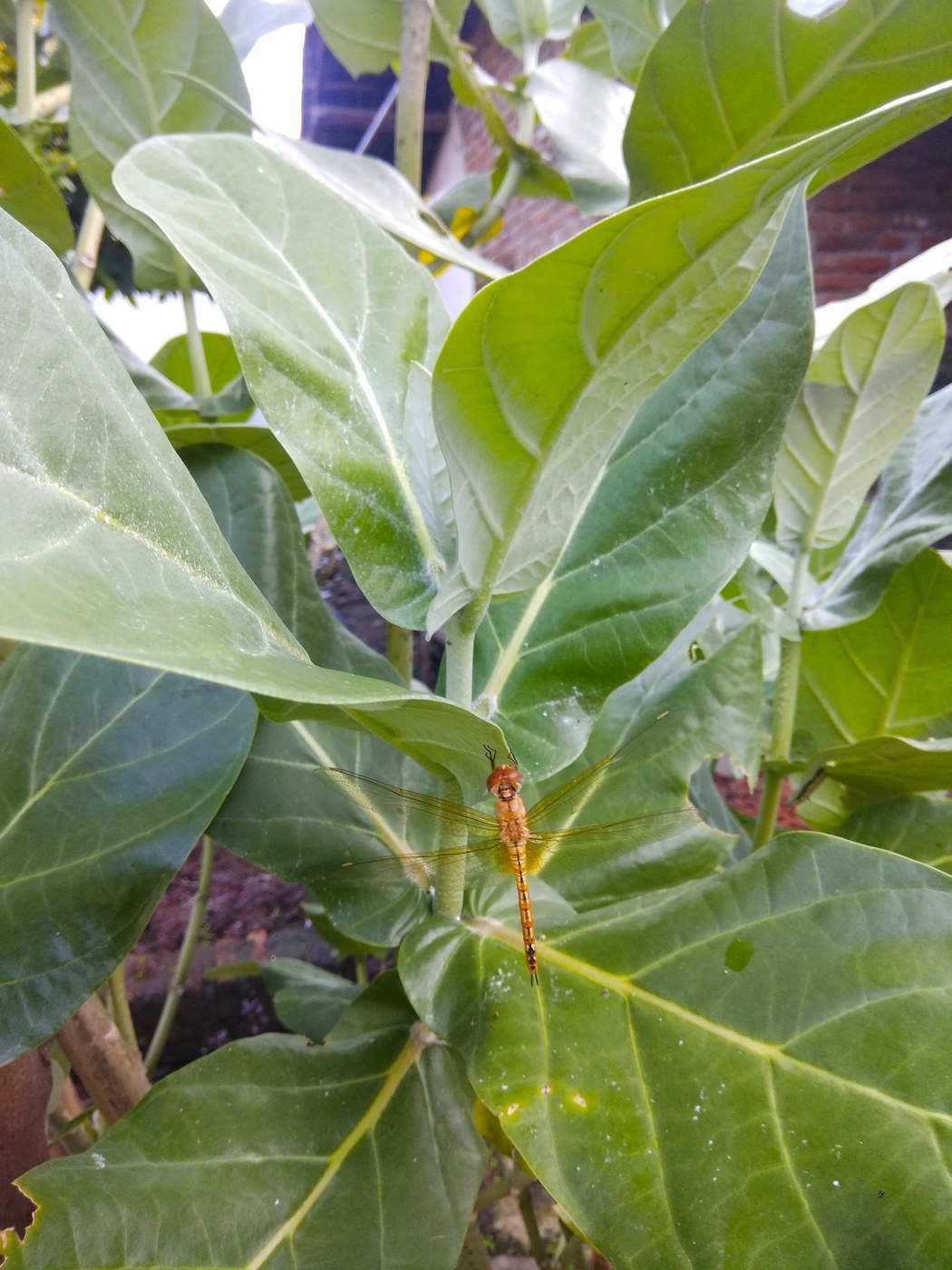
Wandering Glider
Temporary pools, open fields, and coastlines nearly worldwide
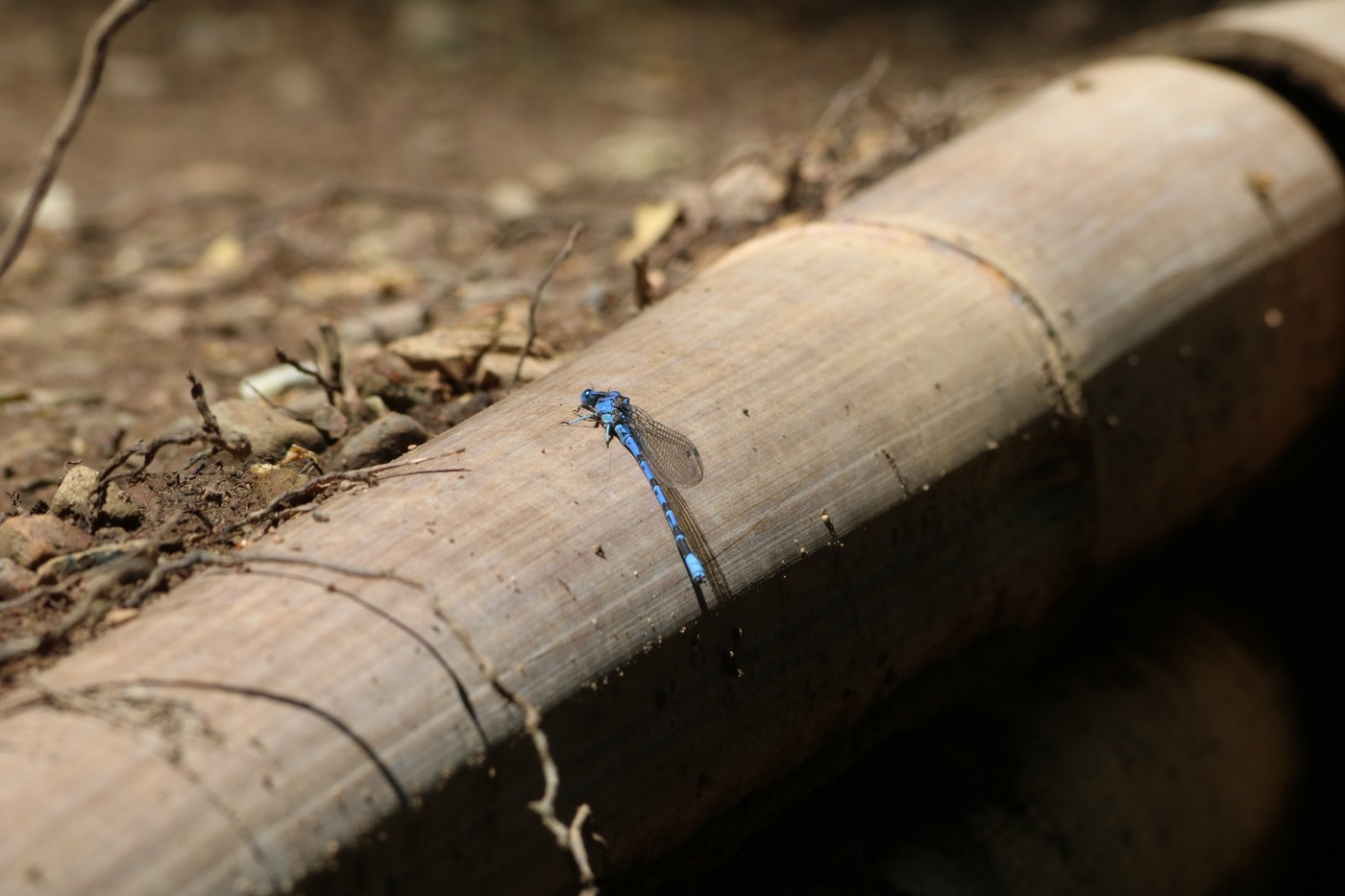
Vivid Dancer
rocky streams, seeps, and spring-fed creeks, often near thermal or warm springs
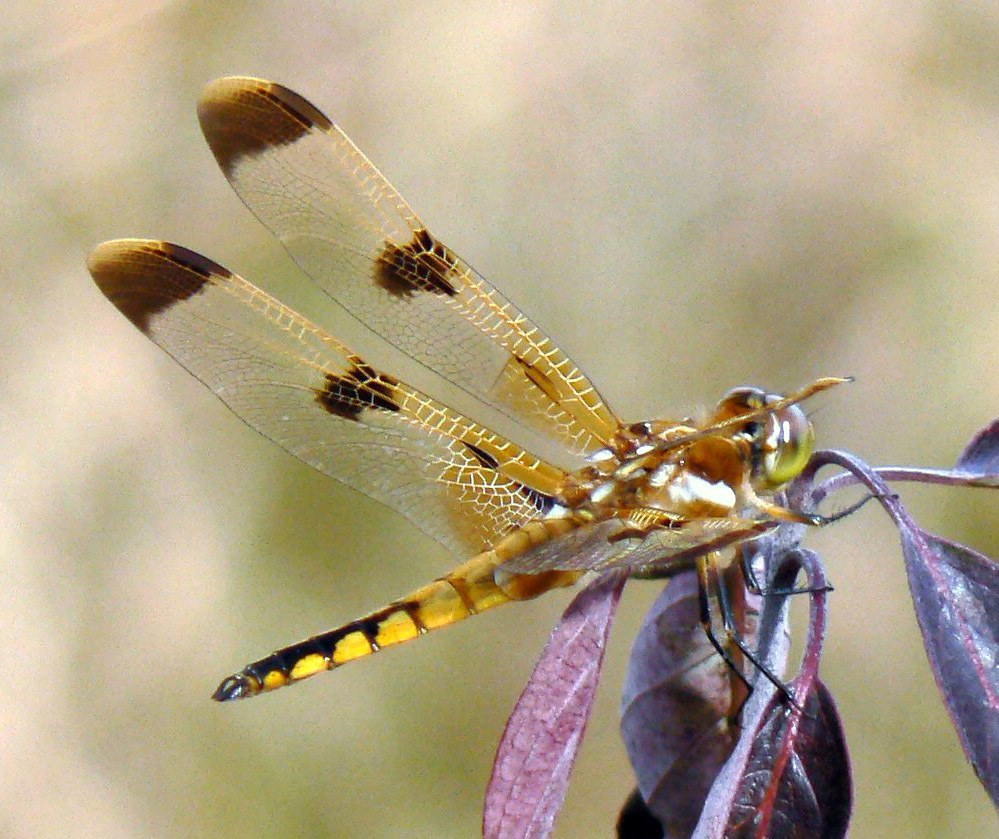
Painted Skimmer
Ponds, marshes, and slow-moving vegetated waters, including temporary pools
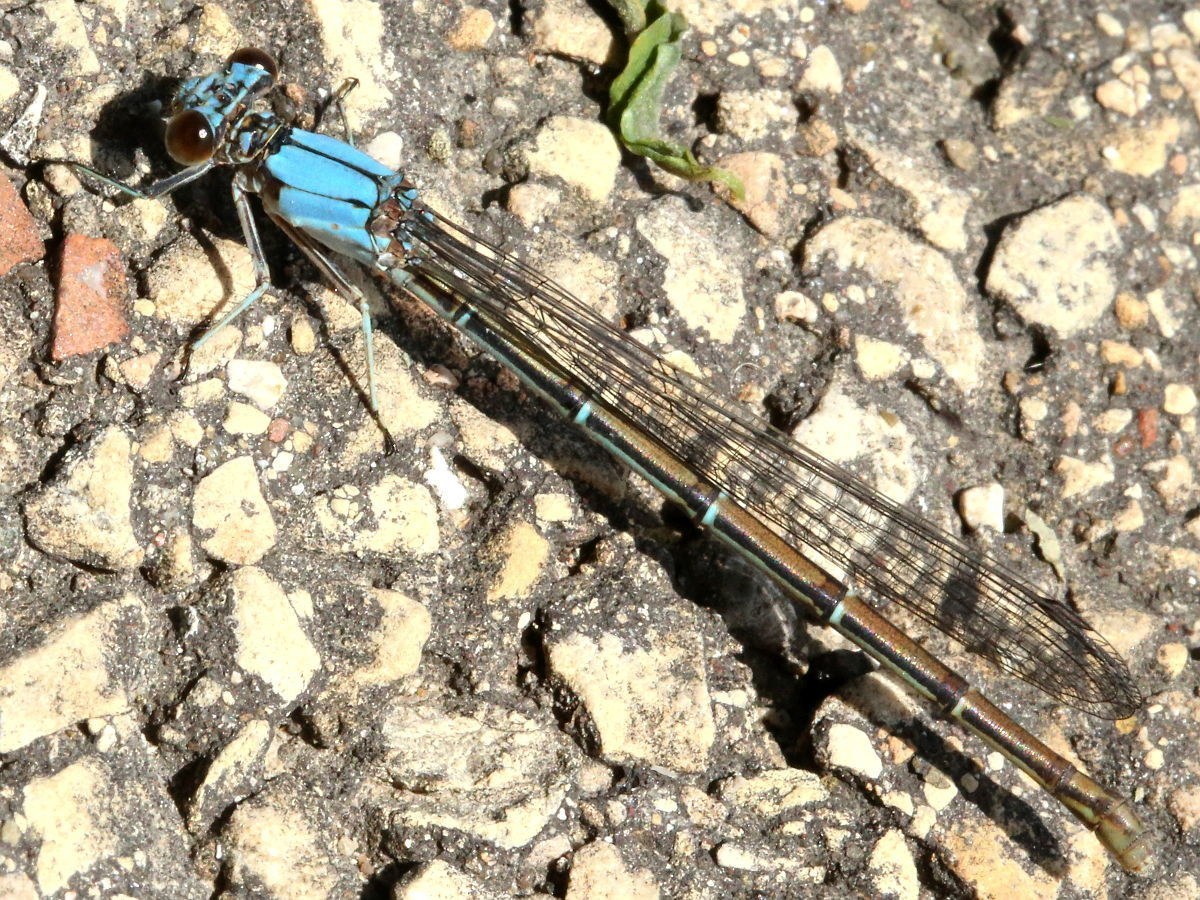
Powdered Dancer
rocky and gravelly rivers, streams, and lake shorelines