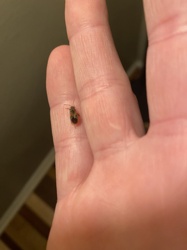
Elm Seed Bug Identification Guide
Spot the elm seed bug by its small dark body with thin reddish-orange edging and its habit of clustering on sunny walls near elm trees.
Read the full Elm Seed Bug encyclopedia entry →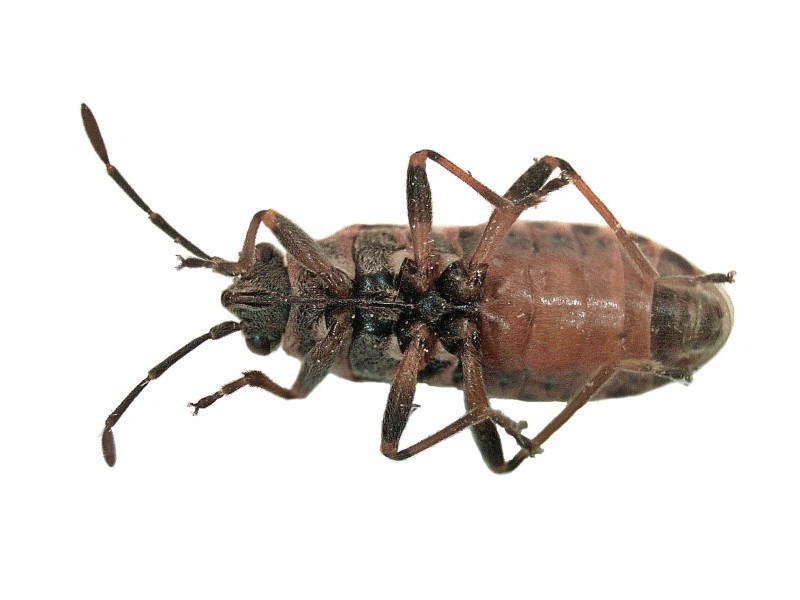
Key Features
- Small, elongated-oval body about 8-9mm long
- Dark brown to blackish base color with reddish-orange markings along the edges of the wings and a reddish tinge near the head
- Flattened body shape typical of true bugs, narrower overall than a boxelder bug
- Wings held flat over the back, forming an elongated pattern when folded
- Small, dark head with short antennae
- Emits a strong, unpleasant odor when disturbed or crushed
Where and When to Look
- Strongly associated with elm trees, feeding on developing seeds in spring and early summer
- Most noticeable in mid-to-late summer and fall, when adults leave elm trees and cluster on sun-warmed surfaces like exterior walls, window sills, and siding
- Common in urban and suburban areas planted with elms
- Often found in large aggregations seeking shelter as temperatures drop in autumn
Similar-Looking Bugs
- Boxelder bugs are similar in overall shape and fall clustering behavior but are noticeably larger, with bolder, wider red-orange stripes and a more elongated body
- Western conifer seed bugs are larger still, with a distinctive leaf-shaped flare on the hind legs that elm seed bugs lack
- Other seed bugs in the same family can look similar; checking the host tree (elm vs. boxelder) is a reliable way to tell them apart
Life Cycle and Behavior
Elm seed bugs typically produce one generation per year in most regions, with adults overwintering in sheltered cracks and crevices before returning to elm trees in spring to lay eggs. Nymphs develop through several molts while feeding on developing elm seeds, reaching adulthood by mid-summer and continuing to feed until cooler weather triggers the fall search for shelter.
Quick ID Checklist
- Small size (under 1cm), smaller than a boxelder bug
- Dark brown-black body with thin reddish-orange edge markings
- Found on or near elm trees during the growing season
- Clusters on sunny walls and windows in fall
- Strong odor when disturbed
Frequently asked questions
How can I tell an elm seed bug from a boxelder bug?
Elm seed bugs are noticeably smaller and have thinner, less bold red-orange markings than the larger boxelder bug, and they are associated with elm trees rather than boxelder or maple.
When are elm seed bugs most commonly seen?
They are most visible in late summer and fall when they leave elm trees to seek sheltered overwintering spots, often clustering on building exteriors.
Do elm seed bugs bite?
They are seed-feeding bugs that use their mouthparts on plant tissue, not on people.
Why do elm seed bugs gather on walls in large numbers?
Sun-warmed, light-colored exterior surfaces attract them as they search for cracks and crevices to overwinter in.
Elm Seed Bug identified by the community
Recent Elm Seed Bug finds identified with Bug Identifier.