Emerald Ash Borer Identification Guide
Identify the emerald ash borer by its narrow metallic green body and the distinctive D-shaped exit holes it leaves in ash bark.
Read the full Emerald Ash Borer encyclopedia entry →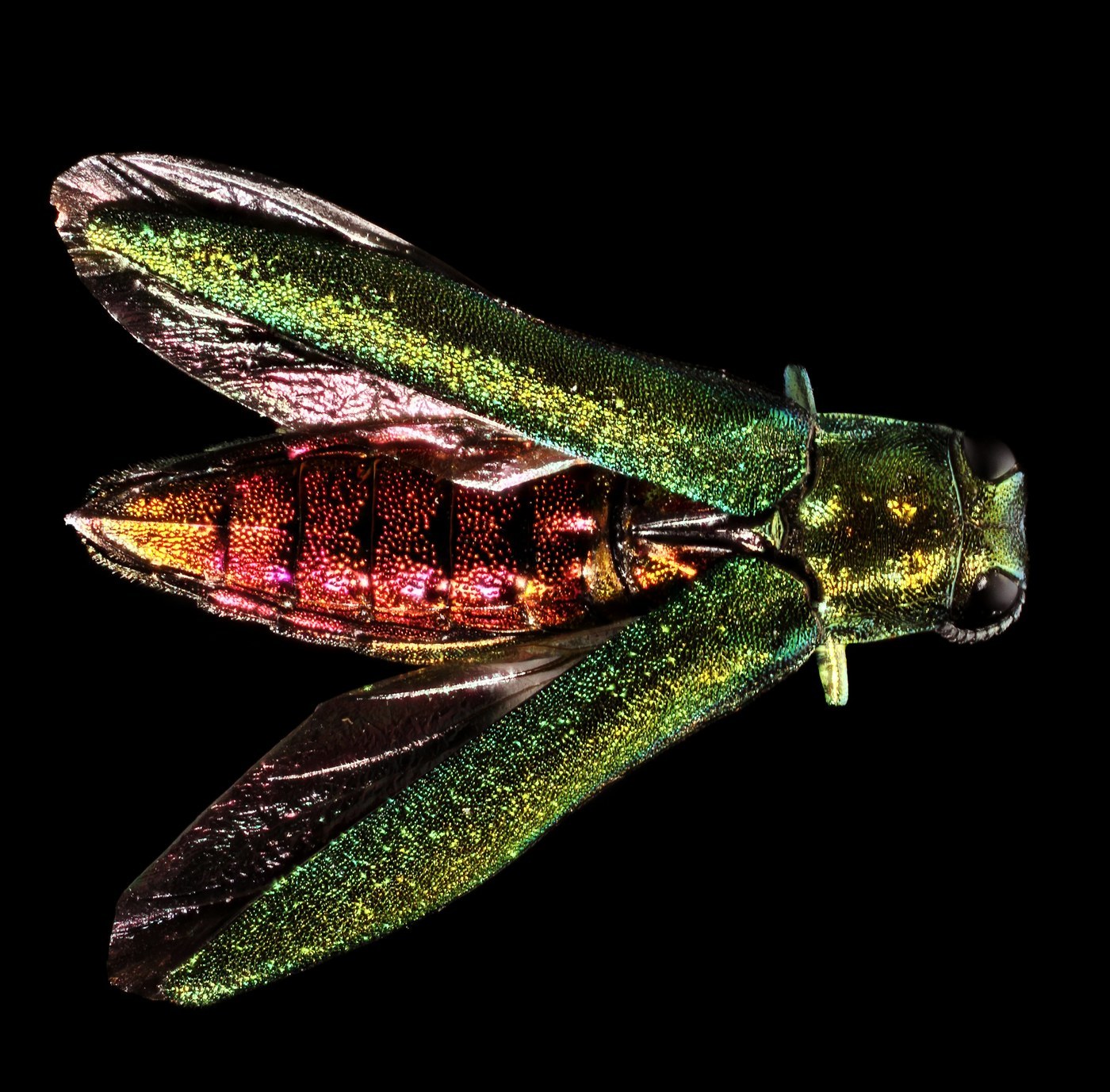
Key Visual Features
- Body shape: Slender, elongated, and bullet-shaped, roughly 1/2 inch long and about 1/8 inch wide.
- Color: Bright, iridescent metallic green across the body, sometimes with a coppery or reddish sheen visible under the wing covers when viewed at certain angles.
- Wings: Hardened, smooth wing covers (elytra) that fold flat over a bright reddish-purple abdomen visible only when the wings are spread.
- Head and antennae: Flattened head with relatively short, thread-like antennae.
- Legs: Six short legs positioned close to the body.
- Sign of presence: Distinctive D-shaped exit holes about 1/8 inch across in bark, along with S-shaped winding larval tunnels (galleries) visible beneath bark that has been peeled back.
Where and When You'd See One
Emerald ash borers are specifically associated with ash trees, where larvae develop under the bark and adults emerge from spring through summer. Adults are most visible on warm, sunny days, resting or flying around the canopy and trunks of ash trees, while larvae remain hidden within the wood for most of the year. Look for their presence primarily through tell-tale D-shaped exit holes and thinning canopy on ash trees rather than spotting the small adult beetle directly.
Similar-Looking Creatures
- Six-spotted tiger beetle: Also bright metallic green but has a more rounded body, prominent eyes, and pale spots on the wing covers, and is found on the ground rather than on ash trees.
- Japanese beetle: Metallic green head and thorax but coppery-brown (not green) wing covers, and a rounder, more compact body shape.
- Other native borer beetles: May share an elongated shape but typically lack the emerald ash borer's uniform bright metallic green color and are not tied specifically to ash trees.
- Dogbane beetle: Metallic and iridescent but more rounded and multicolored (with green, gold, and copper reflections) compared to the ash borer's narrower, more uniform green body.
Quick ID Checklist
- Narrow, bullet-shaped body about 1/2 inch long, bright metallic green.
- Reddish-purple abdomen visible when wings are spread.
- Found on or near ash trees specifically.
- D-shaped exit holes in bark and S-shaped tunnel galleries underneath.
- Adults most visible on warm days from spring through summer.
Frequently asked questions
What is the most reliable sign of an emerald ash borer besides the beetle itself?
D-shaped exit holes about 1/8 inch wide in the bark of ash trees, along with winding S-shaped tunnel galleries visible when bark is peeled back, are strong identification clues even if the adult beetle is not seen.
How can I distinguish an emerald ash borer from other metallic green beetles?
The emerald ash borer has a distinctly narrow, elongated, bullet-shaped body and is found specifically on or near ash trees, while similar-looking green beetles tend to be more rounded, found in different habitats, or show different coloring on the wing covers.
What color is visible if you spread the wing covers of an emerald ash borer?
Beneath the metallic green elytra, the abdomen has a bright reddish-purple coloring, which is a useful confirming feature when the wings are lifted or spread.
When during the year are adult emerald ash borers seen?
Adults typically emerge and are active from spring through summer, often resting on ash tree trunks and foliage on warm, sunny days.
Emerald Ash Borer identified by the community
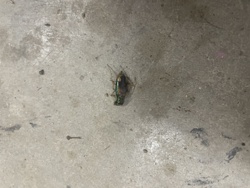
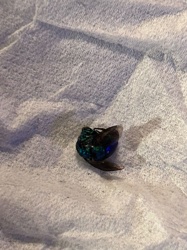
Recent Emerald Ash Borer finds identified with Bug Identifier.