
Emperor Dragonfly Identification Guide
Identify this large, powerful dragonfly by its bright blue-green body, apple-green thorax, and constant high-speed patrolling flight.
Read the full Emperor Dragonfly encyclopedia entry →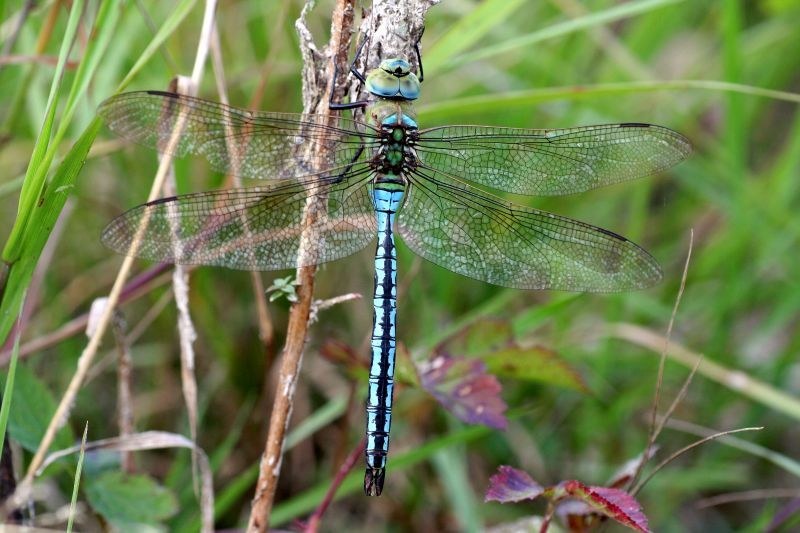
Key Visual Features
The emperor dragonfly is one of the largest and most powerful dragonflies found around ponds and lakes, known for its bold coloration and dominant flight behavior.
- Size: A large dragonfly, with body length typically 75-85 mm and a broad wingspan, making it one of the biggest species in its range.
- Color: Males have a bright sky-blue abdomen with a fine black stripe running down the center, paired with an apple-green thorax; females and immatures are typically green or greenish-brown overall with a less vivid abdomen.
- Body shape: Robust and thick-bodied compared to damselflies, with a broad thorax and a long, straight abdomen that appears cylindrical rather than thread-thin.
- Wings: Large, clear wings held permanently spread out flat to the sides even at rest, never folded above the body — a key feature separating all dragonflies from damselflies.
- Eyes: Very large compound eyes that meet or nearly meet at the top of the head, giving excellent all-around vision.
- Flight behavior: Known for fast, sustained, high patrolling flight over open water, rarely settling for long periods, and males aggressively defend territory along the water's edge.
Where and When You'd See It
Emperor dragonflies are found around larger ponds, lakes, and slow rivers with open water and abundant vegetation, where males patrol back and forth over the same stretch of water for extended periods, only briefly perching on tall waterside plants. Active from late spring through summer on warm, sunny days, they are most easily observed by watching open water for a large, fast-flying, blue-and-green dragonfly cruising steadily along the shoreline.
Similar-Looking Bugs
- Southern hawker and other hawker dragonflies: Similar large size but typically show more spotted or banded patterning on the abdomen rather than the emperor's clean, solid blue-green coloring with a simple central stripe.
- Damselflies (bluets, jewelwings): Much smaller and thinner, and rest with wings folded above the body rather than held open to the sides.
- Chasers and skimmers: Generally smaller and stockier, with broader, flatter abdomens and different color patterns, often patrolling more locally rather than covering long open-water beats.
Quick ID Checklist
- Large dragonfly, 75-85 mm, thick-bodied with wings held open at rest
- Males: sky-blue abdomen with a thin black central stripe, green thorax
- Females/immatures: greener or brownish overall coloration
- Fast, sustained patrolling flight over open water
- Large eyes meeting at the top of the head
Frequently asked questions
What color pattern identifies a male emperor dragonfly?
A male has a bright sky-blue abdomen with a thin black stripe running down the center, combined with an apple-green thorax, making it one of the more vividly colored large dragonflies.
How can you tell an emperor dragonfly from a damselfly at a pond?
The emperor dragonfly is much larger and thicker-bodied, and holds its wings open flat to the sides even at rest, while damselflies are thin and fold their wings together above the body.
What flight behavior helps identify this species from a distance?
Emperors are known for fast, sustained patrolling flight back and forth over open stretches of water, often covering the same beat repeatedly rather than perching for long periods.
How does a female emperor dragonfly differ in appearance from a male?
Females and immature individuals are typically green or greenish-brown overall, lacking the vivid blue abdomen seen in mature males.