
Emperor Moth Identification Guide
Identify the emperor moth by the four bold eyespots on its wings and its feathery antennae.
Read the full Emperor Moth encyclopedia entry →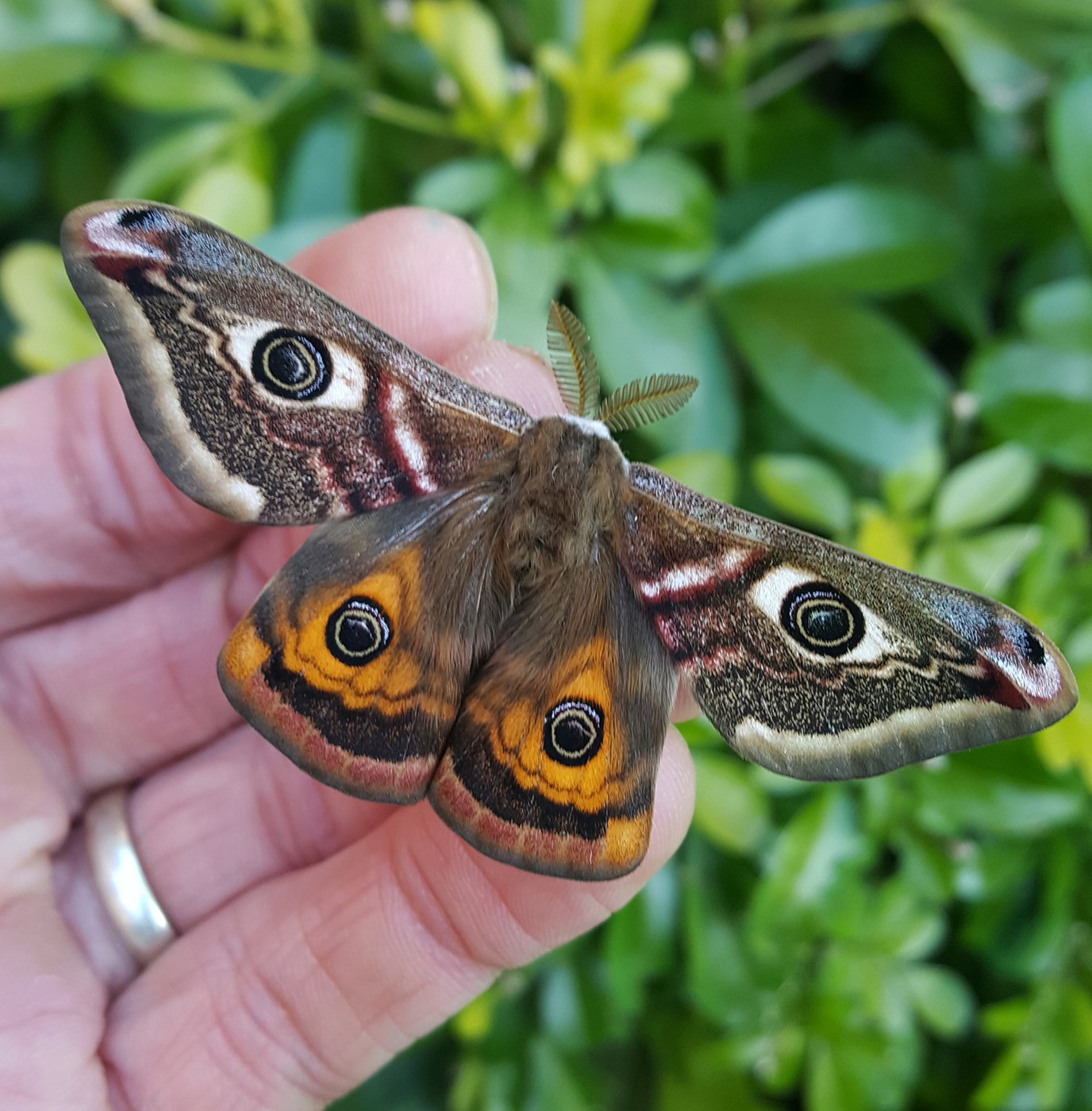
Key Visual Features
The emperor moth (Saturnia pavonia) is a medium-large moth with a wingspan of about 2 to 2.75 inches, and the sexes look noticeably different. Males are smaller with orange-brown wings and prominently feathery, comb-like antennae used to detect female pheromones from long distances. Females are larger, with grayer, more subdued wing coloring and less feathery antennae. Both sexes share the species' hallmark feature: four large, circular eyespot markings, one on each wing, made up of concentric rings of black, blue-white, and yellow or orange. The wing margins have wavy, scalloped edges with darker borders. The body is stout and furry, typical of the silk moth family.
Where and When You'll See It
This species is found across heathland, moorland, open scrub, and hedgerows throughout much of Europe. It is somewhat unusual among large moths in that males are often seen flying during the day, actively searching for females by following pheromone trails, while females tend to be more nocturnal and less frequently observed in flight. Adults are on the wing in spring, typically April through June depending on latitude. The caterpillar is bright green, ringed with black bands and studded with small, bristled, wart-like tubercles in yellow or orange, and is commonly found feeding on heather, bramble, and a range of other shrubs through the summer months.
Similar-Looking Bugs
- Other Saturniidae (giant silk moths): Many relatives elsewhere in the world share large eyespots and a stout furry body, but the emperor moth is the only member of this family found in much of its European range, making it fairly distinctive there.
- Io moth: A superficially similar species found only in the Americas (not overlapping in range with the emperor moth) with a single large eyespot per hindwing rather than four smaller ones spread across all wings.
- Peacock butterfly: Also displays large eyespots, but is a day-flying butterfly with clubbed antennae and a very different wing shape, easily separated from the feather-antennaed emperor moth.
Quick ID Checklist
- Four large eyespots, one on each wing, with concentric black, blue-white, and orange/yellow rings
- Males orange-brown with feathery antennae; females grayer with plainer antennae
- Stout, furry body typical of silk moths
- Males often fly by day searching for females; females mainly nocturnal
- Found on heathland and scrub, active spring (April–June)
Frequently asked questions
How can I tell a male emperor moth from a female?
Males are smaller, more orange-brown, and have prominently feathery antennae, while females are larger, grayer, and have less feathery antennae.
Why might I see an emperor moth flying in daylight?
Males are unusual among large moths in that they often fly during the day while searching for females by tracking their pheromone scent trail.
What is the most distinctive marking on this moth?
Each of its four wings carries a large, bold eyespot made of concentric black, blue-white, and orange or yellow rings, which is the clearest identifying feature.
What does the caterpillar look like?
The caterpillar is bright green with black rings and small yellow or orange bristled tubercles, commonly found feeding on heather or bramble during summer.