
Emperor Scorpion Identification Guide
One of the largest scorpion species in the world, identified by its glossy black body, heavy pincers, and robust build.
Read the full Emperor Scorpion encyclopedia entry →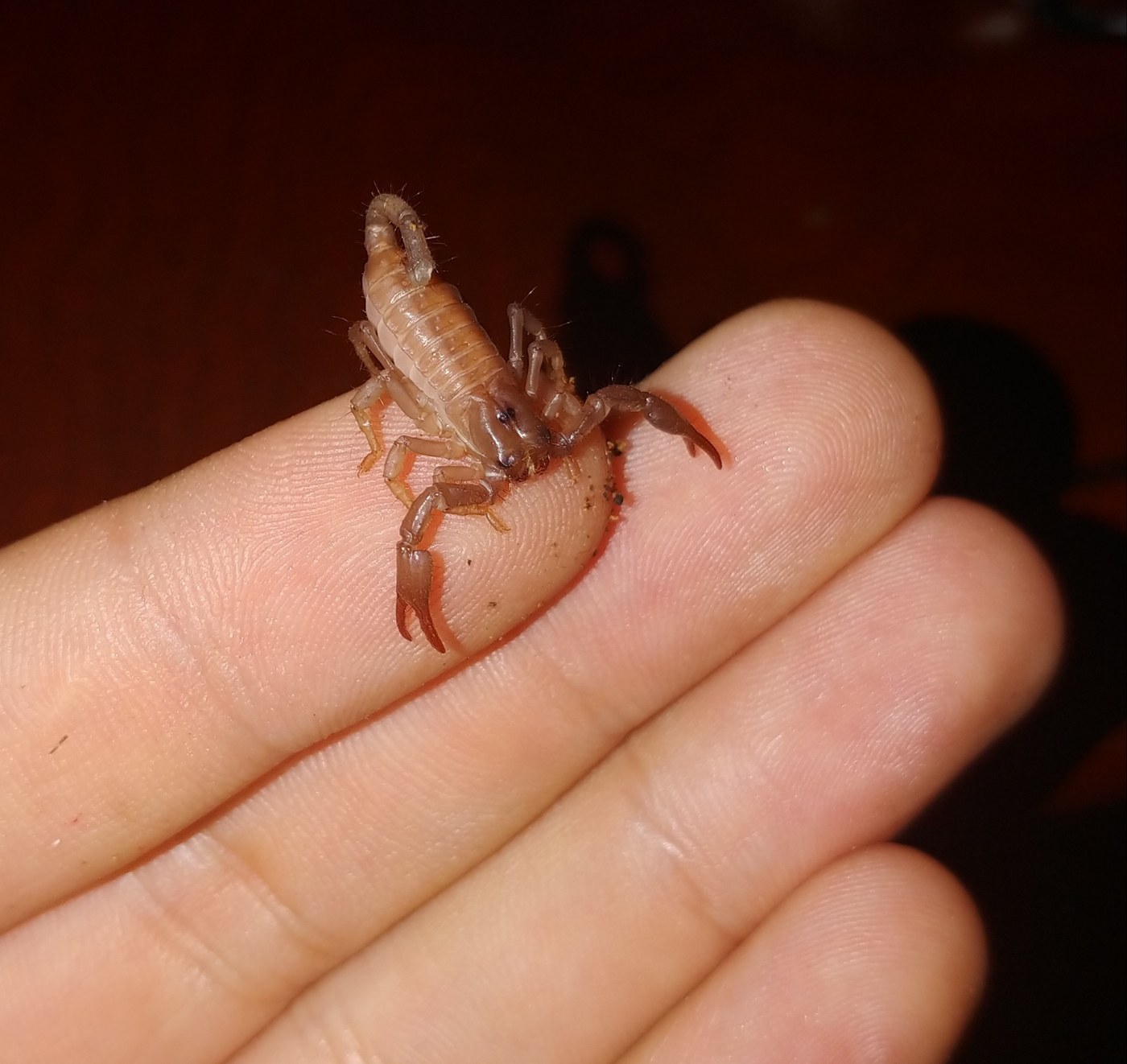
Key Visual Features
- Among the largest scorpions by mass, typically reaching 5-8 inches (12.5-20 cm) in total length, with an exceptionally thick, heavy build compared to most other scorpion species.
- Body color is a deep, glossy black to dark brownish-black, sometimes with a subtle reddish tint on the legs and pincers depending on lighting.
- Pincers (pedipalps) are notably large, thick, and rounded, appearing oversized relative to the body — a strong contrast to the more slender pincers of many other scorpion species.
- The tail (metasoma) is relatively short and thick compared to body size, curving upward, with a bulbous stinger segment (telson) at the tip.
- Legs are sturdy, dark, and end in small claws suited for digging.
- Under ultraviolet light, like most scorpions, the exoskeleton fluoresces a pale blue-green color, which can help confirm identification in dark conditions.
Where and When You'd See It
- Native to lowland tropical rainforests and savannas of West Africa, favoring humid forest floor habitats.
- Burrows in soil, under logs, rocks, and leaf litter, or uses existing burrows and crevices, staying hidden during the day.
- Primarily nocturnal, emerging after dark to move about; during the day it typically stays hidden in a burrow or shelter.
- Prefers consistently warm, humid conditions and is closely tied to forested or moist habitats rather than arid environments.
Similar-Looking Bugs
- Many desert scorpion species are much smaller, lighter in color (tan, yellow, or light brown), and have thinner, more slender pincers and a longer, thinner tail relative to the body.
- Asian forest scorpions can be similarly large and dark, but generally have a somewhat different pincer shape and are found in different regions; overall body proportions and thickness of the pincers are the best comparison points.
- Whip scorpions and vinegaroons lack a stinger at the tail tip entirely and instead have a long, thin whip-like tail filament, making them easy to rule out.
Quick ID Checklist
- Large size, 5-8 inches, with an unusually thick, heavy-bodied build.
- Glossy black to dark brown-black coloring.
- Oversized, rounded, thick pincers relative to body size.
- Short, thick tail ending in a bulbous stinger segment.
- Found in humid tropical forest floor habitats, active mainly at night.
Frequently asked questions
What is the fastest way to distinguish an emperor scorpion from smaller desert scorpions?
Its overall size and unusually thick, heavy-bodied build combined with oversized, rounded pincers set it apart from the more slender, lighter-colored scorpions typical of arid regions.
Does the emperor scorpion glow under UV light like other scorpions?
Yes, like most scorpion species its exoskeleton fluoresces a pale blue-green under ultraviolet light, which is a useful confirmation tool in low light.
How can I tell a scorpion apart from a whip scorpion or vinegaroon?
Check the tail tip: true scorpions like the emperor scorpion have a stinger segment at the end of the tail, while whip scorpions and vinegaroons have a long, thin, whip-like tail with no stinger.
What habitat is the emperor scorpion typically found in?
It's associated with humid, lowland tropical forest and savanna habitats in West Africa, sheltering in burrows, under logs, and in leaf litter during the day.