Face Fly Identification Guide
Distinguish the face fly from the common house fly by its slightly larger size, duller coloring, and tendency to cluster around livestock faces.
Read the full Face Fly encyclopedia entry →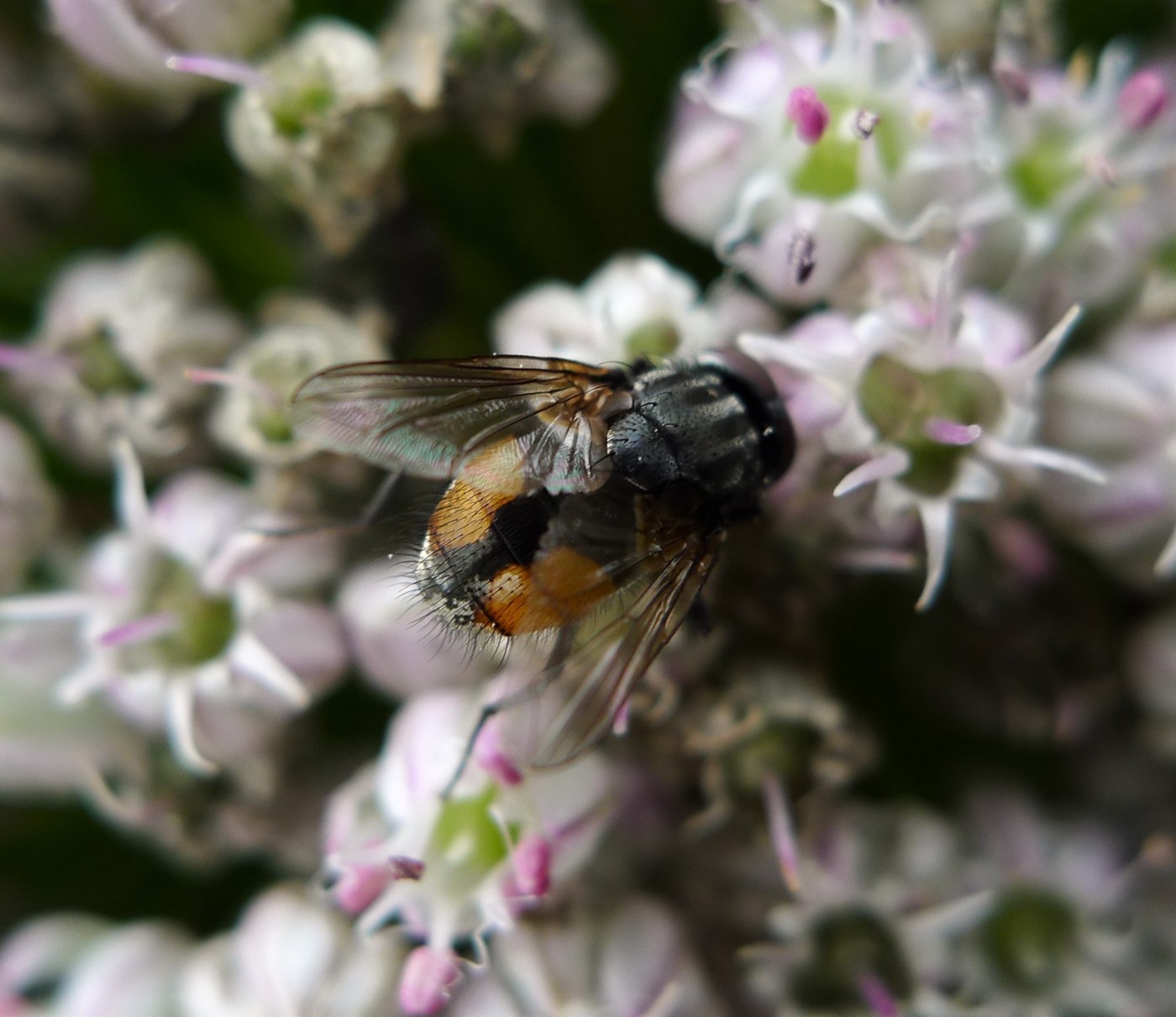
Key Visual Features
The face fly is a close relative of the house fly, closely resembling it but with subtle differences and a strong behavioral tie to livestock.
- Size: Slightly larger than a typical house fly, around 6-8 mm.
- Color: Dull gray body with four faint dark stripes on the thorax, similar in tone to a house fly but often appearing slightly darker or duller overall.
- Body shape: Sturdy, moderately robust fly body, broader than many smaller flies.
- Wings: Clear, held slightly spread in a shallow V at rest, typical of muscid flies.
- Legs: Dark and moderately long, adapted for clinging to fur and skin around an animal's face.
- Antennae: Short, typical fly-style antennae with a feathery arista.
- Distinctive traits: Face flies rarely land on humans and are instead almost always seen clustered tightly around the eyes, nose, and mouth of cattle and other livestock.
Where and When You'll See Them
Face flies are strongly associated with pastures and livestock, particularly cattle, where they gather around the animals' faces, especially near moist areas like eyes and nostrils. They're most active outdoors during the day in warm months, from late spring through early fall, and are rarely found indoors compared to house flies. Look for them resting in tight clusters on the faces or backs of grazing animals or basking on sunlit fences and barn walls nearby.
Similar-Looking Bugs
- House flies: Nearly identical in general shape and the four thoracic stripes, but house flies are more commonly found indoors around food and garbage rather than clustered on animal faces, and are slightly smaller and paler.
- Stable flies: Also found around livestock, but stable flies have a visible piercing proboscis projecting forward from the head, while face flies have sponging mouthparts and no visible stinger-like structure.
- Horn flies: Much smaller than face flies and typically found clustered on the back and sides of cattle rather than the face.
Quick ID Checklist
- Dull gray body with four faint thoracic stripes, slightly larger than a house fly
- Clusters specifically around eyes, nose, and mouth of livestock
- Rarely enters buildings or approaches humans
- Wings held in a shallow V over the body at rest
- Most common in pastures during warm months
Frequently asked questions
How do I tell a face fly from a common house fly?
Behavior is the biggest giveaway: face flies almost exclusively cluster around the faces of grazing livestock outdoors, while house flies are more generalist and commonly seen indoors around food and waste.
Do face flies bite?
Face flies have sponging mouthparts rather than piercing ones, so they feed by sponging up moisture and secretions rather than biting like some other livestock-associated flies.
Where on an animal are face flies usually found?
They are typically seen clustered tightly around the eyes, nostrils, and mouth, areas with natural moisture and secretions.
Are face flies active indoors like house flies?
No, face flies are primarily an outdoor, pasture-associated species and are rarely found inside buildings compared to house flies.
Face Fly identified by the community
Recent Face Fly finds identified with Bug Identifier.