
Falcate Orangetip Identification Guide
A small white spring butterfly with a hooked wingtip and, in males, a bright orange patch that gives the species its name.
Read the full Falcate Orangetip encyclopedia entry →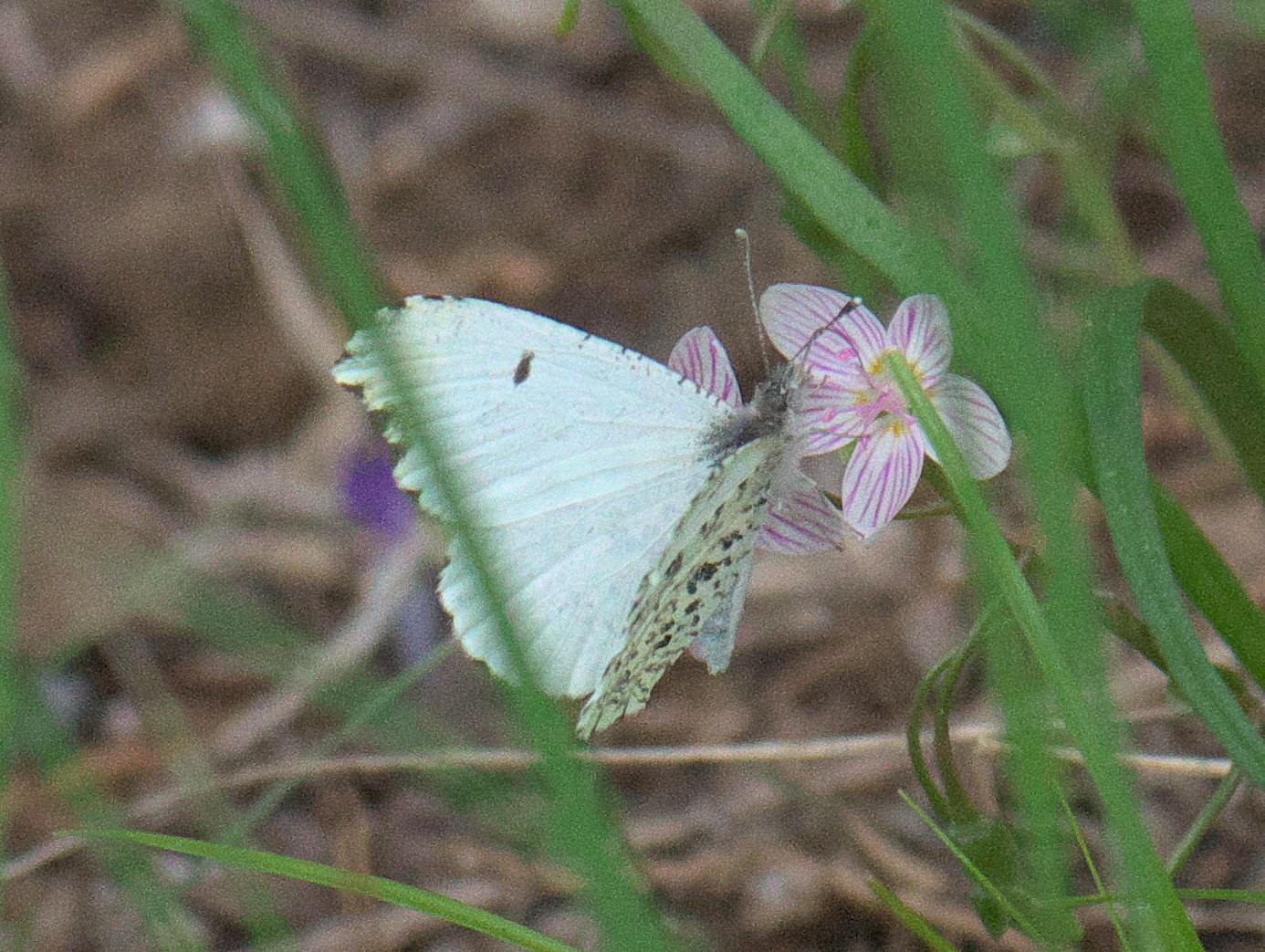
Key Features
The falcate orangetip (Anthocharis midea) is a small white butterfly with a wingspan of about 1.25 to 1.75 inches. Its most distinctive feature is wing shape and color:
- The forewing tip is hooked or sickle-shaped (falcate), rather than rounded like most other white butterflies.
- A small black crescent mark sits right at the pointed tip of the forewing.
- Males have a vivid orange patch covering much of the outer forewing tip, making them easy to recognize in flight.
- Females lack the orange patch entirely, showing plain white with just the black tip crescent, which can make them trickier to identify at a glance.
- The underside of the hindwing has a marbled, mottled pattern of yellow-green and gray that provides camouflage when the butterfly is at rest with wings closed.
Where and When to Spot It
Falcate orangetips are found in open woodlands, forest edges, glades, and streamside habitats across the eastern United States. They are true early-spring specialists, typically flying for just a few weeks in March and April, often among the very first butterflies of the season alongside spring wildflowers such as toothwort and rock cress, which serve as caterpillar host plants. Look for them fluttering low along sunny woodland edges and clearings early in the year.
Similar Species
- Cabbage white: Rounded (not hooked) forewing tip, bold black spots, and no orange patch.
- West Virginia white: Rounded forewing tip and plain veined wings, without the hook or orange patch.
- Female falcate orangetip vs. other whites: The hooked wingtip with a black crescent is the best clue even when the orange patch is absent.
Quick ID Checklist
- Small white butterfly with a hooked (falcate) forewing tip
- Black crescent mark at the very tip of the forewing
- Males show a bold orange patch; females are plain white-tipped
- Marbled yellow-green underside on the hindwing
- Flies briefly in early spring in open woodlands and edges
FAQs
Frequently asked questions
How can I identify a female falcate orangetip without the orange patch?
Look for the hooked forewing tip with a small black crescent mark, which is present in both sexes even though only males show the orange color.
When is the best time of year to see this butterfly?
It flies for a brief window in early spring, typically March and April, often appearing alongside the season's first wildflowers.
What makes the wing shape of this species unusual?
Unlike most white butterflies with rounded wingtips, the falcate orangetip has a distinctly hooked or sickle-shaped forewing tip.
Where should I look to find falcate orangetips?
Open woodlands, forest edges, glades, and streamside habitats in the eastern United States are the most reliable places during early spring.