
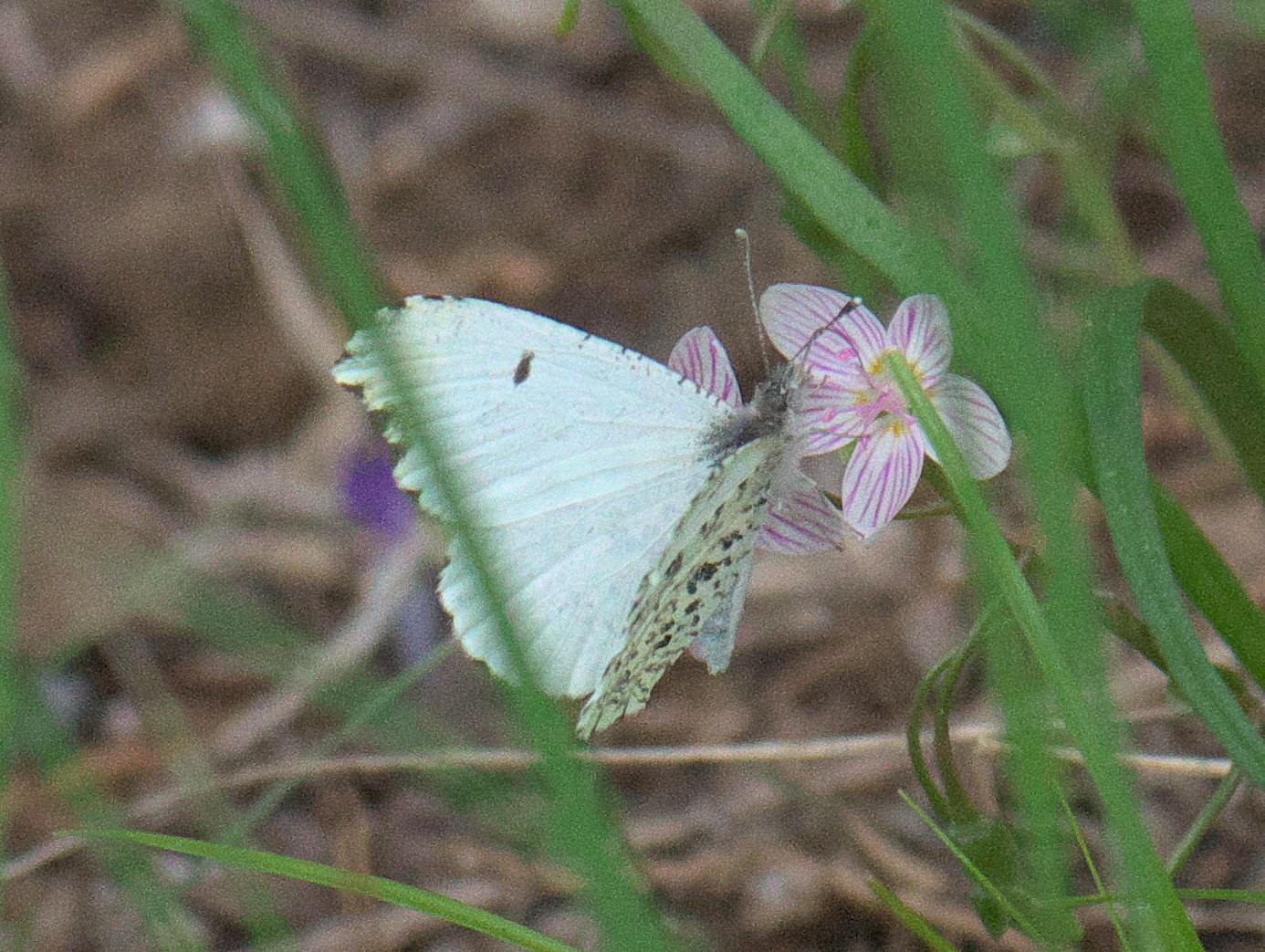
Falcate Orangetip
Anthocharis midea
An early-spring white butterfly whose males flash bright orange wingtips, while both sexes show a distinctive hooked (falcate) forewing shape and marbled green underside pattern.
- Size
- 1.25–1.75 in wingspan
- Habitat
- Open woodlands, forest edges, and stream bottoms in eastern North America
- Danger
- Harmless
Spotted a bug like this?
Identify any bug or insect from a photo, free.
Overview
The Falcate Orangetip is a small pierid butterfly (family Pieridae) that appears each spring across the eastern and south-central United States. It belongs to a group of "orangetip" butterflies found across the Northern Hemisphere, most of which share the same bright wingtip coloration in males and a mottled underside camouflage pattern.
It is one of the earliest butterflies to appear in the season, often flying before many trees have fully leafed out, and its presence is closely tied to a handful of early-blooming mustard-family wildflowers. The species is notable among naturalists as a true harbinger of spring in eastern woodlands.
Within Pieridae it sits in the subfamily Pierinae alongside whites and other orangetips, distinguished by its uniquely shaped, curved (falcate) forewing tip.
How to Identify
- Forewing tip is distinctly hooked or curved (falcate), unlike the rounded wingtips of true whites.
- Males have a bright orange patch covering the outer portion of the forewing upperside; females lack the orange and are plain white above.
- The underside of the hindwing in both sexes shows a fine, marbled green-and-white mottling that provides camouflage at rest.
- Small black spot near the center of the forewing.
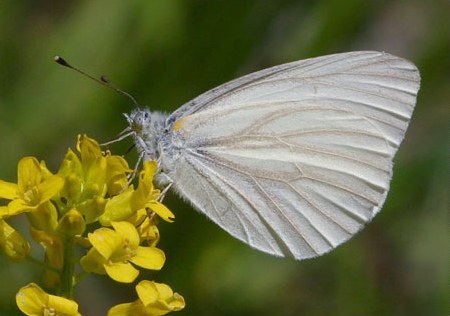
- Lookalikes: female West Virginia Whites lack the falcate wingtip and the green marbling is grayer rather than green; Cabbage Whites are larger with squared wingtips and solid black spots.
Habitat & Range
Ranges across the eastern and south-central United States, from the Northeast and Midwest south into the Gulf states and west to the edge of the Great Plains. It favors open deciduous woodlands, wooded stream corridors, meadows adjacent to forest, and shaded roadsides where its mustard-family host plants grow. Adults fly for a short period in early spring, generally March through May depending on latitude, and are rarely seen later in the year.
Behavior & Diet
Males patrol along woodland edges and stream bottoms searching for females, flying with a quick, low, somewhat erratic pattern. Adults nectar at spring wildflowers such as toothwort, rock cress, and violets. Females lay single eggs on flower buds of host plants in the mustard family; the caterpillars that hatch are sometimes cannibalistic toward other eggs or larvae on the same plant, an adaptation linked to limited food resources on small annual and biennial hosts. Adults contribute modestly to early-season pollination in forest understory habitats.
Life Cycle
Eggs are laid singly, usually on flower buds of mustard-family plants, and turn from pale to orange as they mature. Caterpillars are slender and blue-green with a pale stripe, feeding on developing seed pods before descending to pupate. The pupa is elongated and twig-like, camouflaged among dead plant stems, and this stage overwinters for many months. There is one generation per year (univoltine) in most of the range, with adults emerging the following spring.
Frequently asked questions
Why do only some Falcate Orangetips have orange wingtips?
Only males have the orange patch; females are plain white above, a common pattern of sexual dimorphism in orangetip butterflies.
What does 'falcate' refer to in its name?
It refers to the curved, hook-shaped tip of the forewing, which is more pointed and curled than the rounded wingtip of related white butterflies.
When is the best time to see one?
Early spring, typically March through May, since adults fly for only a few weeks before disappearing until the following year.
Where does it spend the rest of the year?
It overwinters as a camouflaged, twig-like pupa attached to dead plant stems near its host plants.
Falcate Orangetip guides
In-depth guides for identifying, understanding, and living alongside Falcate Orangetip.
Other bugs you may enjoy
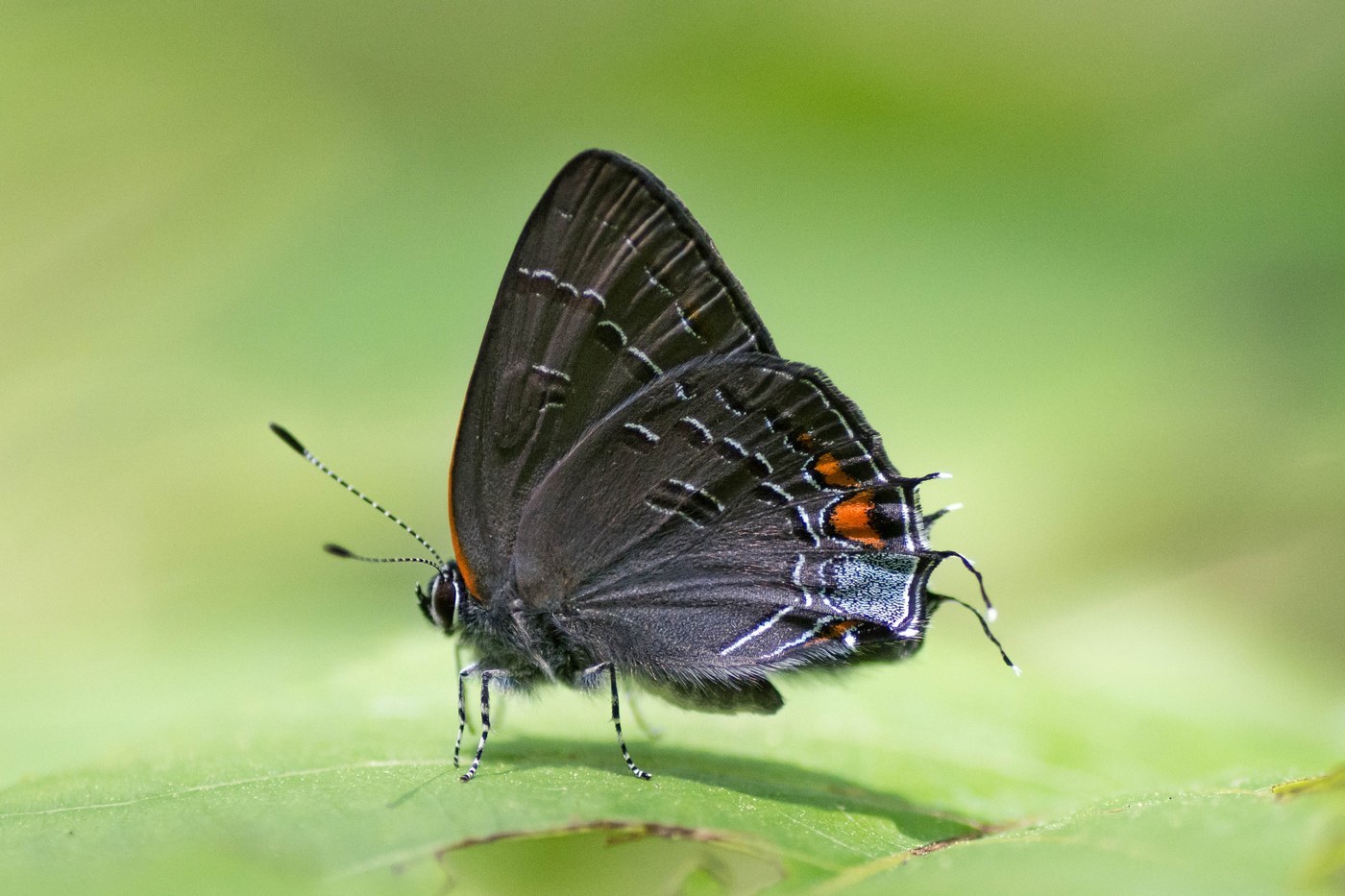
Banded Hairstreak
Deciduous woodlands and edges with oaks and hickories
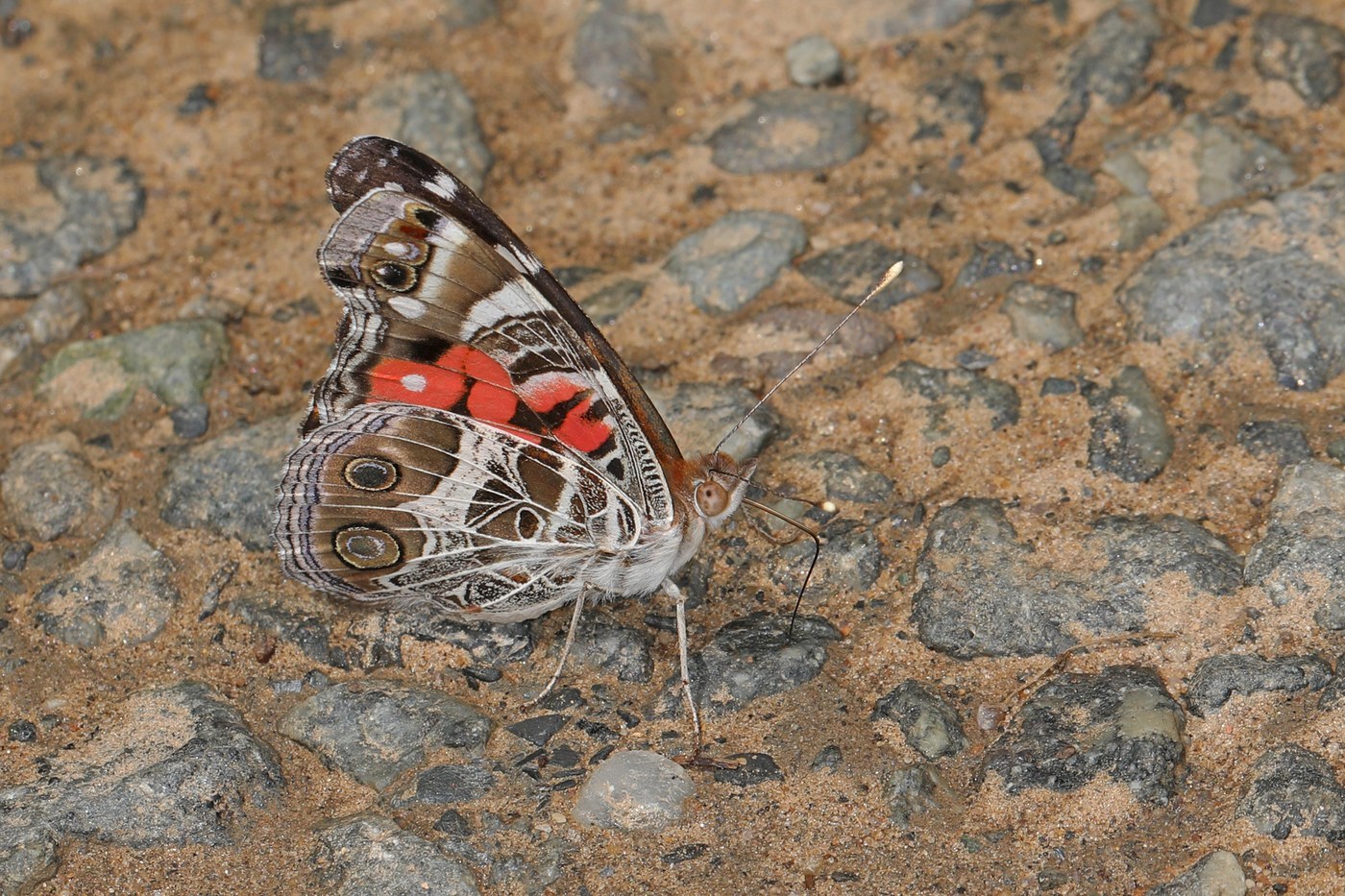
American Lady
Open fields, meadows, gardens, roadsides
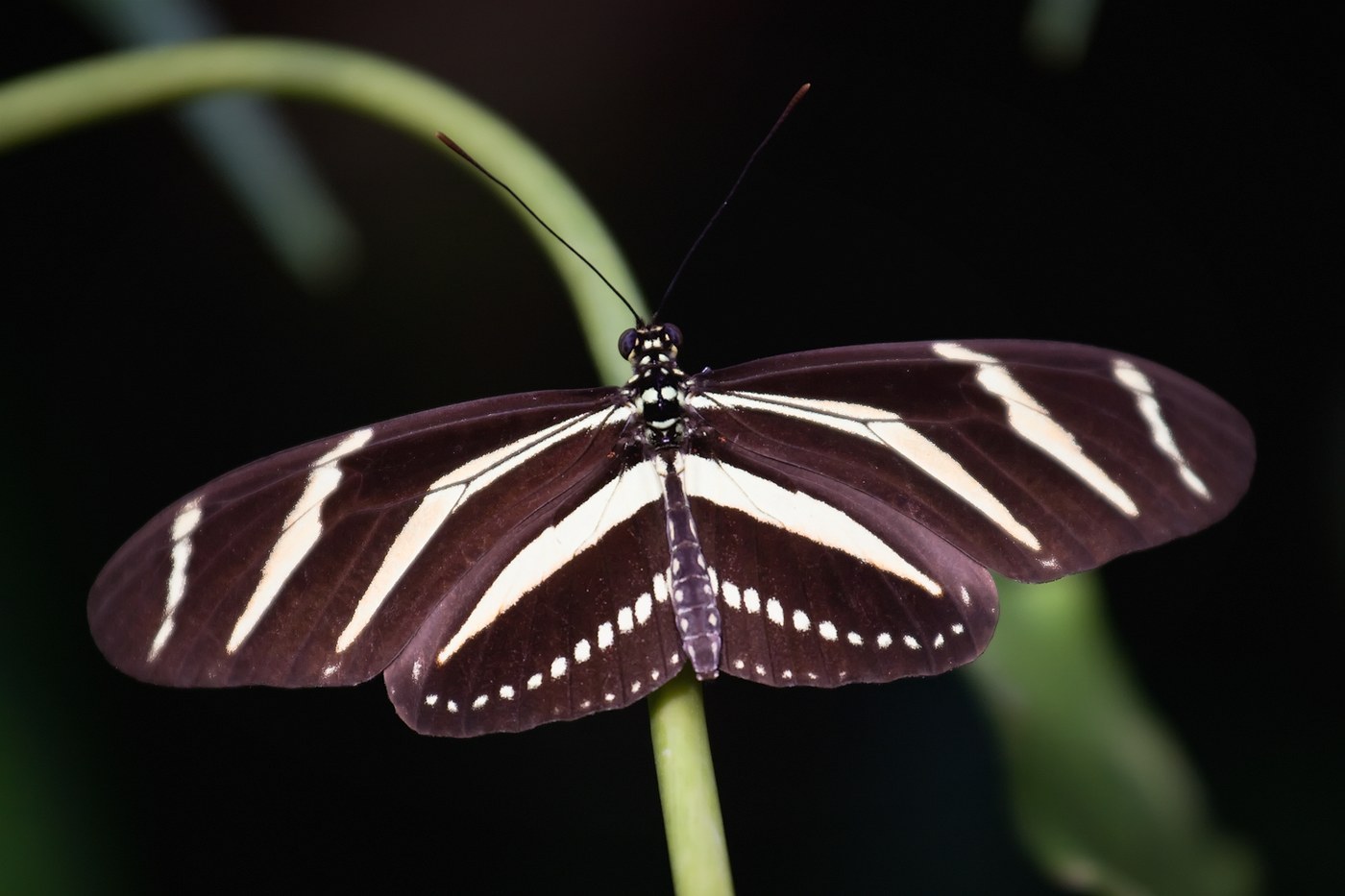
Zebra Longwing
Tropical hammocks, gardens, forest edges
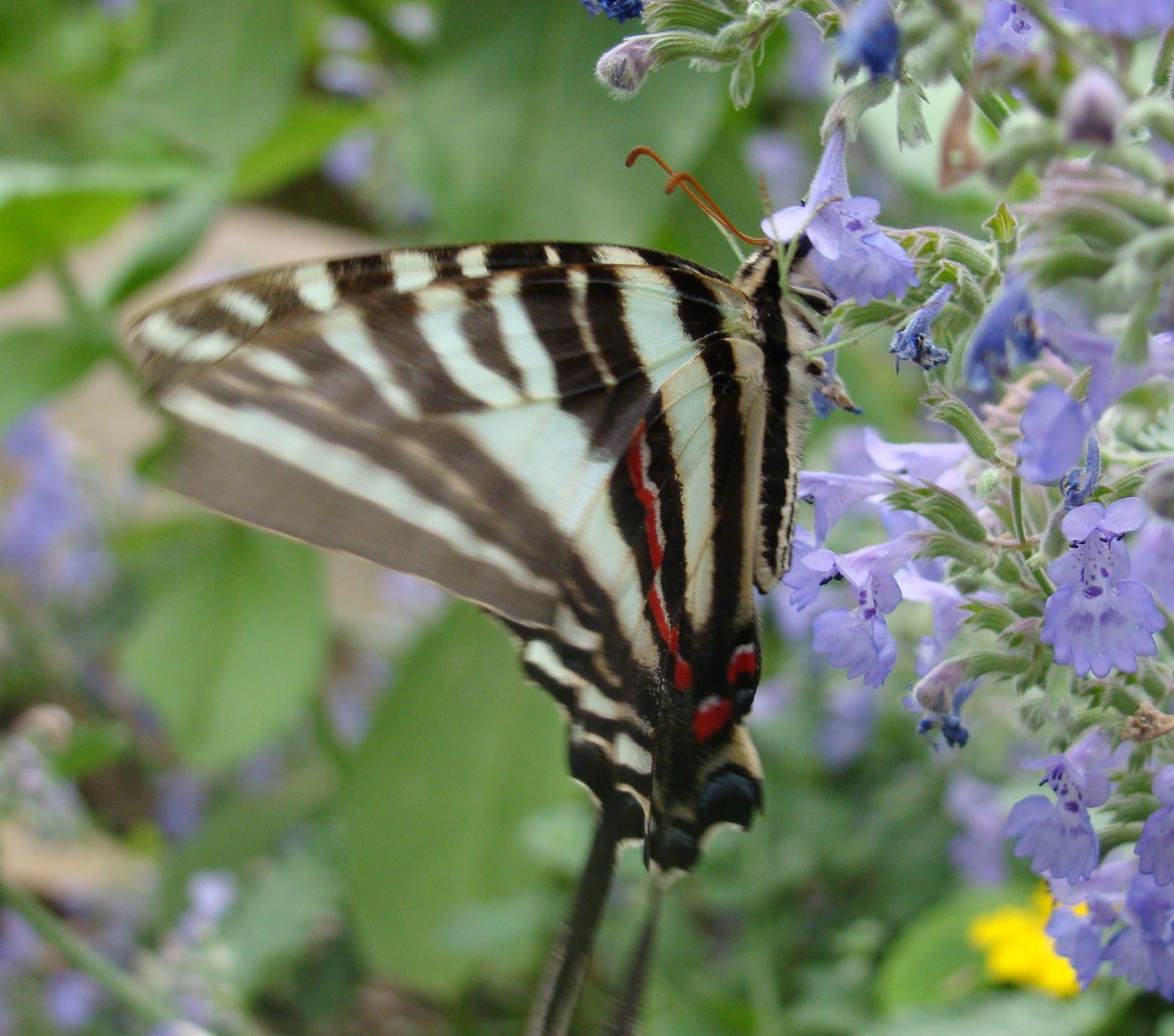
Zebra Swallowtail
Woodlands, floodplains, forest edges near pawpaw
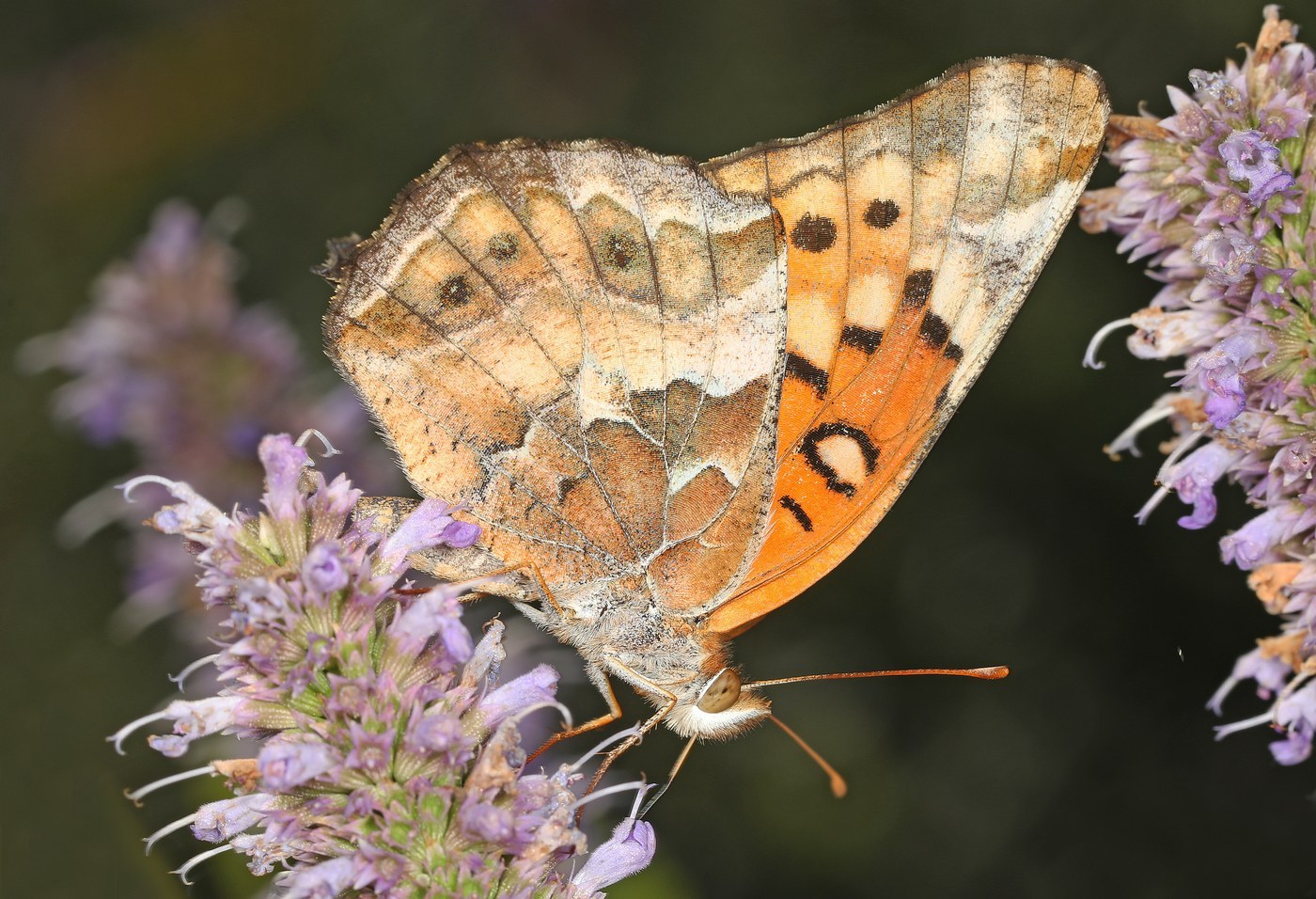
Variegated Fritillary
Open fields, prairies, roadsides, and disturbed ground across most of the United States
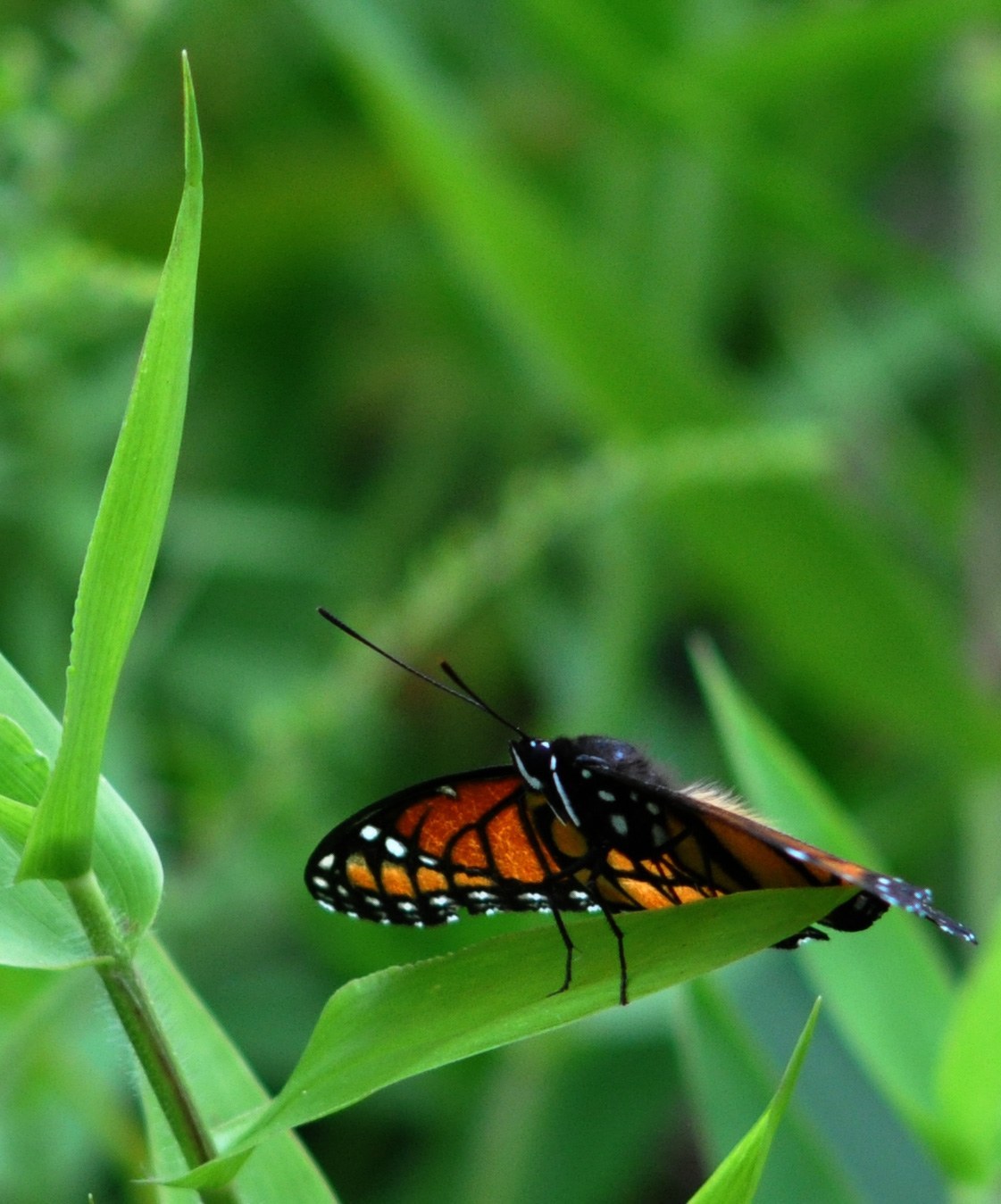
Viceroy Butterfly
Wetlands, meadows, riverbanks, willow thickets (North America)
Baltimore Checkerspot
Wet meadows, bogs, and marshy fields in the northeastern and Appalachian US
American Copper
Old fields, roadsides, and disturbed open ground with sorrel or dock
West Virginia White
Rich deciduous forest floors, especially near seeps and streams
Spring Azure
Woodland edges, gardens, shrubby clearings
Red Admiral
Gardens, woodland edges, parks, meadows
Sleepy Orange
Open woodland, fields, roadsides, and disturbed ground