Familiar Bluet Identification Guide
One of the most widespread blue-and-black pond damselflies, though pinning down the exact bluet species often takes a close look at the abdomen tip.
Read the full Familiar Bluet encyclopedia entry →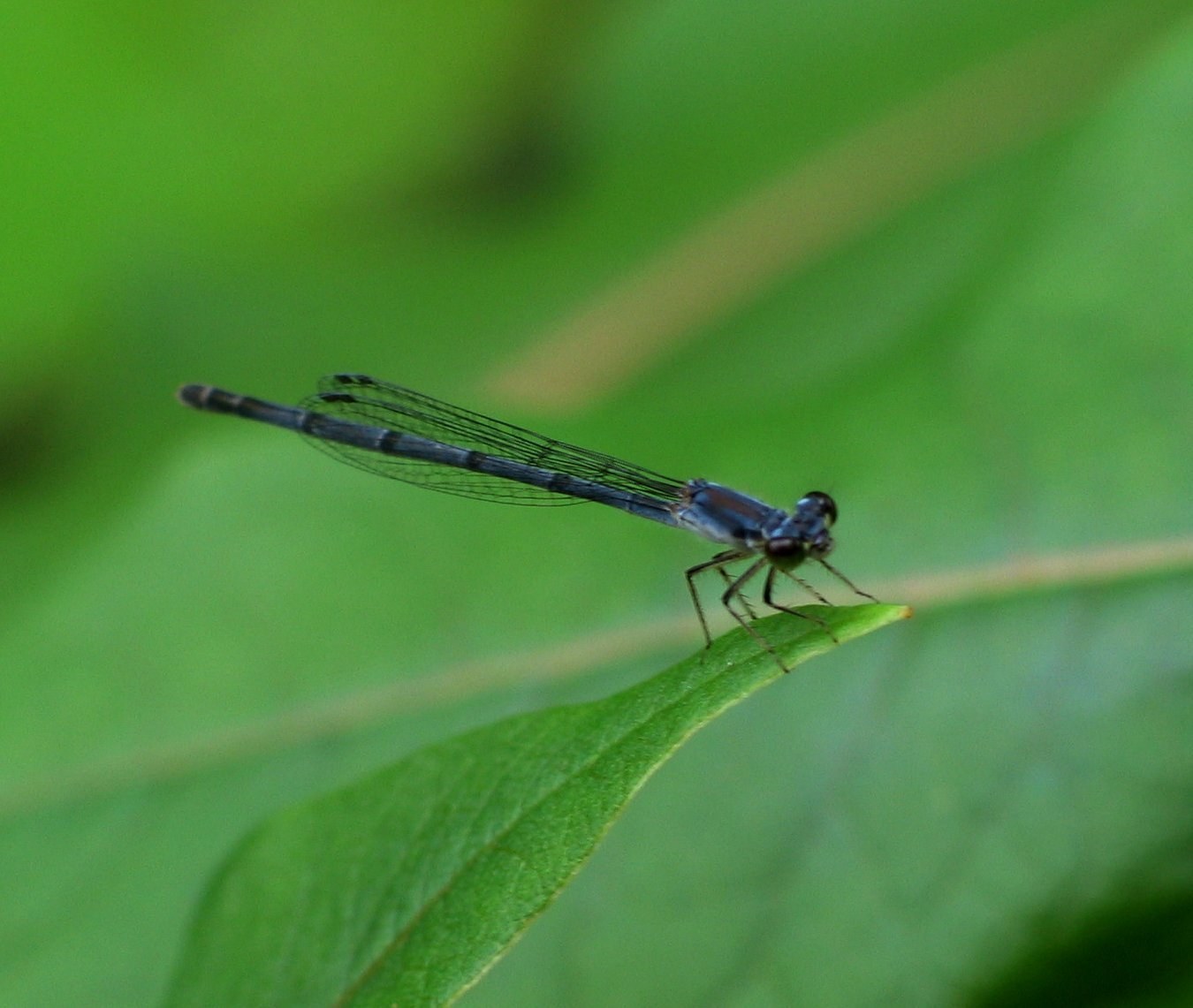
Key Visual Features
The Familiar Bluet is a small, slender damselfly, about 1.2 to 1.4 inches (30-35 mm) long, part of the large "bluet" group known for blue-and-black patterned bodies.
- Body color: Mature males show a blue thorax marked with black stripes and a mostly blue abdomen interrupted by black rings and markings, with a characteristic dark marking on the upper side of one of the last abdominal segments.
- Body shape: Thin, elongated abdomen typical of pond damselflies, with wings folded together over the back at rest.
- Eyes: Blue in mature males, often with a darker cap on top of the head.
- Female coloring: Females are usually more subdued, ranging from pale blue-gray to tan, with a similar black-striped thorax pattern but less vivid overall.
- Legs: Pale with narrow dark stripes running down each segment.
Where and When You'll See It
Familiar Bluets are extremely common at ponds, lakes, and slow streams with abundant vegetation, and are tolerant of a wide range of water conditions, including some disturbed or urban ponds. They fly from late spring well into fall in much of their range, often seen in large numbers perched on floating or emergent plants just above the water surface.
Similar-Looking Species
Bluets as a group are notoriously difficult to separate by sight alone, and the Familiar Bluet is no exception:
- Azure Bluet: Similar blue-and-black pattern, but with a different, more isolated black marking near the front of the abdomen; close comparison is often needed.
- Other common bluets: Many species share nearly identical general coloring, and reliable identification frequently depends on examining the small terminal appendages at the tip of the abdomen, sometimes requiring a photo or hand lens.
- Blue-fronted Dancer: A different genus with a similar blue-and-black scheme but a more solidly black abdomen tip and a bouncier flight style.
Quick ID Checklist
- Small, slender damselfly with a blue-and-black striped thorax
- Mostly blue abdomen with black rings and a distinctive marking near the tip
- Extremely common at ponds and lakes with dense vegetation
- Long flight season, from late spring into fall
- Exact bluet species often confirmed only by close inspection of abdomen tip details
Frequently asked questions
Why is the Familiar Bluet hard to distinguish from other bluets?
Many bluet species share a very similar blue-and-black body pattern, so confirming the exact species often requires a close look at the small appendages at the tip of the abdomen.
What habitat is most likely to have Familiar Bluets?
Ponds, lakes, and slow streams with plenty of floating or emergent vegetation, including many disturbed or urban water bodies, since this species is quite tolerant.
How long is the flight season for this species?
It is active from late spring well into fall across much of its range, longer than many other damselfly species.
Are females colored the same as males?
No, females tend to be paler, ranging from blue-gray to tan, and generally look more subdued than the vivid blue of mature males.
Familiar Bluet identified by the community
Recent Familiar Bluet finds identified with Bug Identifier.