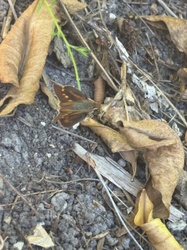
Fiery Skipper Identification Guide
Recognize this small, fast orange skipper by its ragged black wing borders and short hooked antennae.
Read the full Fiery Skipper encyclopedia entry →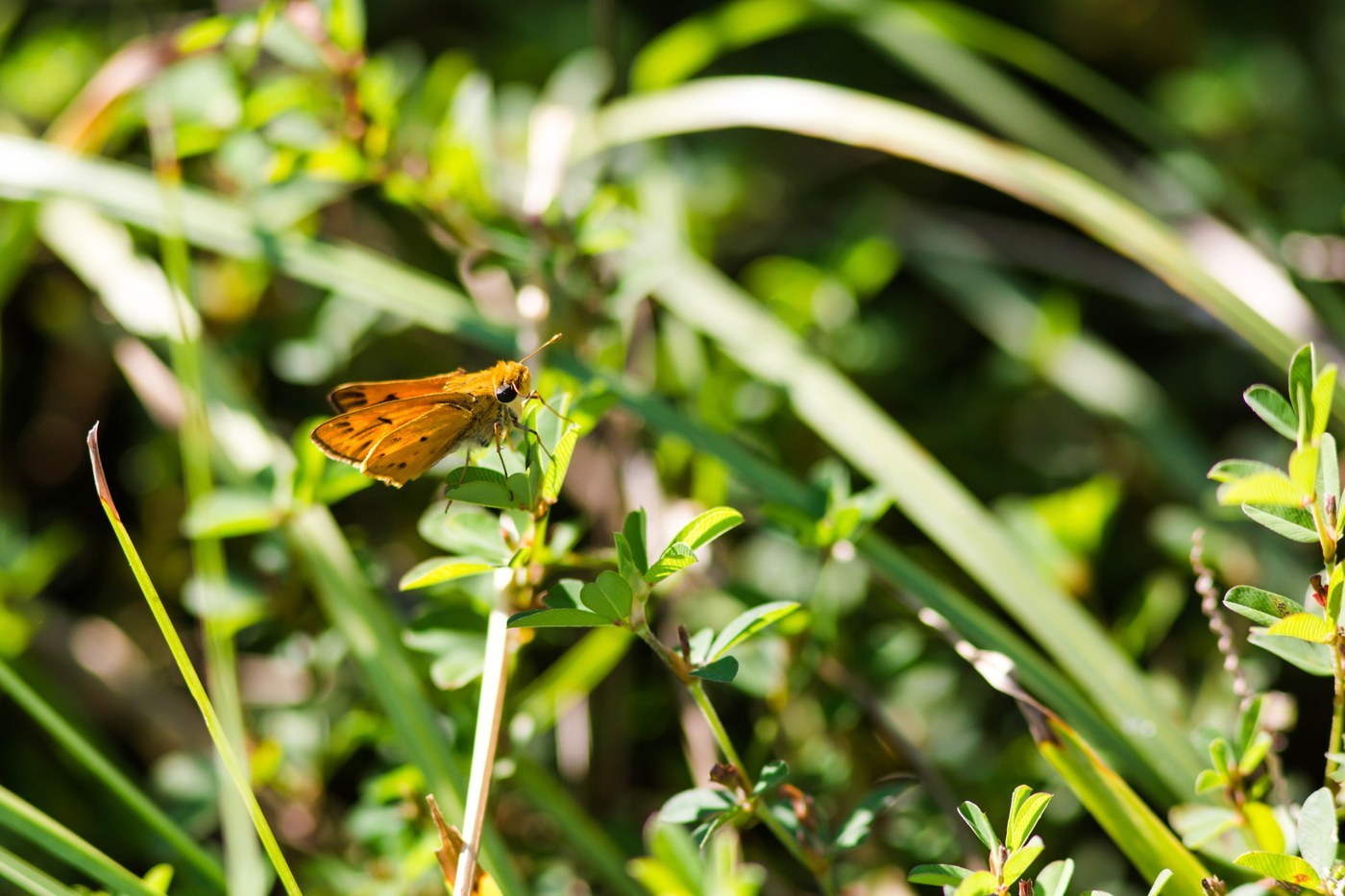
Key Visual Features
The Fiery Skipper (Hylephila phyleus) is a small, stocky skipper with a wingspan of about 1 to 1.5 inches.
- Males: Bright orange-yellow wings with irregular, ragged black borders and scattered black spots along the wing edges.
- Females: Duller orange coloring with more extensive black checkering across the wings, giving a more mottled appearance.
- Underside: Yellow-orange hindwing marked with small, scattered black spots.
- Antennae: Notably short antennae with hooked tips, shorter than in many other skippers.
- Body: Stocky, robust body typical of grass skippers.
- Flight style: Fast, low, and often erratic flight close to the ground.
Where and When You'll See It
Fiery Skippers are common in warm climates, especially in lawns, open grassy areas, gardens, parks, and other disturbed sites. They are strongly associated with grassy habitats since their larvae feed on various grasses. Adults are active during the day and fly low and fast, frequently stopping to nectar on low flowers. Multiple broods occur through the warmer months, and they can be seen nearly year-round in the mildest parts of their range.
Similar-Looking Species
- Sachem: Also orange with dark markings, but typically shows a more defined dark rectangular stigma patch on the male forewing and a somewhat different border pattern.
- Whirlabout: Similar coloring but with different spot arrangement on the ventral hindwing.
- General distinction: The Fiery Skipper's notably short antennae and the ragged, jagged appearance of its black wing borders help separate it from these similar orange skippers.
Quick ID Checklist
- Small, stocky orange-yellow skipper
- Ragged, irregular black wing borders (more checkered in females)
- Short, hooked antennae, shorter than typical for skippers
- Fast, low flight over grassy habitat
- Common in lawns, parks, and open grassy areas in warm climates
Frequently asked questions
What makes the Fiery Skipper's antennae unusual?
Its antennae are notably shorter than those of many other skippers, which is a useful clue when comparing it to similar orange species.
How do male and female Fiery Skippers differ?
Males are brighter orange-yellow with ragged black borders, while females are duller with more extensive black checkering across the wings.
What habitat is best for spotting a Fiery Skipper?
Lawns, parks, and other open grassy areas in warm climates are ideal, since the species is closely tied to grasses as larval host plants.
How can I tell a Fiery Skipper from a Sachem?
The Fiery Skipper has shorter antennae and more ragged black wing borders, while the Sachem typically shows a more distinct dark stigma patch on the male's forewing.
Fiery Skipper identified by the community
Recent Fiery Skipper finds identified with Bug Identifier.