
Fig Wasp Identification Guide
Discover how to recognize the almost microscopic wasps whose entire life is tied to the inside of a single fig fruit.
Read the full Fig Wasp encyclopedia entry →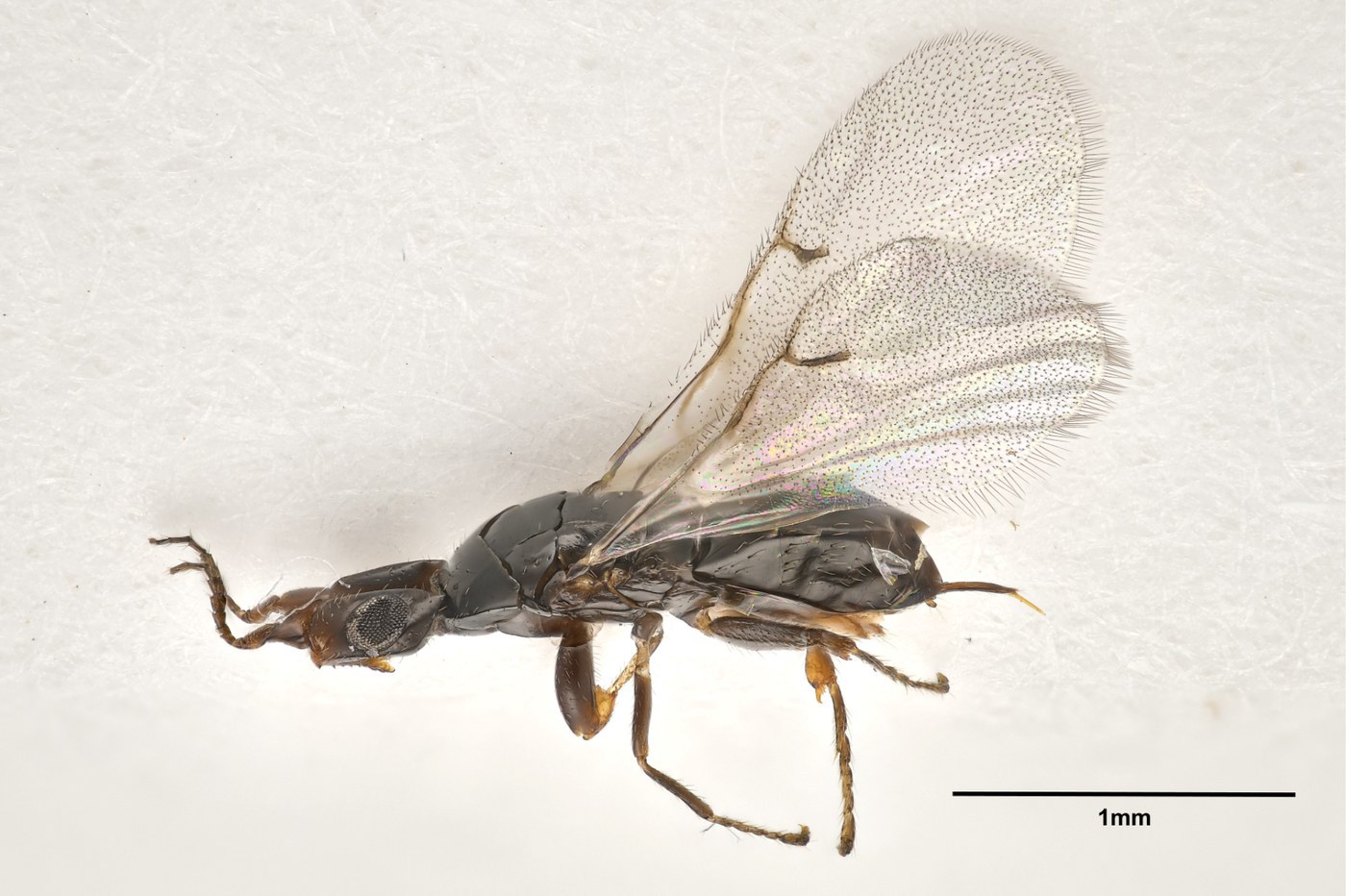
Key Visual Features
Fig wasps are exceptionally small and rarely encountered outside of fig fruit, with striking differences between males and females.
- Size: Tiny, typically only 1–2.5 mm long, among the smallest wasps most people will ever encounter.
- Color: Generally dark brown to black, sometimes with a slight amber or reddish tint, and not strongly patterned.
- Females: Winged, with a narrow, elongated body and a long, slender abdomen adapted for entering the tight opening of a fig.
- Males: Usually wingless, with a flattened, pale, almost worm-like or grub-like body quite different in appearance from the females, adapted for a life spent entirely inside the fig.
- Antennae: Short and thread-like in females; reduced in males.
- Head: In females, somewhat flattened and elongated to help squeeze through the narrow natural opening (ostiole) at the tip of a fig.
Where and When You'll See One
Because of their tiny size and specialized life cycle, fig wasps are almost never seen away from fig trees.
- Look at fig trees, especially wild or ornamental fig species, during the fruiting season when figs are developing.
- Winged females may be briefly visible flying near ripening figs as they search for a fruit with the right opening to enter.
- The interior of a cut-open fig can reveal remains of fig wasps at various life stages, though this is more a curiosity of dissection than casual field observation.
- Activity is closely tied to the fig's own flowering and fruiting cycle, which can occur multiple times a year in warm climates.
Similar-Looking Bugs
- Other tiny chalcid wasps: Similarly minuscule and dark, but not associated with entering fig fruit; general habitat and host plant are the best distinguishing clues.
- Thrips: Also extremely small and sometimes found on fruit, but thrips have fringed, feather-like wings and a different, more elongated slender body without a wasp waist.
- Winged aphids: Roughly similar in size but soft-bodied and pear-shaped, lacking the narrow wasp waist and elongated head of a female fig wasp.
- Fungus gnats: Small and dark like fig wasps but have fly-like features such as a single pair of wings and longer legs, rather than a wasp's two wing pairs and narrow waist.
Quick ID Checklist
- Extremely tiny wasp, only a couple of millimeters long
- Found specifically in or near fig trees during fruiting
- Winged females with an elongated head and body; males typically wingless and pale
- Best evidence often found inside a cut fig rather than by spotting a free-flying adult
- Activity timed closely to the fig tree's fruiting cycle
Frequently asked questions
Why are fig wasps so hard to spot?
Their extremely small size, often just a couple of millimeters, combined with a life cycle spent almost entirely inside the enclosed fig fruit, makes them very difficult to observe directly in the field.
Do male and female fig wasps look the same?
No, they look quite different — females are winged with an elongated body suited for entering a fig, while males are typically wingless, pale, and more grub-like in appearance.
Where inside the fig would I find fig wasps?
They develop inside the fig's interior cavity, and remains or live individuals at various life stages can sometimes be seen if a fig is carefully cut open during the right part of the season.
Are fig wasps found on all fig trees?
They are strongly associated with fig species generally, though which exact fig wasp species is present can vary with the particular type of fig tree involved.