
Fireflies Identification Guide
Recognize fireflies by their soft dark wing covers, orange-marked thorax, and rhythmic evening light flashes.
Read the full Fireflies encyclopedia entry →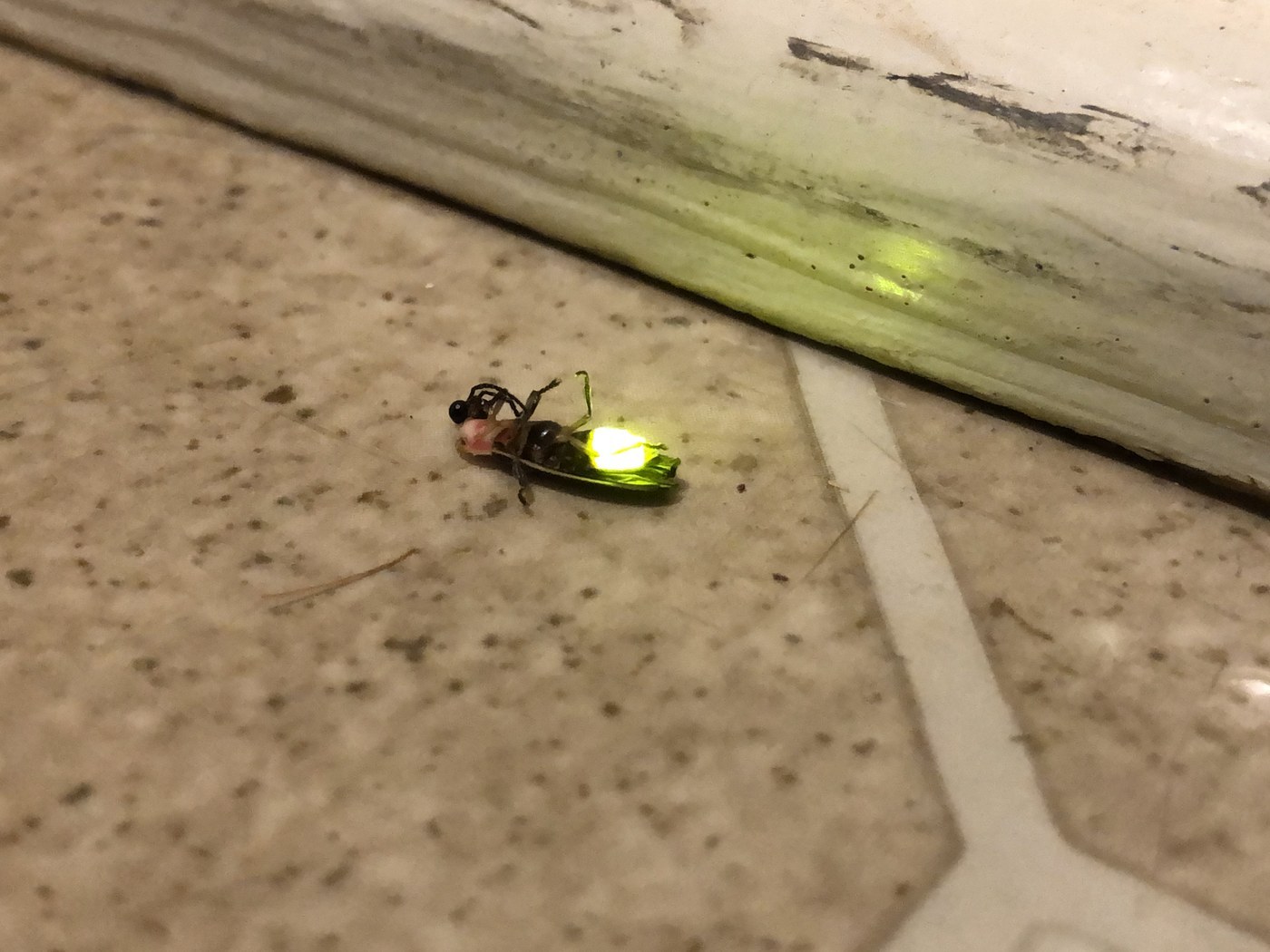
Key Visual Features
Fireflies, also called lightning bugs, belong to the beetle family Lampyridae. Adults are soft-bodied and elongated, generally 1/4 to 3/4 inch long depending on species, with leathery, flexible wing covers (elytra) that are darker than the hard, glossy shells of most beetles. The body is typically dark brown to black, often with an orange, red, or yellow marking on the pronotum (the shield-like segment behind the head), sometimes with a dark central spot. The head is largely hidden beneath this pronotum shield. The signature feature is a specialized light-producing organ on the underside of the abdomen's rear segments, which produces soft flashes of yellow-green or amber light, especially visible at dusk and after dark. Antennae are thread-like, and the eyes are relatively large for the body size.
Where and When You'll See Them
Fireflies favor warm, humid environments with some moisture nearby: meadows, fields, woodland edges, marshes, and grassy yards, often close to ponds, streams, or damp low-lying areas. They are most active from late spring through summer, and their nightly flight and flashing display typically begins at dusk and continues into the darker hours of the evening. Different species have characteristic flash patterns — steady rhythms, specific colors, or distinct flight paths — which is one reason enthusiasts can often identify species just by watching flash timing in the field.
Similar-Looking Bugs
- Glowworm beetles — closely related; females and larvae are wingless and worm-like, glowing steadily rather than flying and flashing like adult fireflies.
- Net-winged beetles — share a similarly soft, flattened body but lack any light-producing organ and instead show a distinctive netted texture on the wing covers.
- Soldier beetles — similarly soft-bodied and elongated, but do not glow and often have more uniform coloring.
Quick ID Checklist
- Soft, flexible dark wing covers, 1/4 to 3/4 inch
- Orange or yellow marking on the shield-like pronotum
- Glowing light organ on the underside of the abdomen tip
- Flies and flashes at dusk into the night, late spring through summer
- Found in meadows, fields, and grassy areas near moisture
Frequently asked questions
How do fireflies produce their light?
They have a specialized organ on the underside of their abdomen that produces a chemical reaction generating a soft yellow-green or amber glow, used to flash signals after dark.
When are fireflies most active?
They're most active from late spring through summer, with flying and flashing activity concentrated at dusk and into the evening.
How can I tell a firefly from a net-winged beetle?
Fireflies have a light-producing organ on the abdomen and softer, less textured wing covers, while net-winged beetles lack any glow and have a distinctive raised, net-like pattern on their wing covers.
Where are fireflies commonly found?
They favor meadows, fields, woodland edges, and grassy yards, especially near ponds, streams, or other damp areas.