Fishing Spider Identification Guide
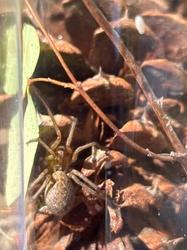
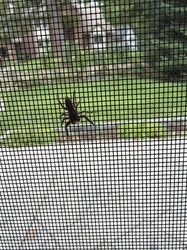
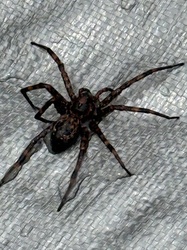
Recognize the fishing spider by its large size, water-repellent legs, and habit of resting on the surface of ponds and streams.
Read the full Fishing Spider encyclopedia entry →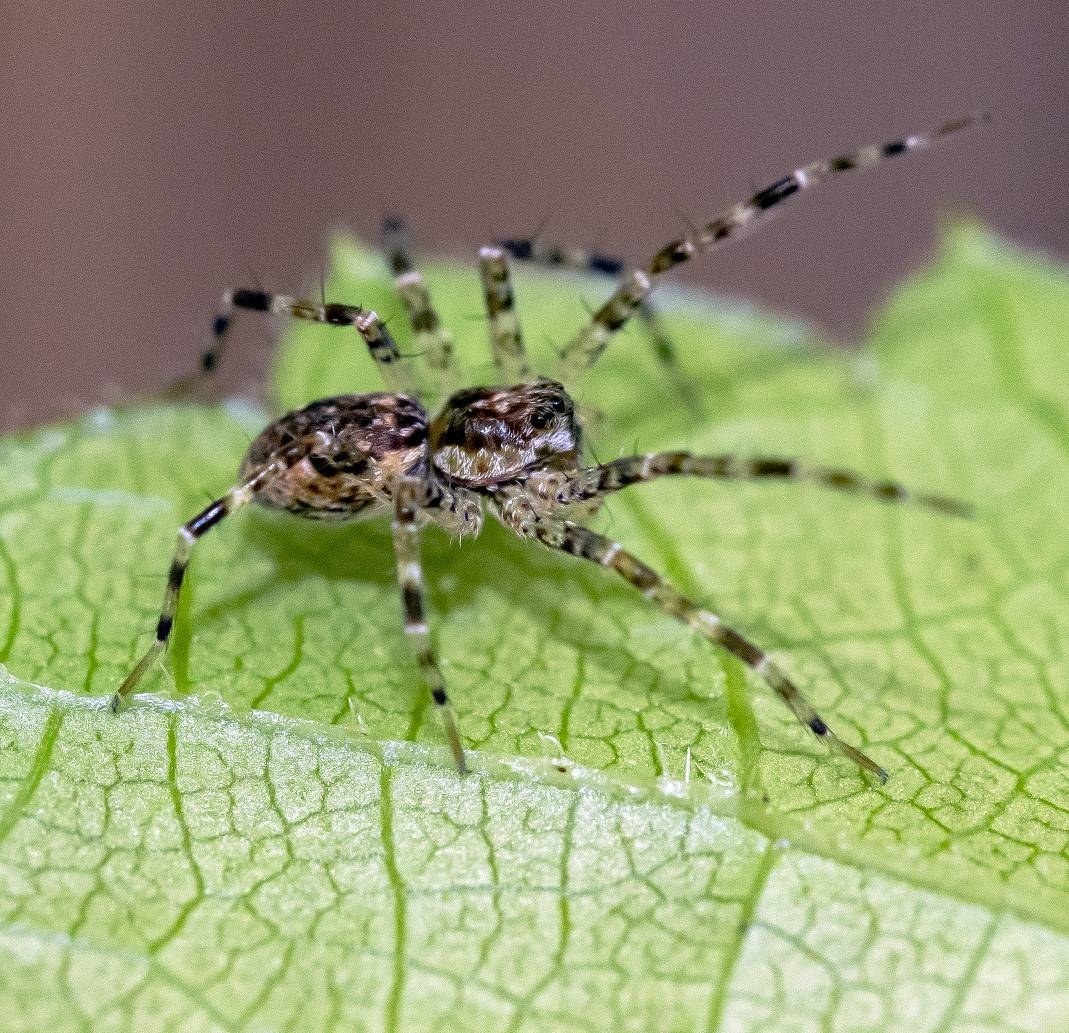
Key Visual Features
Fishing spiders are among the largest non-web-building spiders found near water:
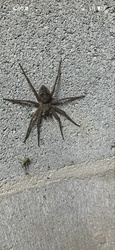
- Size: Body length often 1-1.5 inches, with a leg span that can exceed 3 inches in large females, making them one of the bigger spiders encountered outdoors.
- Color: Brown to grayish-brown, often with darker chevron or W-shaped markings down the center of the abdomen and pale stripes along the sides.
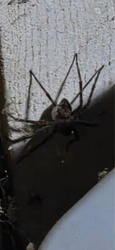
- Legs: Long, sturdy legs covered in fine water-repellent hairs that allow the spider to rest and move on the surface of water without sinking.
- Body shape: A robust, slightly flattened body typical of active hunting spiders, held low and wide for stability on water and land.
- Eyes: Eight eyes arranged in two rows, giving good all-around vision for detecting movement on the water's surface.
Where and When You'll See One
As the name suggests, fishing spiders are found at the edges of ponds, streams, lakes, and slow-moving water, as well as in damp woodland areas nearby. They rest on rocks, logs, or directly on the water's surface, sensing vibrations from insects or small aquatic movement. They are most active and visible in warm months, from late spring through early fall, often basking near the waterline during the day and hunting actively at dusk.
Similar-Looking Spiders
- Nursery web spiders: Close relatives with a similar body shape and pale central stripe, but generally smaller and found away from water in grass and gardens rather than at the water's edge.
- Wolf spiders: Also large, brown, and ground-hunting, but lack the water-walking ability and are rarely found resting directly on a water surface.
- Dock spiders: A regional name sometimes used interchangeably with fishing spider, referring to the same general group found around docks and shorelines.
Quick ID Checklist
- Large brown body with chevron or W-shaped markings on the abdomen
- Long legs with fine hairs suited for resting on water
- Found directly on or near the surface of ponds, streams, and lakes
- Robust, flattened body typical of an active ground-and-water hunter
- Most visible basking near the waterline in warm months
Frequently asked questions
How does a fishing spider avoid sinking on water?
Fine, water-repellent hairs on its legs spread its weight across the surface tension of the water, allowing it to rest and move without breaking through.
What is the easiest way to tell a fishing spider from a wolf spider?
Habitat is the biggest clue — fishing spiders are consistently found at the water's edge or on the surface, while wolf spiders are typically found on dry ground.
Do fishing spiders build a web to catch prey?
No, they are active hunters that detect vibrations on water or land and pursue prey directly rather than relying on a silk trap.
What time of day are fishing spiders easiest to spot?
They often bask near the waterline during the day and become more actively hunting at dusk, so both times offer good viewing opportunities.
Fishing Spider identified by the community
Recent Fishing Spider finds identified with Bug Identifier.