
Fork-tailed Bush Katydid Identification Guide
Learn to identify this slender green katydid by the distinctive forked tail appendages found on males.
Read the full Fork-tailed Bush Katydid encyclopedia entry →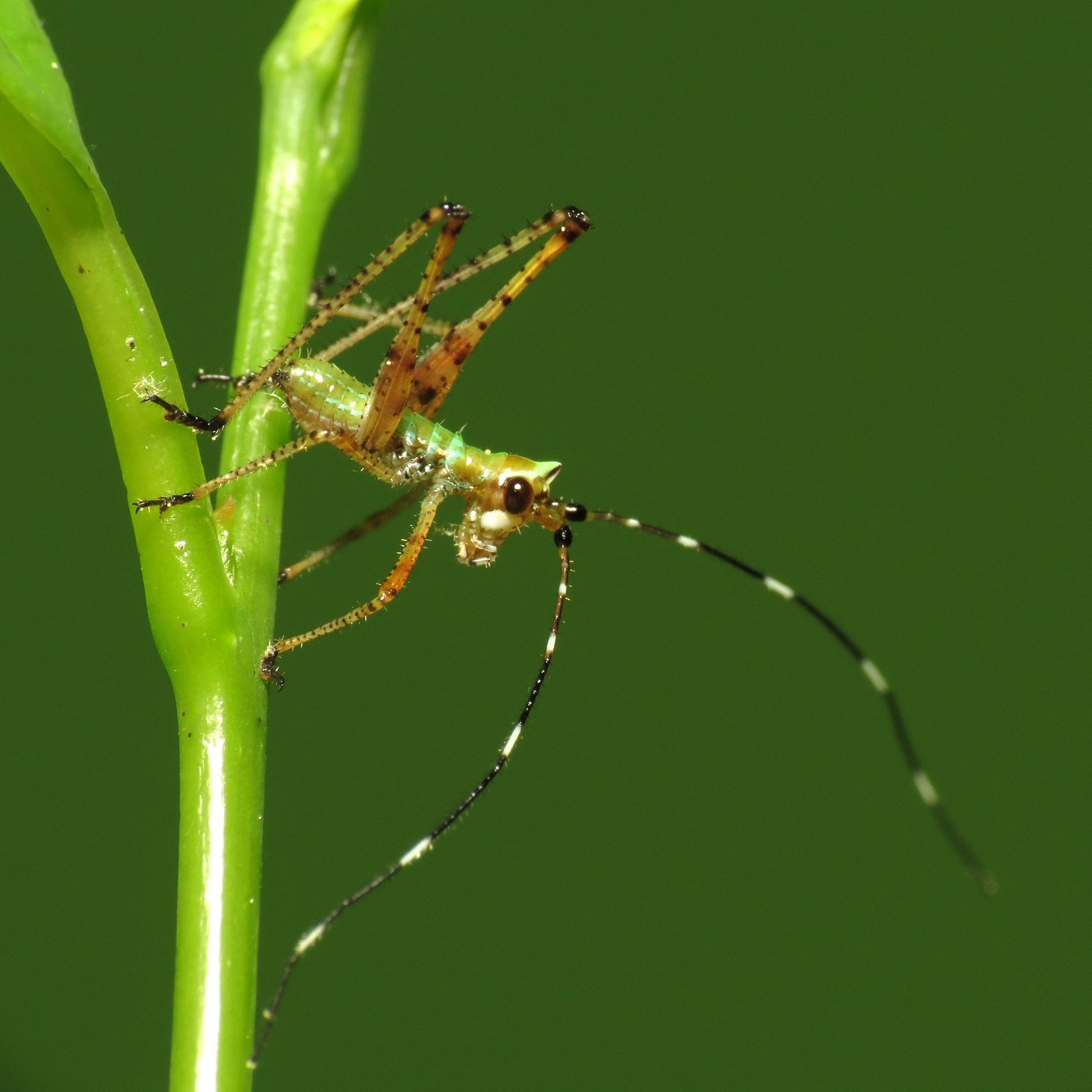
Key Visual Features
The fork-tailed bush katydid (Scudderia furcata) is a slender, medium-sized katydid, typically 1.5 to 2 inches long.
- Color: Bright green overall, sometimes with a pale stripe or edge along the wings, providing effective camouflage among leaves.
- Wings: Long, narrow, leaf-shaped wings, less broad and rounded than those of the common true katydid, held angled over the body.
- Body shape: Slender and elongated compared to stouter katydid species, with long legs suited for climbing through shrubs and low branches.
- Antennae: Very long, thread-like antennae that extend well past the body length.
- Diagnostic feature: Males have distinctive forked or curved cerci (paired appendages at the tip of the abdomen) that curve inward and cross near the tip — this is the most reliable feature separating this species from other similar bush katydids, though it usually requires a close look at the abdomen tip.
Where and When You'll See It
Fork-tailed bush katydids are found in shrubs, bushes, hedgerows, and garden vegetation across much of North America. They are active mainly at night from summer through fall, when males call to attract mates, though they can occasionally be found resting on leaves during the day if disturbed from cover.
Similar-Looking Species
- Common true katydid: Larger and stouter overall, with broader, more rounded wings and a preference for tree canopies rather than shrubs.
- Other Scudderia bush katydids: Very similar in overall shape and green coloring; the shape of the male's cerci at the tip of the abdomen is typically the most dependable way to distinguish between species in this genus.
- Meadow katydids: Smaller and more slender, associated with grasses and low meadow vegetation rather than shrubs and bushes.
Quick ID Checklist
- Slender, bright green body with narrow, leaf-shaped wings
- Antennae much longer than the body
- Males show distinctive forked, inward-curving cerci at the abdomen tip
- Found in shrubs, bushes, and hedgerows rather than tree canopies or grass
- Active mainly at night, summer through fall, across much of North America
Frequently asked questions
What makes the fork-tailed bush katydid unique among bush katydids?
Males have distinctive forked, inward-curving cerci (appendages) at the tip of the abdomen, which is the most reliable way to distinguish this species from other similar-looking bush katydids.
Where do fork-tailed bush katydids live?
They're found in shrubs, bushes, hedgerows, and garden vegetation across much of North America, rather than in tree canopies or open grass.
How is the fork-tailed bush katydid different from the common true katydid?
It's more slender with narrower, less rounded wings and lives in shrubs rather than tree canopies, while the common true katydid is stouter with broad rounded wings and lives high in trees.
When are fork-tailed bush katydids active?
They're mainly active at night from summer through fall, when males call to attract mates, though they may occasionally be seen resting on leaves during the day.