
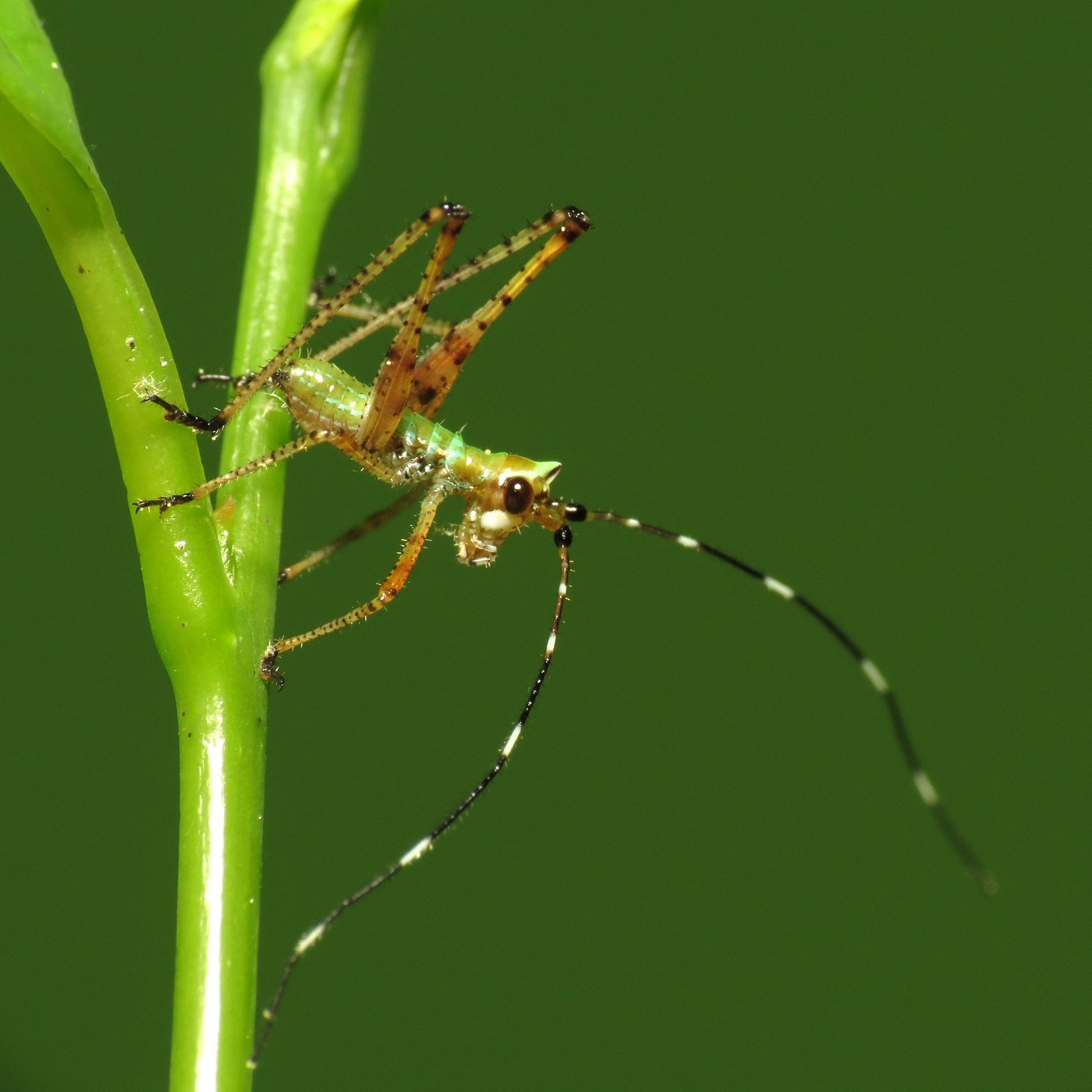
Fork-tailed Bush Katydid
Scudderia furcata
Slimmer and greener than its treetop relatives, the fork-tailed bush katydid lives among shrubs and garden plants, with males identified by the distinctive forked appendages at the tip of the abdomen that give the species its name.
- Size
- 2.8–4 cm (1.1–1.6 in) long
- Habitat
- Shrubs, gardens, meadows, and forest edges across North America
- Danger
- Harmless
Spotted a bug like this?
Identify any bug or insect from a photo, free.
Overview
The fork-tailed bush katydid is one of the most widespread and commonly encountered bush katydids in North America, found in shrubby vegetation, gardens, meadows, and forest edges across much of the continent. It belongs to a group of katydids in the genus Scudderia that are generally more slender and smaller than the large true katydids of the tree canopy, favoring lower, shrubbier vegetation instead.
Adults are typically bright green with narrow, leaf-shaped wings that provide effective camouflage among shrub foliage. The common name refers to the distinctively forked appendages found at the tip of the male's abdomen, a feature used to distinguish this species from closely related bush katydids that can otherwise look very similar.
This species is a familiar inhabitant of gardens and shrubby edges throughout much of its range, where its soft, ticking or lisping call can often be heard on summer evenings, typically less loud and more subdued than the calls of larger true katydids.
How to Identify
- Slender, elongated green body with narrow, leaf-shaped wings.
- Long, thread-like antennae exceeding the length of the body.
- Males have a distinctively forked appendage at the tip of the abdomen, visible with close inspection, which gives the species its common name.
- Females have a broad, upward-curving ovipositor used for inserting eggs into plant tissue.
- Generally smaller and more slender than the common true katydid.
- Distinguished from other Scudderia species mainly by the shape of the male terminal appendages and subtle differences in call structure.
Habitat & Range
This species is widespread across most of the United States, southern Canada, and into Mexico, occupying shrubs, garden plantings, meadow edges, and forest margins rather than high tree canopy. It is commonly found in suburban gardens and hedgerows as well as more natural shrubby habitats, with adults active mainly from midsummer into fall.
Behavior & Diet
Fork-tailed bush katydids feed on the leaves and occasionally flowers of a variety of shrubs and herbaceous plants, and are also known to opportunistically consume small insects. Males produce a soft, intermittent ticking or lisping call to attract females, generally quieter and less far-carrying than the loud choruses of true katydids. Their green coloration and leaf-shaped wings provide strong camouflage among shrub foliage, helping them avoid detection by predators such as birds and other insectivores while they feed and rest during the day.
Life Cycle
Females use their curved ovipositor to insert flattened eggs into plant leaves or stems in late summer and fall, and the eggs overwinter before hatching the following spring. Nymphs develop through several instars of incomplete metamorphosis over the summer months, gradually resembling smaller wingless versions of adults before maturing by mid to late summer. Generally one generation occurs per year, though in warmer parts of the range a partial second generation is possible.
Frequently asked questions
How did the fork-tailed bush katydid get its name?
Males have a distinctive pair of forked appendages at the tip of the abdomen, a feature used to identify the species and the source of its common name.
Where does the fork-tailed bush katydid live?
It is found in shrubs, gardens, meadow edges, and forest margins across most of the United States, southern Canada, and Mexico.
How is this species different from the common true katydid?
It is smaller and more slender, lives in shrubs rather than tree canopy, and produces a quieter ticking call rather than a loud rhythmic song.
What do fork-tailed bush katydids eat?
They feed on the leaves and occasionally flowers of various shrubs and plants, and will opportunistically eat small insects.
Fork-tailed Bush Katydid guides
In-depth guides for identifying, understanding, and living alongside Fork-tailed Bush Katydid.
Other bugs you may enjoy
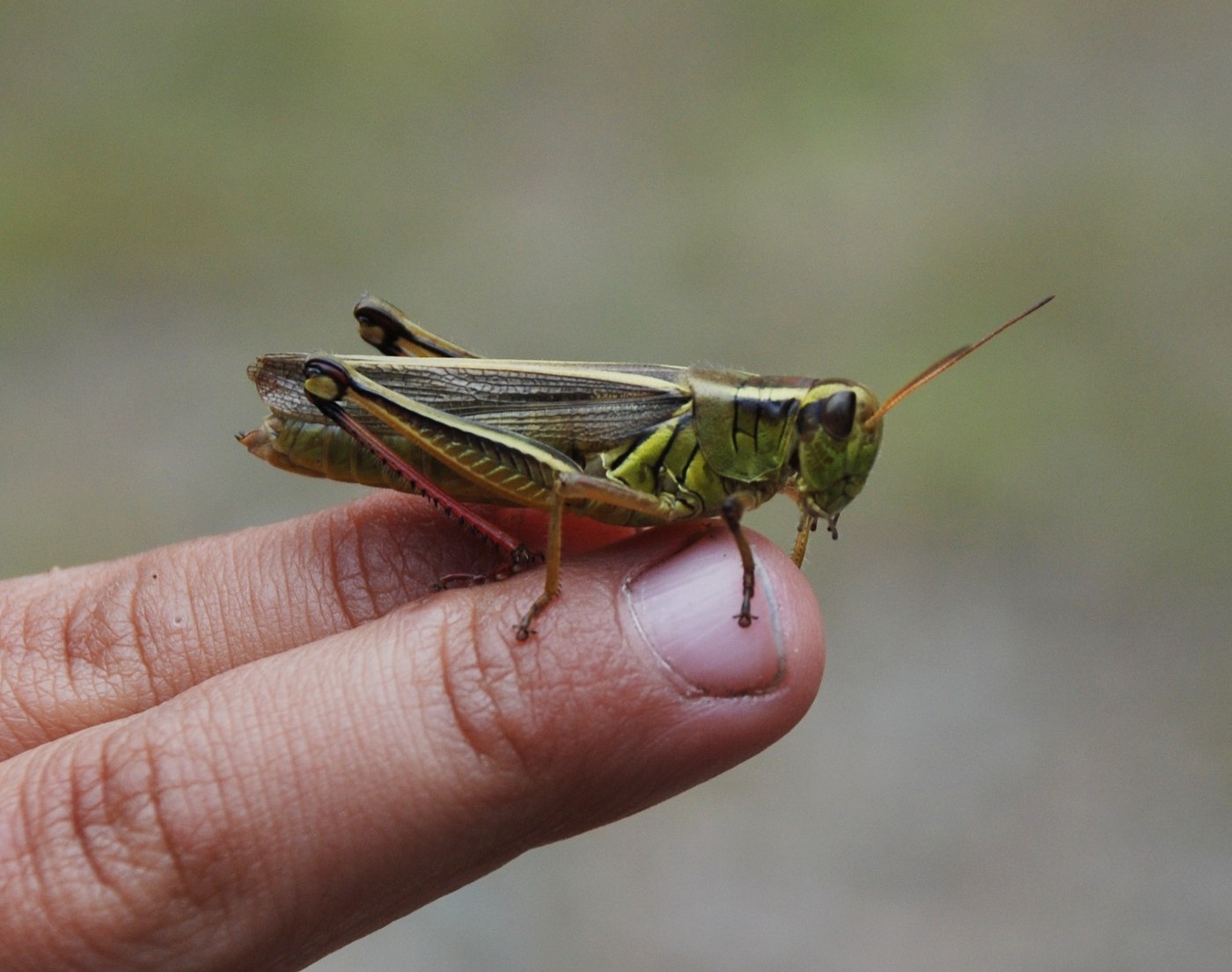
Two-striped Grasshopper
Meadows, pastures, riverbanks, and agricultural fields across North America
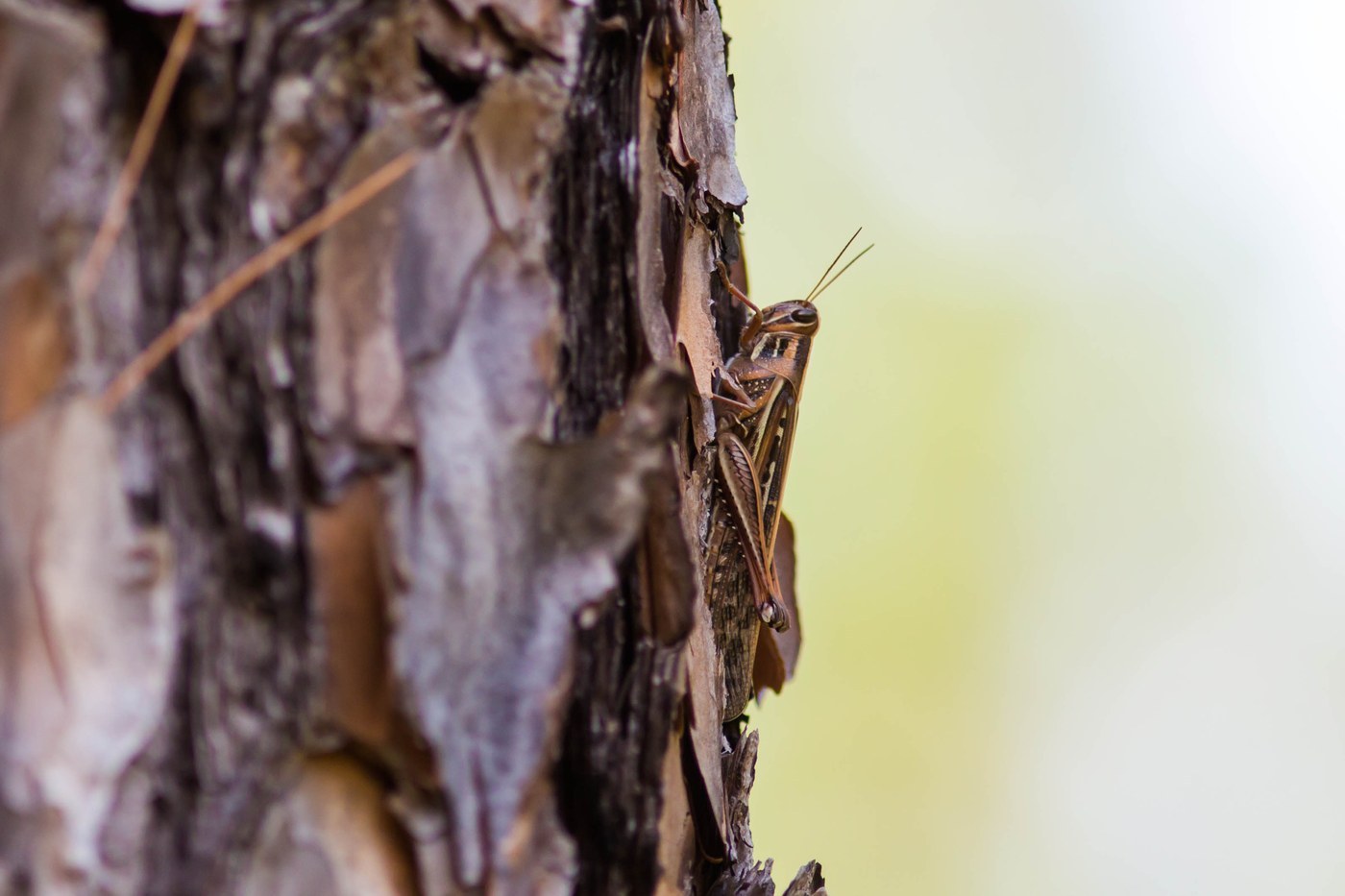
American Grasshopper
Woodland edges, citrus groves, gardens, and open fields across the southern and southeastern United States
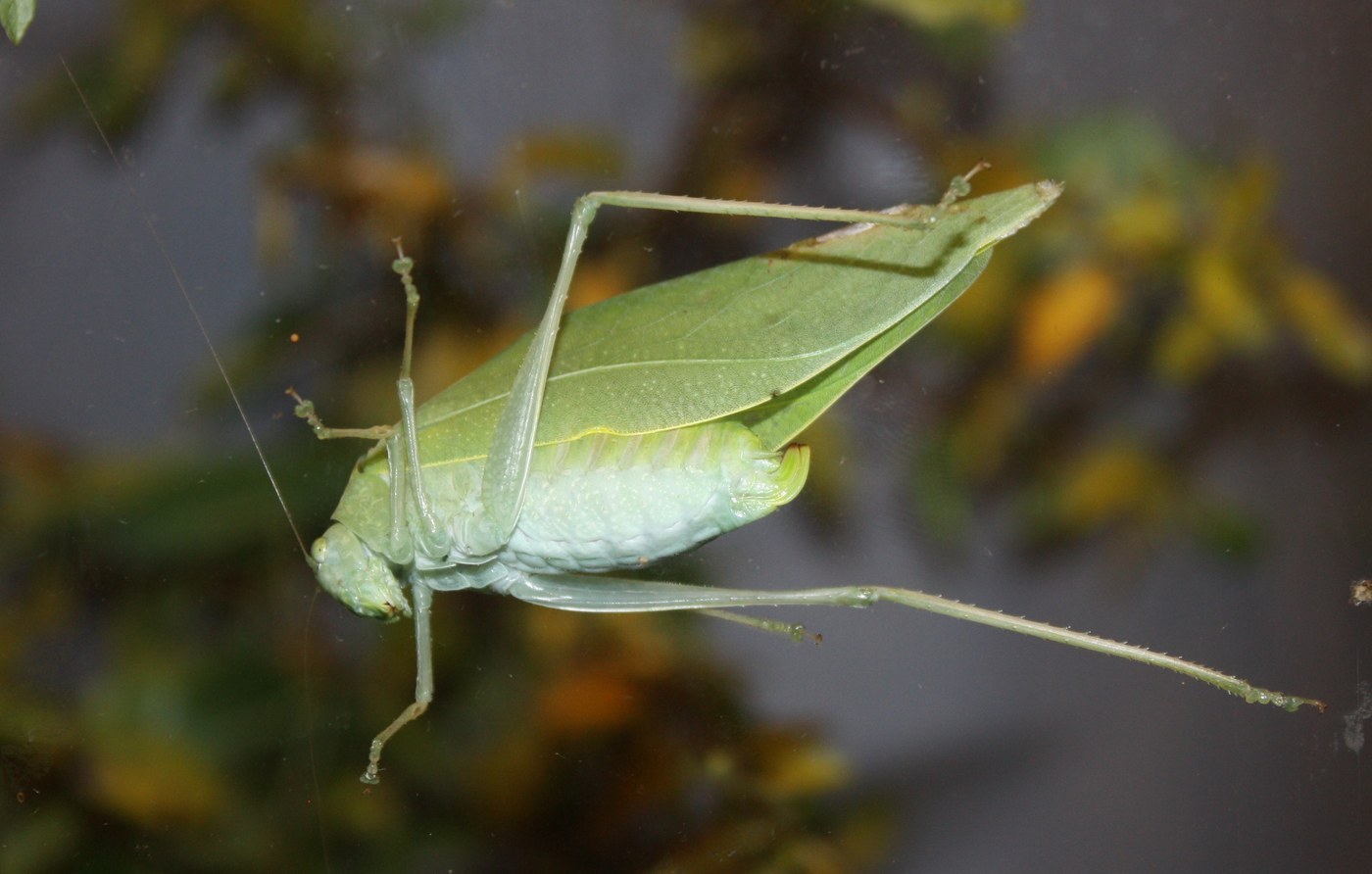
Angular-winged Katydid
deciduous trees, shrubs, and hedgerows across eastern and central North America
Spur-throated Grasshopper
grasslands, meadows, croplands, and roadsides across North America
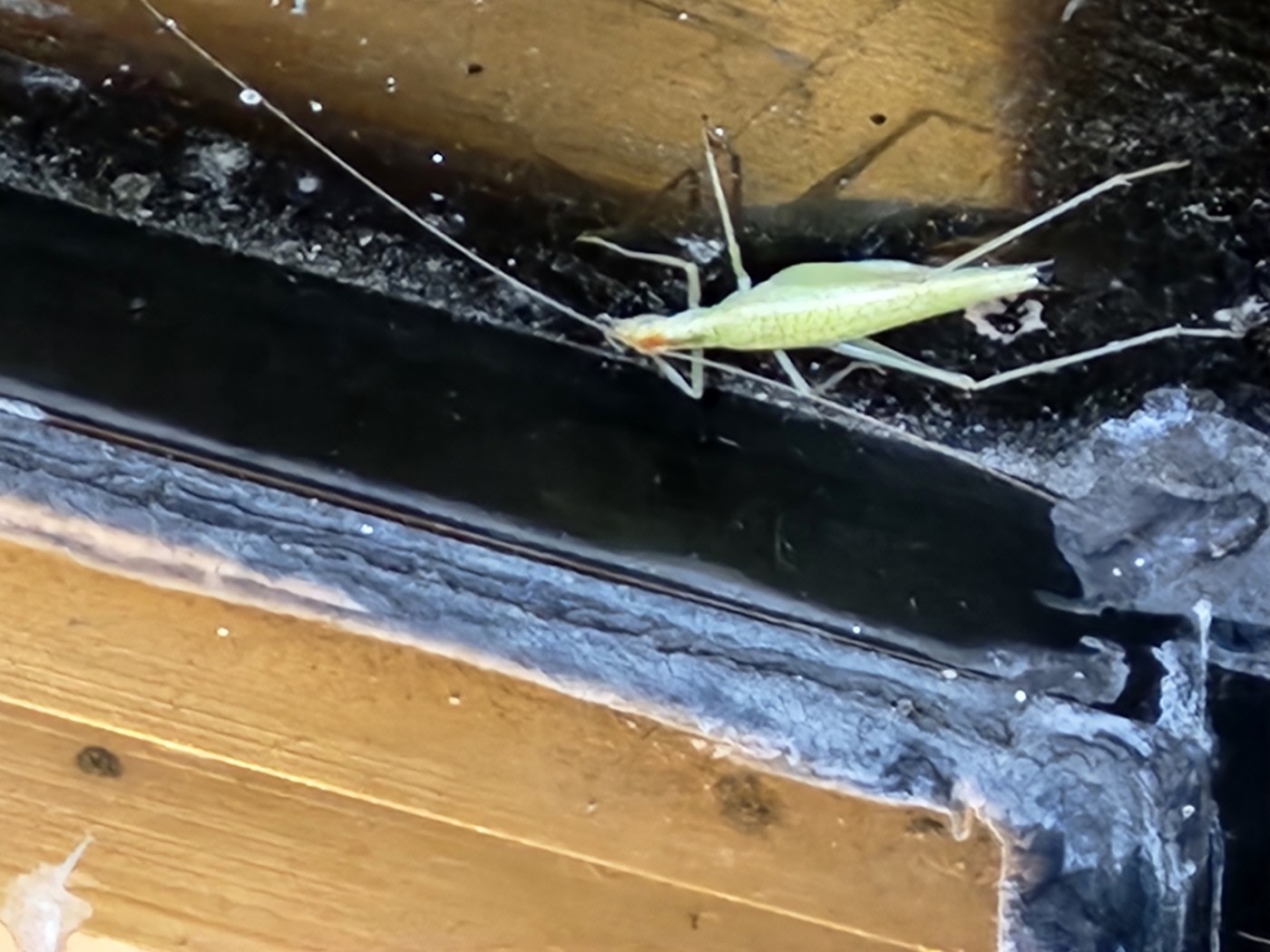
Snowy Tree Cricket
Shrubs, trees, and tall vegetation across North America
Rocky Mountain Locust
historically open grasslands and river valleys of the Rocky Mountains and Great Plains (now believed extinct)
Spotted Camel Cricket
damp caves, crawl spaces, basements, leaf litter, and rotting logs in eastern North America
Pygmy Grasshopper
damp soil, mud, and low vegetation near ponds, streams, and marshes
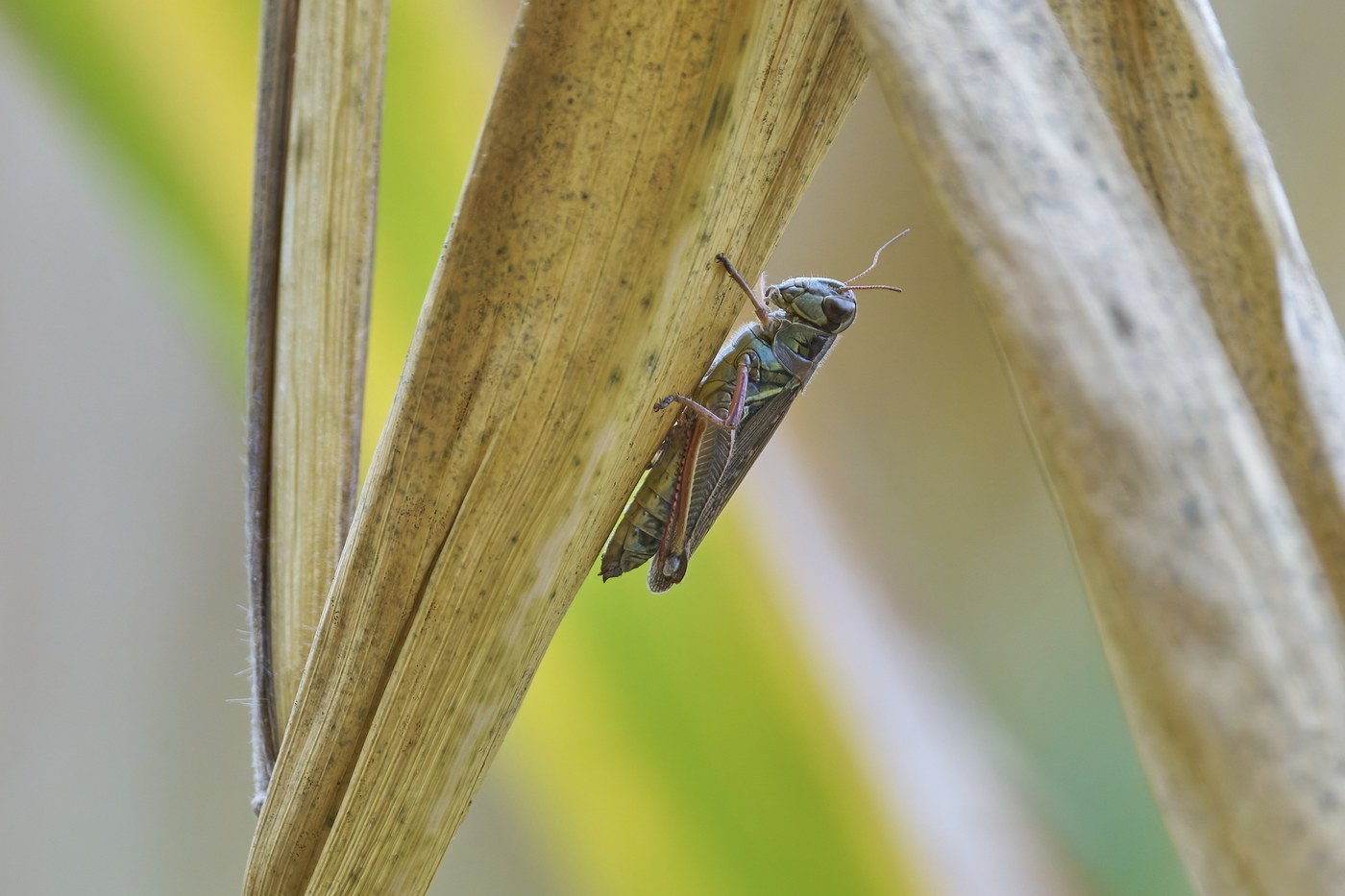
Red-legged Grasshopper
Meadows, pastures, field edges, and gardens across North America
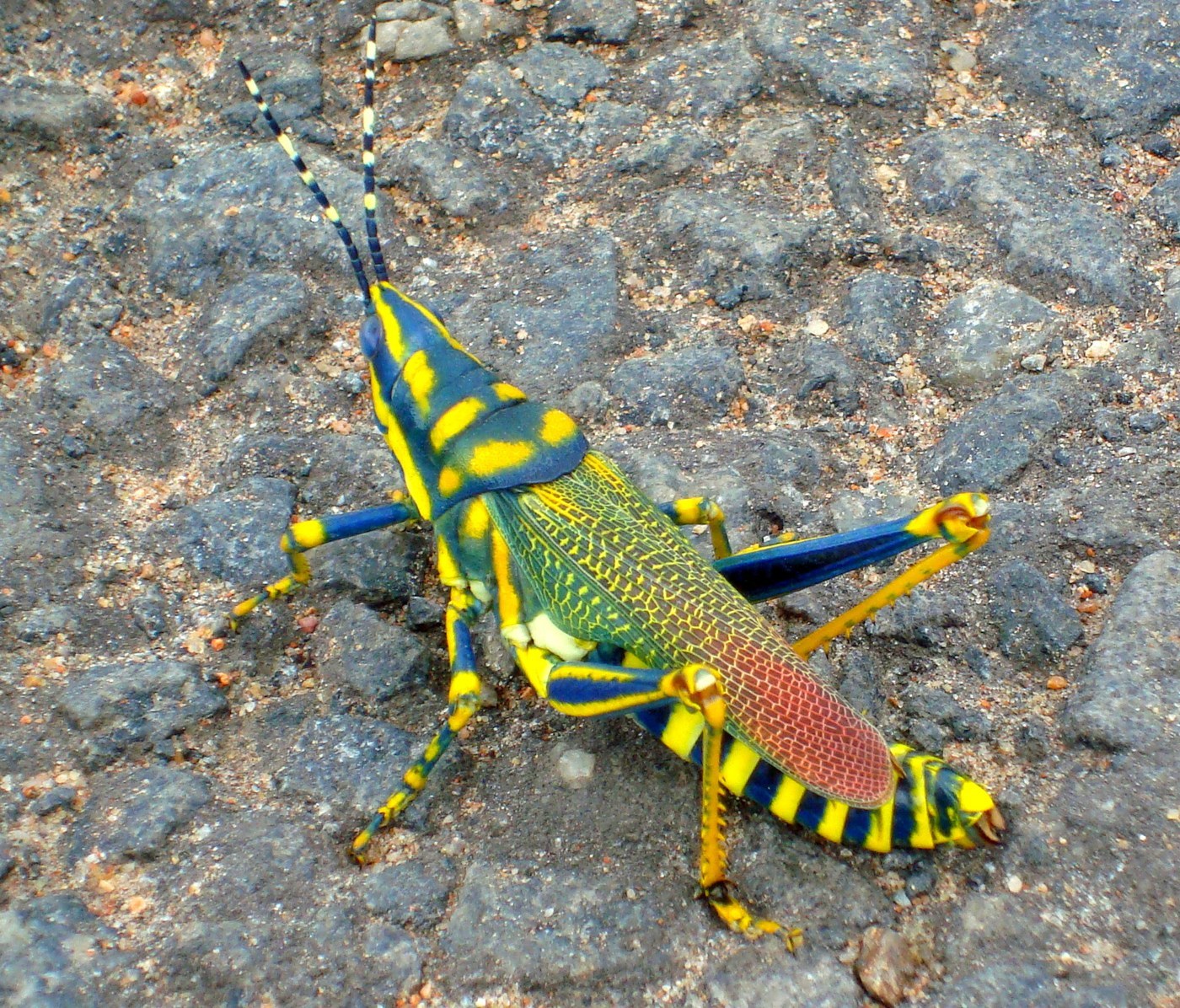
Painted Grasshopper
arid scrub, wastelands, and gardens of the Indian subcontinent, especially near milkweed plants
Speckled Bush Cricket
Brambles, hedgerows, nettles, and shrubby vegetation
Northern Mole Cricket
wet soil, pond margins, and marshy ground across eastern and central North America