
Formosan Subterranean Termite Identification Guide
Recognize Formosan subterranean termites by their large dusk swarms, oval soldier heads, and carton-like nest material.
Read the full Formosan Subterranean Termite encyclopedia entry →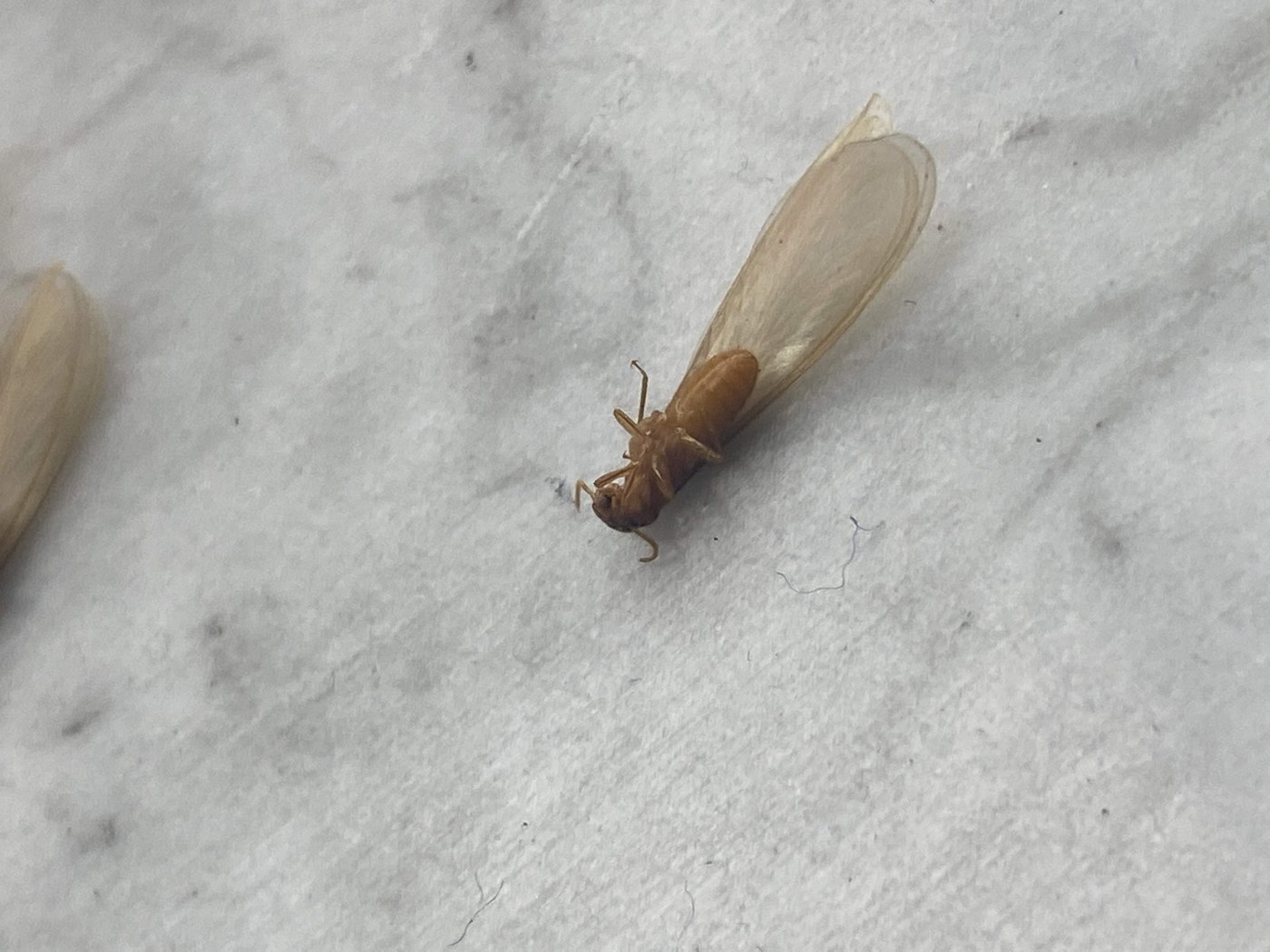
Key Visual Features
The Formosan subterranean termite (Coptotermes formosanus) is a large, aggressive termite species known for building sizeable colonies.
- Workers: creamy white, soft-bodied, roughly 1/2 inch long including a slightly larger body size than many native subterranean termites.
- Soldiers: pale yellow-brown, with an oval-shaped head (rather than rectangular) and long mandibles; when disturbed, soldiers can release a defensive secretion from a fontanelle on the head.
- Swarmers (alates): pale yellow-brown body with two pairs of translucent wings covered in fine hairs, about 1/2 inch long including wings.
- Body shape: straight waist, no constriction, typical of termites, distinguishing them from ants.
- Antennae: straight, bead-like segments rather than elbowed.
Where and When You'd See It
- Colonies can be extremely large and are known to build "carton" nests — structures made from a mix of soil, wood fragments, and saliva — sometimes above ground level in wall voids or trees.
- Swarmers typically emerge at dusk or after dark during warm, humid evenings, often attracted to outdoor lighting.
- Found in soil, tree stumps, wall voids, and other moist environments, especially in warmer coastal and subtropical regions.
- Mud tubes similar to other subterranean termites are built to travel between soil and wood sources.
Similar-Looking Bugs
- Eastern subterranean termite swarmers: darker brown to black in color and typically swarm during the day rather than at dusk.
- Flying ants: pinched waist, elbowed antennae, and unequal front/back wing lengths set them apart from Formosan termite swarmers.
- Drywood termite swarmers: generally larger-bodied and not reliant on soil contact, unlike the soil-dependent Formosan termite.
Behavior Notes
Because Formosan termite colonies can grow far larger than many other subterranean species, swarms are often correspondingly dense, sometimes numbering in the thousands and forming visible clouds around outdoor lights on warm evenings. Discarded wings are frequently found in piles on windowsills or under light fixtures the morning after a swarm, which can be a useful secondary sign even after the swarmers themselves have dispersed.
Quick ID Checklist
- Pale yellow-brown swarmers with hairy, translucent wings
- Oval-shaped soldier heads (not rectangular)
- Straight waist and bead-like antennae
- Carton nests made of soil, wood bits, and saliva
- Swarms typically occur at dusk on warm humid evenings
Frequently asked questions
How can I tell Formosan termite soldiers from other subterranean termite soldiers?
Formosan soldiers have an oval-shaped head rather than the rectangular head seen in many other subterranean termite species.
What time of day do Formosan subterranean termites swarm?
They typically swarm at dusk or after dark during warm, humid evenings, unlike some species that swarm in daylight.
What is a carton nest?
It is a nest structure built by Formosan termites from a combination of soil, chewed wood fragments, and saliva, sometimes located above ground in wall voids or trees.
How do Formosan termite swarmer wings look different from other termites?
Their wings are translucent and covered in fine hairs, giving them a slightly fuzzy texture compared to smoother-winged species.